AI SEO Tools Audit: What Actually Moved Rankings in 2026
Every vendor in this category sells the same promise dressed in slightly different clothes. The AI finds your keywords. The AI writes your briefs. The AI publishes forty articles a week. The AI gets you to number one.
So I went looking for the evidence behind that promise. Not the case studies on the sales pages — the actual measurements, the ones with sample sizes, methodology notes, and numbers that could embarrass the people who published them. What I found is a market that is genuinely large, genuinely useful in a few narrow ways, and genuinely mis-selling itself in most others.
Here is the uncomfortable part up front. The category that grew fastest over the last two years, raw AI content generation at scale, has a measurable correlation with Google rankings of roughly zero. Not negative, which would at least be interesting. Zero.
The number that should have ended the argument
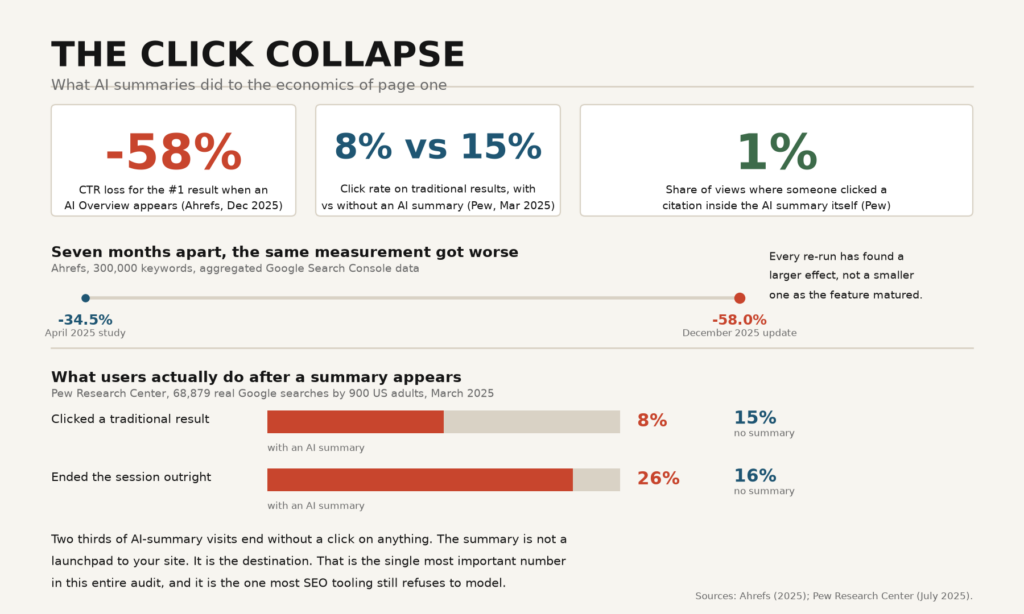
In July 2025, Pew Research Center published something most of the industry skimmed and moved past. They had tracked 900 American adults who agreed to install a browsing monitor, capturing 68,879 real Google searches in March 2025. Of those, 12,593 triggered an AI summary.
When a summary appeared, 8% of visits included a click on a traditional result. When no summary appeared, 15% did. And the citation inside the summary itself — the link every GEO vendor is now optimising for — drew a click in about 1% of visits.
Read those again, because they change the shape of the problem. Fewer than one visit in ten that saw a summary ended with a click on a normal result. Pew also found that sessions ended outright 26% of the time when a summary appeared, against 16% when it did not.
Then Ahrefs put a price on it. Working from aggregated Search Console data across 300,000 keywords, half of which triggered an AI Overview, they found the click-through rate for position one on those queries had fallen from 7.3% in December 2023 to 1.6% in December 2025. That is a 58% reduction once you model what the rate would have been without the feature. Their earlier run on April 2025 data found 34.5%.
The second measurement is the one nobody quotes. The effect did not shrink as the feature matured. It nearly doubled.
The part that keeps the story honest
That 58% figure gets quoted everywhere, usually stripped of the caveat that makes it meaningful. Informational keywords without an AI Overview also lost clicks over the same two years — position-one CTR fell from 7.6% to 3.9%, a 49% decline.
Which means a good part of the collapse is not the summary at all. It is the whole results page: knowledge panels, image carousels, video previews, and a decade of features that answered questions before anyone had to leave. The AI Overview is the newest and most aggressive layer on a surface that was already eroding.
This matters for tool selection, because it changes what you are buying. If the decline were purely a summary problem, you would optimise for citations and be done. Since it is a whole-page problem, the tools that still matter are the ones working on demand that no surface can absorb — brand queries, considered purchases, anything where a paragraph cannot substitute for the real thing.
Meanwhile Semrush tracked 400 US commercial keywords and found AI Overviews present on 88% of them, up from 45.75% earlier in the same tracking. Ahrefs found the feature appearing on 83% of branded searches — your own brand name, summarised by a machine, sitting above your own homepage.
Gartner’s 2024 forecast that traditional search volume would fall 25% by 2026 looked alarmist when it was published. It now looks conservative.
The audit’s first principle follows from all of this. If the surface you are optimising for is shrinking, a tool that only optimises for that surface has a shrinking job. Most of the AI SEO market is still building for the blue links.
How I ranked these tools
I did not rank by feature list, because feature lists are marketing. I ranked on five things that can be checked.
Attributable ranking movement. Did the tool produce movement you can trace to the tool, or did it save someone an afternoon? Time saved is a real benefit. It is not a ranking benefit, and vendors blur the two constantly.
Citation visibility in AI answers. Not “does it have an AI visibility dashboard” — every platform bolted one on within eighteen months. Does using it change what gets cited?
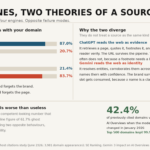
Durability across model changes. Google shipped a core update most quarters through this period, then made Gemini 3 the default model behind AI Overviews globally on 27 January 2026. When SE Ranking measured the before and after, 42.4% of previously cited domains vanished from AI Overviews, almost all of them in the long tail, while the top 500 most-cited domains held 99.98% of their citations. A tactic that worked in December and stopped working in February is not a tool. It is an exploit with a billing page.
Cost against outcome. Subscription pricing here has drifted toward enterprise software, so the justification bar should be enterprise-grade too.
Authority trajectory. Does the tool build the signals that survive model changes, or erode them in exchange for volume?
That fifth criterion does most of the sorting. Keep it in mind.
What is actually on the market
Five categories, and they behave nothing alike.
Raw content generators. Jasper, Copy.ai, and the long tail of ChatGPT wrappers. The play is volume: more pages, more keywords, more shots on goal. Fastest-growing category, weakest evidence base.
Content optimisation platforms. Surfer SEO, Clearscope, and the AI features inside Semrush and Ahrefs. These score a draft against what already ranks and tell you what is missing. Crucially, they improve a human draft rather than replace one.
Keyword and intent research with AI. Ahrefs, Semrush, and the newer prompt-and-question tools that surface the sub-queries inside a topic rather than the head term.
Technical and internal-link automation. Audits, link suggestions, schema generation. Genuinely useful, structurally unexciting, and — this is the point — not a differentiator. Everyone has the same crawler.
AI visibility and GEO tracking. Ahrefs Brand Radar, Semrush AI Visibility Toolkit, Profound, and a dozen challengers. This category barely existed three years ago. Profound alone raised $96 million at a $1 billion valuation in February 2026, then $180 million at $1.8 billion that September, bringing total funding past $335 million and reaching more than 1,000 enterprise brands, including about a third of the Fortune 100.
Does AI content hurt rankings? The answer is more boring than either side wants
Two studies settled this, and both kill a myth that has been costing people money in both directions.
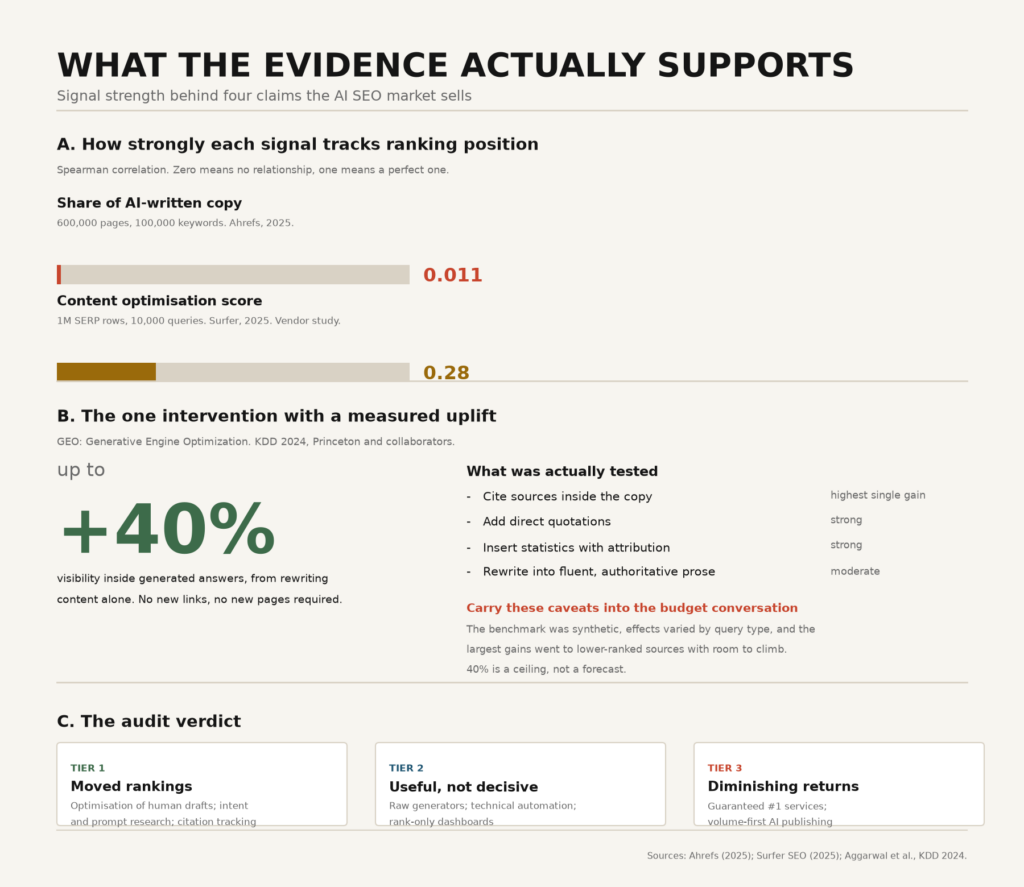
Ahrefs analysed 600,000 pages — the top 20 results for 100,000 keywords — and measured the relationship between a page’s AI-generated share and its position. The Spearman correlation was 0.011. That is statistical noise. Google does not appear to reward AI content and does not appear to punish it either. What the data did show is that the web has quietly become a hybrid: 81.9% of ranking pages carry some AI involvement, 4.6% are fully AI-written, 13.5% fully human.
Graphite, using three detectors across 65,000 URLs, found something stranger. Among pages ranking in Google, 86% were predominantly human-written. Among pages cited by ChatGPT and Perplexity, 82% were. Meanwhile the share of newly published articles that were predominantly AI-written crossed 50% in November 2024, briefly overtaking human output, and has since hovered near parity, up from roughly 5% before ChatGPT existed.
Put those side by side and you get the real story. Roughly half of everything being published is machine-written, and it accounts for about one in seven of the pages that actually rank. That is not a penalty. It is a filter. The flood raised the water level, and most of the flood is not floating.
Tier 1: what actually moved
Optimisation applied to human drafts. Strongest evidence in the audit, and the most unglamorous. Surfer’s own research puts the Spearman correlation between its Content Score and ranking at 0.28 across roughly a million SERP records — weak to moderate, yet higher than the 0.17 that Surfer cites from Ahrefs’ 2024 backlink study. Ahrefs ran an independent test of several scoring tools and found weaker effects, so discount accordingly. Even discounted, 0.28 is the highest number in this entire audit for a tool-driven intervention. And the lesson sits inside the tool’s own data: aim for a score of 70 to 85 and stop. Past 85 you are buying filler.
Intent and prompt research. Finding the sub-queries that AI systems fan out into is where the durable advantage sits, because it is the one place a tool sees something you cannot see by hand. Google’s documentation confirms the mechanism: AI Overviews and AI Mode run several simultaneous sub-searches, then assemble an answer from the results. Your head-term rank tells you almost nothing about whether you appear in those.
AI visibility tracking. Not because tracking moves rankings — it does not — but because it is now the only way to know whether you exist in the answer layer at all. In 2026, “we rank third” and “we get cited” became different questions with different answers, and most teams have instrumentation for the first only.
Tier 2: useful, not decisive
Raw generators. They save real hours and produce real drafts. They do not move rankings, per the 0.011 number, and used without editing they flatten every page into the same confident, structurally identical voice. That matters more than it sounds, because AI systems are now choosing between documents that resemble each other more closely than ever.
Technical automation. Fix your crawl budget, your internal links, your schema. Do it. It will not differentiate you, because your competitor has the same tool and the same fixes available. Technical hygiene is the floor, not the ceiling.
Rank-only dashboards. Still the default purchase in most marketing departments, and increasingly measuring a surface that delivers a third less traffic than it did two years ago.
Tier 3: diminishing returns, actively harmful
Guaranteed-position services. Anything promising a specific rank for a specific term is selling something Google has spent three years deprioritising. The 2024 spam policy update on scaled content abuse was written for exactly the output these services produce, and Google’s current guidance is unusually blunt about it.
Volume-first AI publishing. Not because Google penalises it, but because the market has absorbed it. When half of new articles are machine-written and only one in seven ranking pages is, the marginal page competes against a near-identical marginal page. Publishing more of the same thing is the most expensive way to stay invisible.
Rewriting content specifically for AI crawlers. This is the fastest-growing waste of money in the category, and it is where the audit turns from measurement to what Google actually said.
The citation divorce
Here is the finding that should reorganise your 2026 plan.
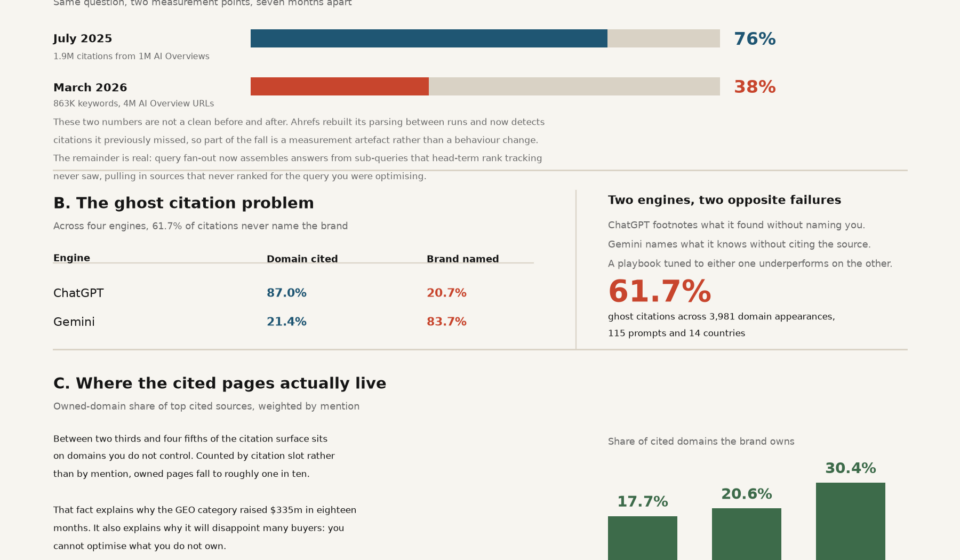
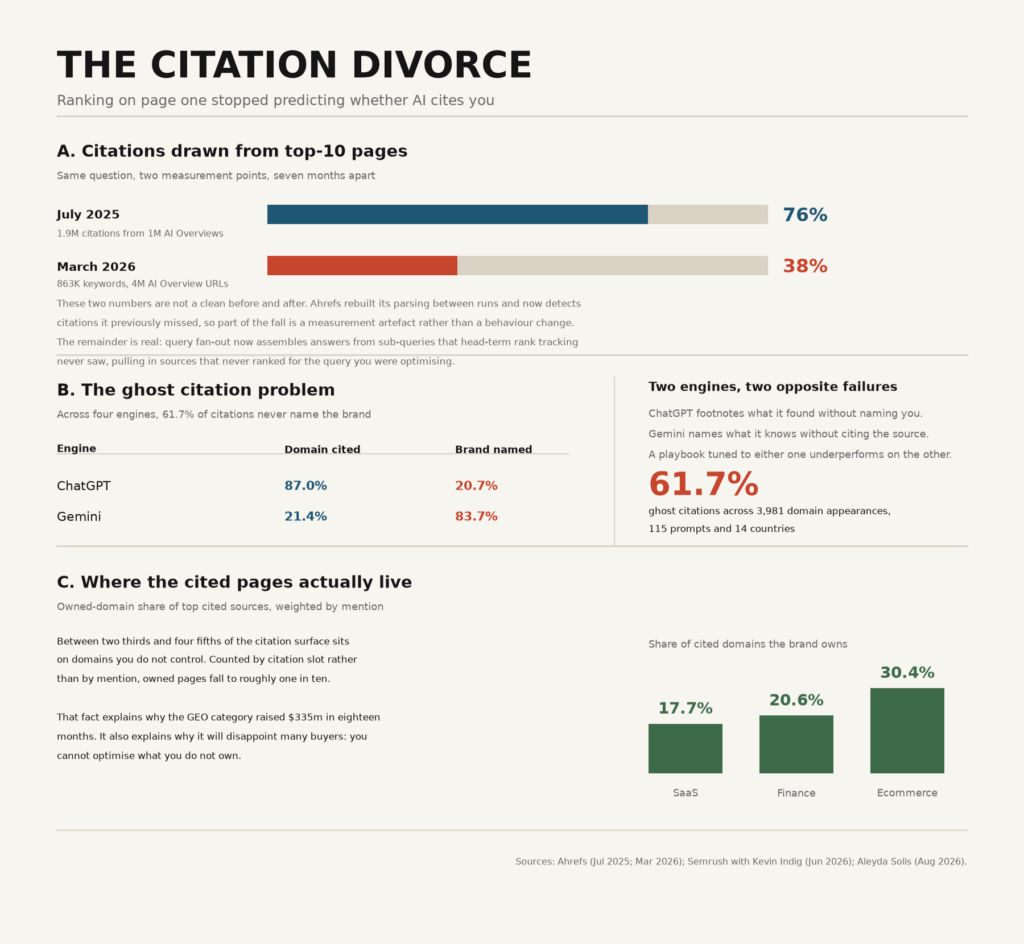
In July 2025, Ahrefs studied 1.9 million citations drawn from a million AI Overviews and found 76.1% of cited pages also ranked in the top ten for that query. Clean story: AI cites what already ranks.
In March 2026 they re-ran it across 863,000 keywords and 4 million AI Overview URLs. Overlap had fallen to 38%.
Some of that gap is measurement. Ahrefs improved its parsing and now catches citations it previously missed, so the two runs are not directly comparable. But not all of it. The rest is query fan-out doing what Google says it does: pulling sources from sub-queries nobody was tracking. Your page-one ranking on the head term is no longer a reliable predictor of citation, and it is drifting further from one.
Then Semrush and Kevin Indig measured the other half of the problem. Across 3,981 domain appearances, 115 prompts, 14 countries and four engines, 61.7% of citations never named the brand in the answer. Ghost citations, they called them. The per-engine split is the useful part: ChatGPT cited a source in 87% of cases but named the brand only 20.7% of the time. Gemini did the reverse — named the brand 83.7% of the time, cited a source only 21.4%.
One engine footnotes you without naming you. The other names you without linking to you. A playbook tuned to either underperforms on the other, which is why single-engine AEO audits are close to worthless.
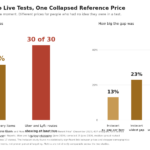
And where do these citations live? Aleyda Solis measured owned-domain share of top cited sources across 15 leading brands in each of three verticals: SaaS 17.7%, finance 20.6%, ecommerce 30.4%. Counted by citation slot rather than weighted by mentions, owned pages drop to roughly one in ten. Between two thirds and four fifths of your citation surface sits on domains you do not control.
That single fact explains why the category attracted $335 million in eighteen months. It also explains why it will disappoint many of the people buying it. You cannot optimise what you do not own, and most of the answer layer is other people’s property.
What Google itself said, and why almost nobody quoted it
On 15 May 2026, Google Search Central published Optimizing your website for generative AI features on Google Search. It includes a section with the refreshing heading “Mythbusting generative AI search: what you don’t need to do.”
The position is straightforward: generative AI search runs on the same core ranking and quality systems as everything else, no special optimisation is required, and pages need only be indexed and eligible for a snippet. It explicitly warns that creating separate content for every possible query variation in order to manipulate rankings or AI responses violates the scaled content abuse policy.
Every GEO vendor read that document and published a post about how it validates their product. Almost none quoted the mythbusting section, which is the part that argues against buying a good deal of what they sell. The strategic read is not that GEO is fake. It is that Google has told you where the leverage is not, and the market ignored the answer because the answer is unmonetisable.
This is also where E-E-A-T stops being an acronym and becomes a budget line. Experience, expertise, authoritativeness, trust — those are the signals a model change cannot strip from you. SE Ranking’s Gemini 3 data proves the point: the long tail lost roughly 42% of its citations overnight while the top 500 domains held almost everything. Scale is fragile. Credibility is not.
Google did add one genuinely new thing: a generative AI performance report in Search Console, announced 3 June 2026, giving sites a dedicated view of impressions in AI Overviews and AI Mode. The first real measuring instrument for the answer layer, and it is free.
The one intervention with a measured uplift
In 2024, a group from Princeton, IIT Delhi, Georgia Tech and the Allen Institute for AI published a paper at KDD introducing Generative Engine Optimization. They tested content modifications against generative engines and found visibility gains of up to 40%.
The methods are almost aggressively ordinary: cite sources inside the copy, add direct quotations, insert attributed statistics, rewrite into fluent authoritative prose. The largest single gain came from citation. No new links. No new pages. No subscription.
Three caveats before that 40% goes into a budget deck. The benchmark engine was synthetic. Effects varied by query type. And the biggest gains went to lower-ranked sources with room to climb — if you already own the top of the answer, there is less headroom.
Still, it is the only intervention in this audit with a documented, peer-reviewed, mechanism-level uplift. Which is a strange thing to be able to say about a market this large.
The 2026 stack, ranked by what it earns
One. Research and optimise; do not generate and publish. Use AI to find sub-queries, cluster topics, and score a human draft. The draft is the asset; the scoring is the accelerant. Skip the step where the machine writes the thing, and you skip the 0.011 correlation entirely.
Two. Build the citation layer, not just the ranking layer. Adopt the GEO content practices — sourced claims, quotations, attributed statistics — because they are cheap, they work on humans and machines at once, and Google’s own documentation does not contradict them. Add a visibility tracking tool understanding that you are buying a thermometer, not a cure.
Three. Treat authority as the moat, because it is the only one left. First-hand detail, named authors, verifiable specifics, original data. Google’s guide says the highest-leverage move for generative AI visibility is publishing valuable, unique, non-commodity content. That is not a vendor talking.
Four. Measure in the answer layer. The Search Console report is the floor. Third-party platforms tell you what the engines say about you. Neither tells you what it is worth — for that you need citation connected to pipeline, which almost nobody is doing and which is the most defensible analytics project available to a marketing team right now.
Five. Cut the volume budget and move it to the evidence budget. Original testing, original numbers, named expertise. Slower, does not scale, and the only input in this audit the flood cannot replicate.
The uncomfortable conclusion
The AI SEO tool market is not a fraud. Most of these products do something real. The fraud is in the framing — the implication that buying the tool buys the ranking, when the evidence says the tool buys time, and the ranking is bought with authority, specificity and citability.
The tools that moved rankings in 2026 made good content better and told you where the answer layer was citing someone else. The ones that did not were selling volume to people who had not yet noticed that volume stopped working.
On the queries where a summary appears, fewer than one visit in ten ends with a click on a traditional result. Roughly one citation in ten belongs to a domain you own. The question is no longer whether you rank. It is whether you are the source a machine decided to believe.
That is a harder problem. It is also a more interesting one, and the first honest one this industry has had in a decade.