The AI Content Line: What to Automate and What to Protect
AI writes fast, but it shouldn’t write everything. A practical, risk-based line between draftable and untouchable content for marketing teams.
If a customer ever falls in love with your brand because of a single sentence, that sentence probably should not have been written by a machine. But here is the twist: a machine can absolutely help you rewrite that same sentence ten different ways until it sounds like you. That tension — the machine as a tireless editor versus the machine as a hollow author — is the whole story of AI and content writing in 2026. The question is not whether AI can write. It can, and it writes faster than any human ever will. The real question is where the line belongs.
The Wrong Question Everyone Asks
Almost every team starts in the same place: “Should we use AI for content, or not?” That is the wrong question, and it is wrong because it treats AI as a single switch. Flip it on and everything gets written by a model. Flip it off and you are back to 2019.
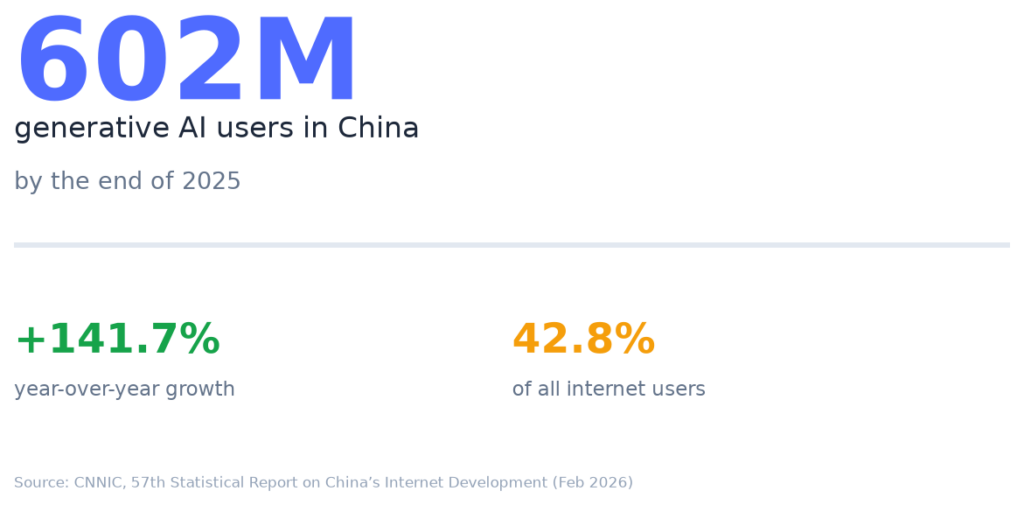
Reality does not work that way. In China alone, 602 million people were using generative AI by the end of 2025 — 42.8 percent of the entire online population, up 141.7 percent in a single year, according to the China Internet Network Information Center. That is no longer a niche tool. It is the default keyboard.
And the writing use case is where the mainstream meets the professional: globally, 55 percent of marketers now use AI for text-based content creation, making it the single most common use case in HubSpot’s research.
So the question is not “whether.” It is “which parts.” The teams that get this right stop asking if they should use AI and start asking what they should let it touch.
A Better Frame: Risk, Not Task
Here is a cleaner way to think about it. Stop sorting content by task — blog post, email, landing page, social caption. Sort it by risk instead.
Almost every piece of content carries two kinds of risk. There is the risk of getting it factually wrong, which AI actually helps with because it can gather and structure information at speed. Then there is the risk of breaking trust — saying something tone-deaf, legally reckless, or simply not you. That second risk is where the machine quietly fails, because a language model does not feel the weight of a promise.
When you frame the decision around risk, the answer stops being a debate and becomes a routing exercise. Low-risk, high-volume, structurally predictable content — that is AI territory. High-risk, trust-bearing, relationship-defining content — that is still human territory, and probably will be for a long time.
A useful way to picture it: AI is a very fast typist, not a strategist. It will produce three thousand words before your coffee cools. It will not know which of those words should carry your reputation.
What AI Writes Well Today
Let us be fair about what the machine genuinely excels at, because dismissing it entirely is just as wrong as trusting it blindly.
AI is strongest where content is structured, repeatable, and verifiable. First drafts are the obvious one — the blank-page problem disappears when a model can lay down a competent skeleton in seconds. Summaries and rewrites are another: taking a long report and compressing it, or taking one strong paragraph and producing ten variants for ten channels. Data narration fits here too. Give the model clean numbers and it will turn them into readable prose without inventing meaning.
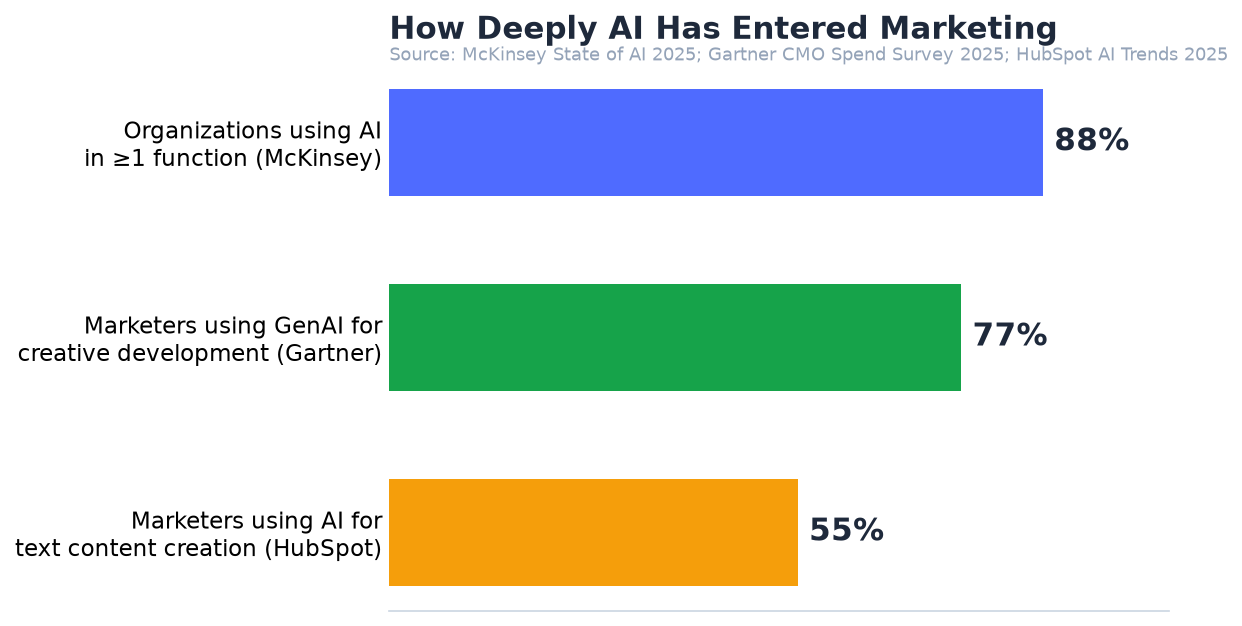
The global numbers back this up. Gartner found that 77 percent of marketers who use generative AI apply it to creative development, making it the most widespread use case by a wide margin. McKinsey’s State of AI research puts organizational adoption even higher — 88 percent of organizations now use AI in at least one business function.
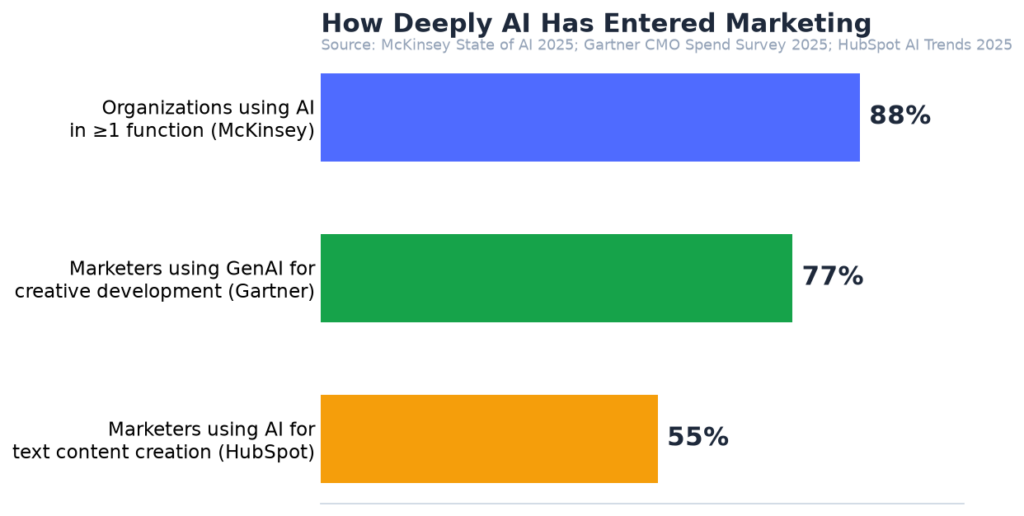
This is not a fringe experiment. It is the default operating layer.
The green-light list, then, is clear: drafting, summarizing, variant generation, data-to-text, and anything where a factual error is cheap to catch and easy to fix. When the downside of a mistake is a small edit, let the machine run.
Drafting at Scale Without Losing Voice
The most common fear people voice is that AI will flatten their voice into the same generic drone everyone else produces. That fear is real, but it points at the wrong fix. The problem is rarely the tool. It is that most teams feed the tool nothing.
If you paste a blank prompt and ask for “a blog post,” you get exactly what you deserve: a competent, forgettable, middle-of-the-road draft. Voice does not disappear because AI writes. It disappears because nobody bothered to define it before hitting generate.
The teams that draft at scale without losing themselves do one thing differently: they give the model a voice sample first. A handful of paragraphs they are proud of, a tone description, a list of phrases they use and phrases they never use. Then the machine becomes a stylist working from your material rather than an author inventing from nothing.
The machine can rewrite your one perfect sentence ten ways. What it cannot do is know why that sentence was perfect in the first place. That is your job, and it is the part worth protecting.
Where AI Quietly Fails
Now the uncomfortable part. AI fails not where you expect it to fail — grammar, structure, fluency — but in ways that are easy to miss until a customer notices.
It fails at tone in sensitive moments. It fails at opinion, because a model has no genuine point of view to defend, only a statistically likely collection of words. It fails at nuance around money, health, legal matters, and anything where being almost right is still wrong. And it fails most dangerously at the things it does not know it does not know: a model will state a plausible-sounding “fact” with complete confidence, and nothing in its output will flag that the fact is fabricated.
There is also a quiet cost happening at the audience level. Gartner surveyed 1,539 consumers and found that 50 percent of them would rather give their business to brands that do not use generative AI in consumer-facing content. Let that land. Half your audience, when given the choice, prefers the brand that keeps the machine away from what they read. That is not a statement about AI’s quality. It is a statement about trust.
Trust and Tone Are Not Optional
Trust is the entire game in content marketing, and tone is how trust gets transmitted. A brand can survive a typo. It cannot easily survive sounding like it does not care, and the flat, overly polished output of an unguided model reads exactly like not caring.
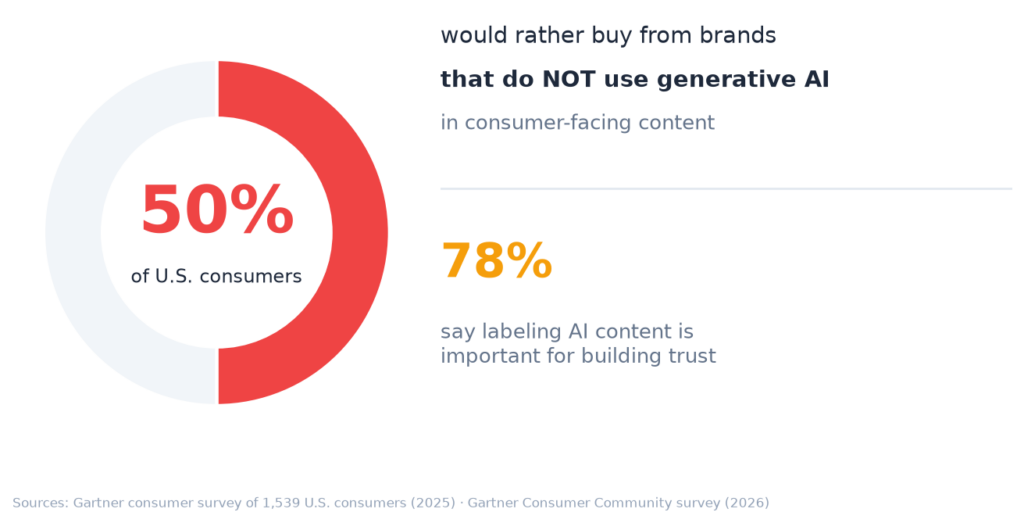
This is why the human touch is not a nice-to-have garnish on top of AI output. It is the substance. The audience is not stupid. They have already learned the texture of machine-written text — HubSpot’s research even names the phenomenon the industry has been wrestling with, the flood of what has been called “AI slop.” When everything sounds the same, the brand that sounds like a person becomes the memorable one.
The practical rule is simple. If the content is supposed to build a relationship — a founder’s note, a response to criticism, a promise about pricing or delivery — a human needs to write it or at least own every word of it. The red light is not about quality control. It is about who is allowed to speak for the brand.
Compliance and Legal Boundaries
There is a harder edge to this conversation, and it is the one most teams would rather skip. Some content is not just a branding choice. It is a legal and regulatory one.
The European Union’s AI Act, the first comprehensive AI regulation of its kind, imposes transparency obligations around AI-generated content, including requirements tied to labeling and disclosure. China has moved in the same direction: its generative AI regulations already require AI-generated content to be marked as such. The pattern across major markets is unmistakable — audiences deserve to know when a machine is doing the talking, and regulators are writing that expectation into law.
Beyond regulation, there is the simpler legal reality of accuracy. When your content makes a claim — about a product’s performance, a price, a guarantee, a medical or financial outcome — a confident hallucination becomes a liability, not a typo. This is the one category where “it sounds right” is never a sufficient standard. Anything that could be quoted back to you in a dispute, or in court, or by a regulator, needs a human who is accountable for every word. The machine can draft the framework. It should not own the claim.
The Hybrid Workflow That Works
By now the pattern should be obvious: the winning approach is not human versus machine. It is human and machine, each doing the part it is good at.
A hybrid workflow that actually holds up looks like this. The human defines the brief — the audience, the point of view, the one thing this piece must make a reader feel. The machine produces the first draft and the structural variants at speed. The human then edits for voice, cuts what rings false, and injects the specific experience and judgment the model cannot have. The machine, finally, handles the grunt work of the edit: tightening, reformatting, adapting the finished piece across channels.
Notice where the human sits in that loop: at the beginning and at the end. Those are the two places where judgment lives. Everything in the middle — the volume, the variants, the formatting — is exactly what a machine is for. The result is not slower content. It is content that scales without becoming generic.
A Scorecard for Any Content Request
Here is a filter you can run over any content request before a single word is generated. Ask four questions.
First, what is the downside if this is wrong? If the answer is a quick fix, it is green. If the answer is lost trust, legal exposure, or a broken promise, it is red.
Second, does this content carry a point of view only a person could defend? Opinion pieces, positions, stances — those are red. Neutral, informative material is green.
Third, does it require specific, lived experience to be credible? A product tutorial you have actually shipped is green to draft and edit. A claim about an industry trend needs your judgment, not a model’s summary.
Fourth, is the audience in a high-stakes or emotional state? Crisis responses, apologies, anything touching money or health — red, always red.
Run those four questions and almost every content decision becomes mechanical. You will be surprised how few pieces are truly untouchable, and how few are truly safe to hand over whole.
Training the Team, Not Just the Tool
Most organizations buy the tool, write a one-line policy, and call it adoption. Then they wonder why the output is uneven. The tool was never the bottleneck. The judgment around it was.
The teams that succeed treat this as a skill to be taught, not a license to be issued. They train people on prompt design, on how to feed the model a voice sample, on how to spot the confident-but-wrong sentence, on where the red lines sit. They build a shared vocabulary so that “draft this” and “own this” mean the same thing to everyone.
And they make the human accountability explicit. Someone’s name goes on every piece of content that ships, AI-assisted or not. That single change does more for quality than any amount of tooling, because it forces the exact question the machine cannot ask: am I willing to stand behind every one of these words?
Metrics That Actually Matter
If you are going to lean on AI for content, you need to measure the right things, because the easiest metrics will lie to you.
Output volume is the seductive one. It is trivially easy to show that AI increased production by three hundred percent. But volume is not a business outcome. The metrics that matter are engagement, conversion, and — quietly, importantly — search visibility in a world where AI is changing how people find content.
That last one deserves attention. HubSpot found that 49 percent of marketers are already reporting a decrease in search traffic because AI-generated answers are displacing traditional results. The playing field is shifting under everyone. Content that merely exists, produced at machine scale, is exactly the content that loses. What survives is content with a point of view, specific experience, and a reason to be cited and trusted — which is to say, content that was never fully machine-made in the first place.
Measure whether people stay, whether they act, and whether the audience trusts you more over time. Those are the only numbers that tell you if the machine is helping or just keeping you busy.
The Human Job That Remains
Strip it all down and the human job that remains is refreshingly small and entirely irreplaceable. It is judgment.
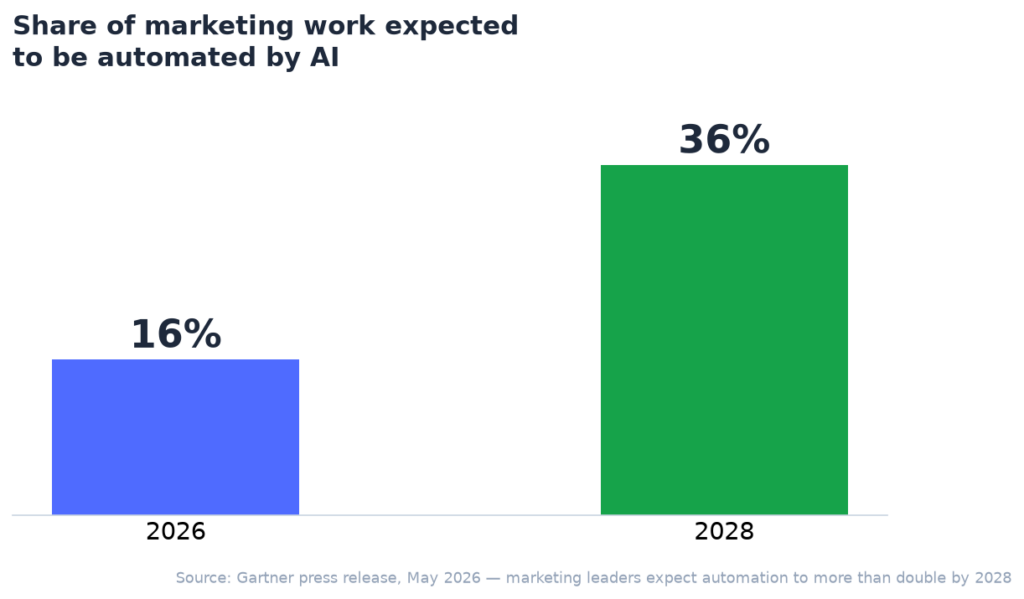
That trajectory is why the human role matters more, not less. As automation rises from 16 percent of marketing work today toward 36 percent by 2028, the scarce resource stops being output and becomes judgment.
Someone has to decide what the brand stands for and which words are allowed to carry that weight. Someone has to feel the moment — the crisis, the apology, the promise — and know the difference between what can be delegated and what cannot. Someone has to be accountable. A model can be accurate, and it can be fast, and it can be tireless. What it cannot do is care, and caring is not a soft skill. It is the entire product.
So let the machine draft, summarize, and multiply your voice across a hundred channels. Let it be the very fast typist it is. Just never confuse the typist with the person who decides what the words should mean.
Summary
AI should write your content when the content is structured, verifiable, and low-risk — drafts, summaries, variants, and data narration where a mistake is cheap to fix. It should stay away from anything that carries trust, tone, stance, or legal weight, because those are precisely the places a machine cannot feel what is at stake. The framework is risk, not task. Run every request through four questions about downside, point of view, lived experience, and emotional stakes, and the routing becomes obvious. Global data tells both halves of the story at once: adoption is everywhere — 55 percent of marketers use AI for text, 88 percent of organizations use it in some function — while half of consumers would rather buy from brands that keep the machine away from what they read. The human job that remains is judgment, and it is not a consolation prize. It is the whole game.