China’s AI Adoption Just Doubled Down: 100 Million New Users, Four Times the Tokens, Half the Clicks
China’s Generative AI Audience Passed 700 Million. Discovery Moved With It
The latest national report from Beijing is not a technology story. It is a story about where purchase questions get asked, and who gets to answer them.
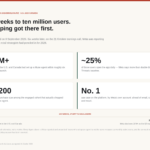
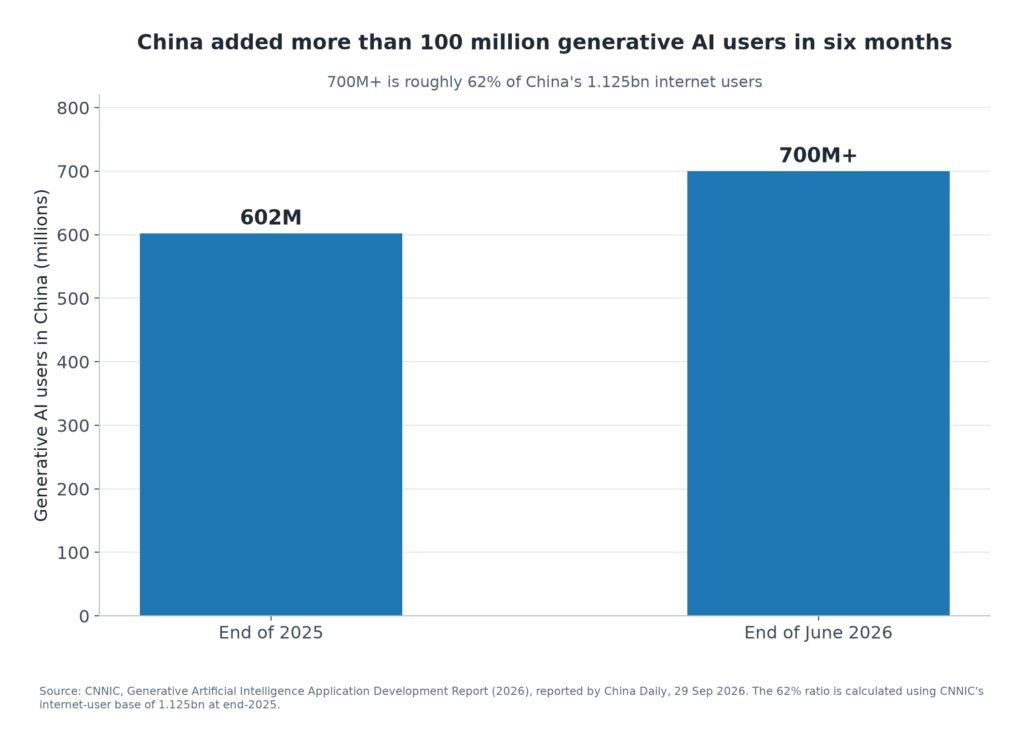
China had more than 700 million generative AI users at the end of June 2026. Six months earlier the figure stood at 602 million. Measured against the 1.125 billion internet users CNNIC counted at the end of 2025, that is roughly six in ten people online. The numbers come from the Generative Artificial Intelligence Application Development Report (2026), published by the policy and international cooperation institute of the China Internet Network Information Center and reported by China Daily on 29 September 2026.
If you sell anything, anywhere, that sentence deserves more than a nod. It describes a market where asking a machine a question has become routine for most adults online, and where the answer, not the link, is increasingly what people act on.
The short version
Three details carry more weight than the headline number.
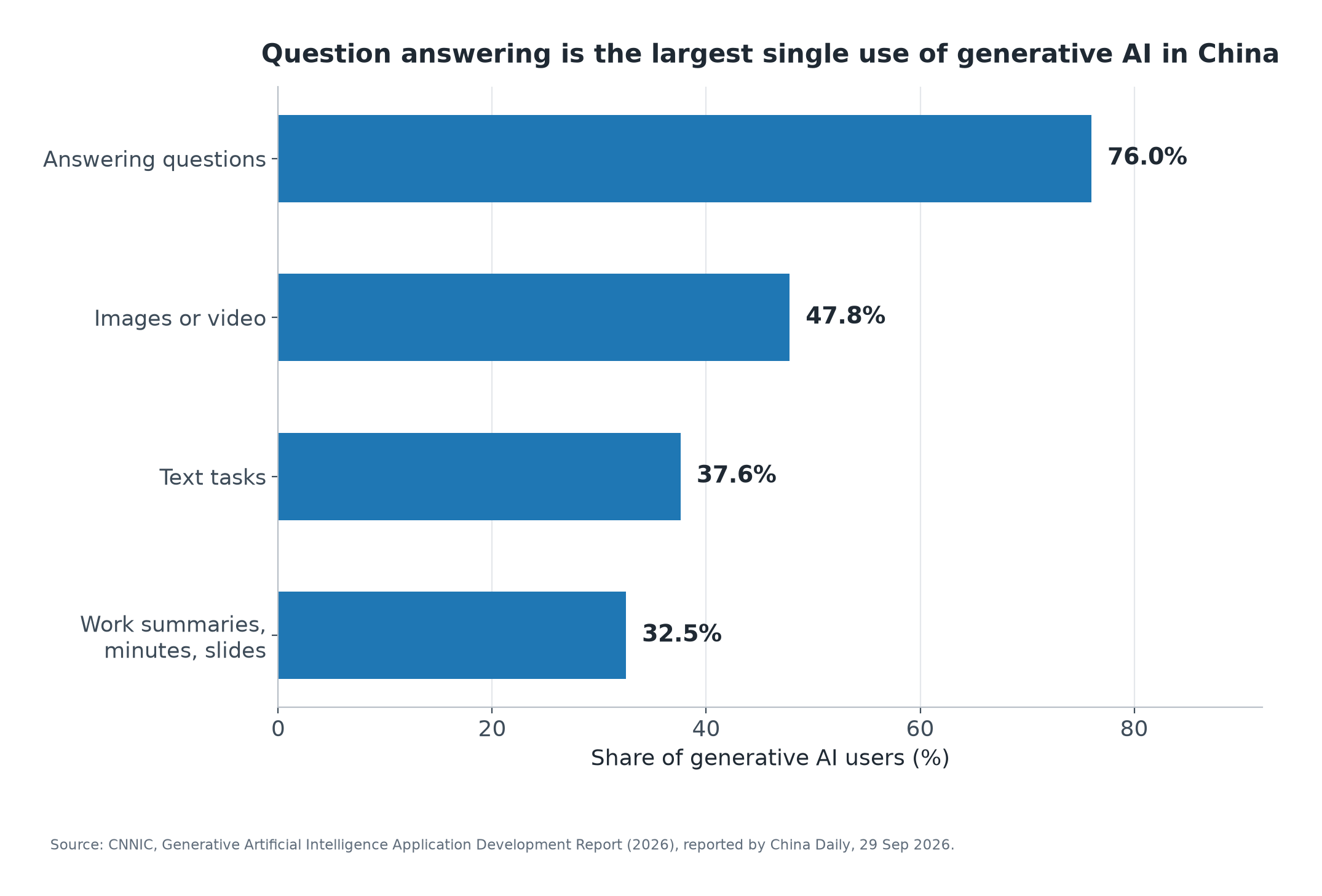
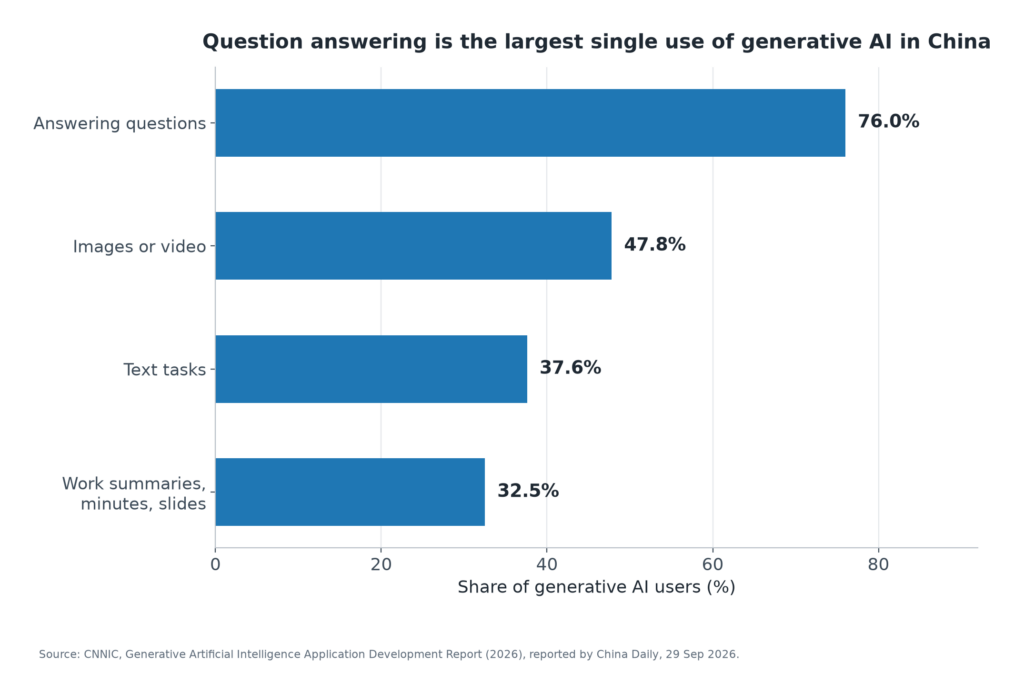
First, people are not poking at chatbots out of curiosity. Seventy-six percent of users say they turn to generative AI to answer questions. That is the largest single use case in the report, and it happens to be the exact behavior that used to belong to search engines.
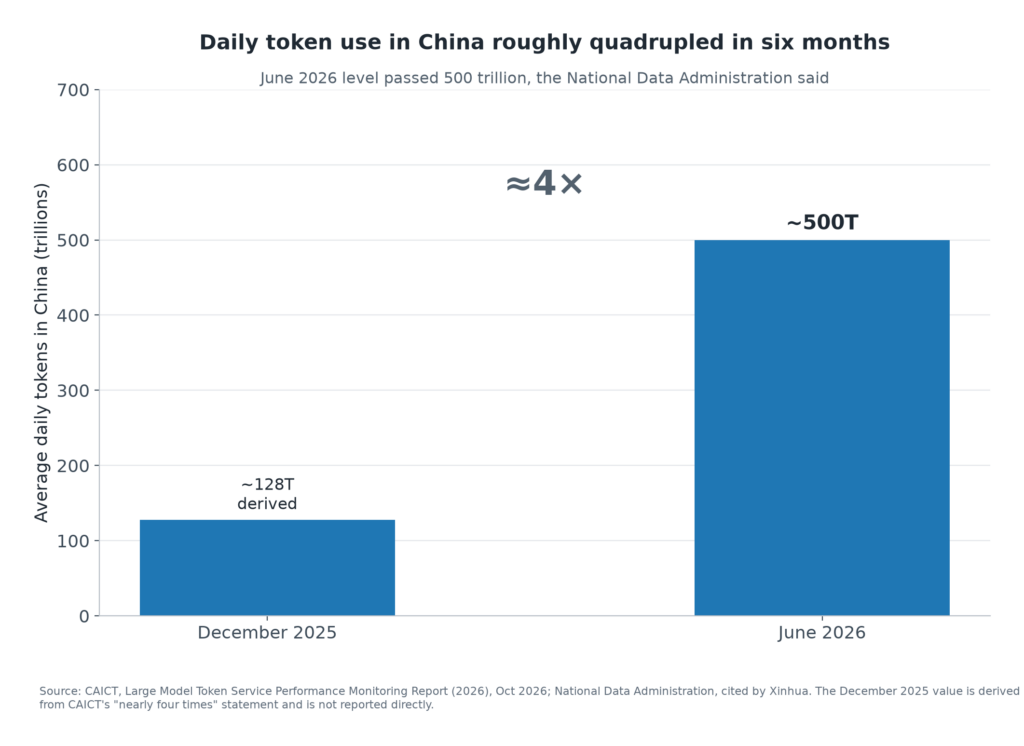
Second, usage is getting deeper, not just wider. Average daily token consumption in China passed 500 trillion by June 2026, a level the National Data Administration has also cited publicly. CAICT, the China Academy of Information and Communications Technology, reported a similar June average and described it as nearly four times the December 2025 figure.
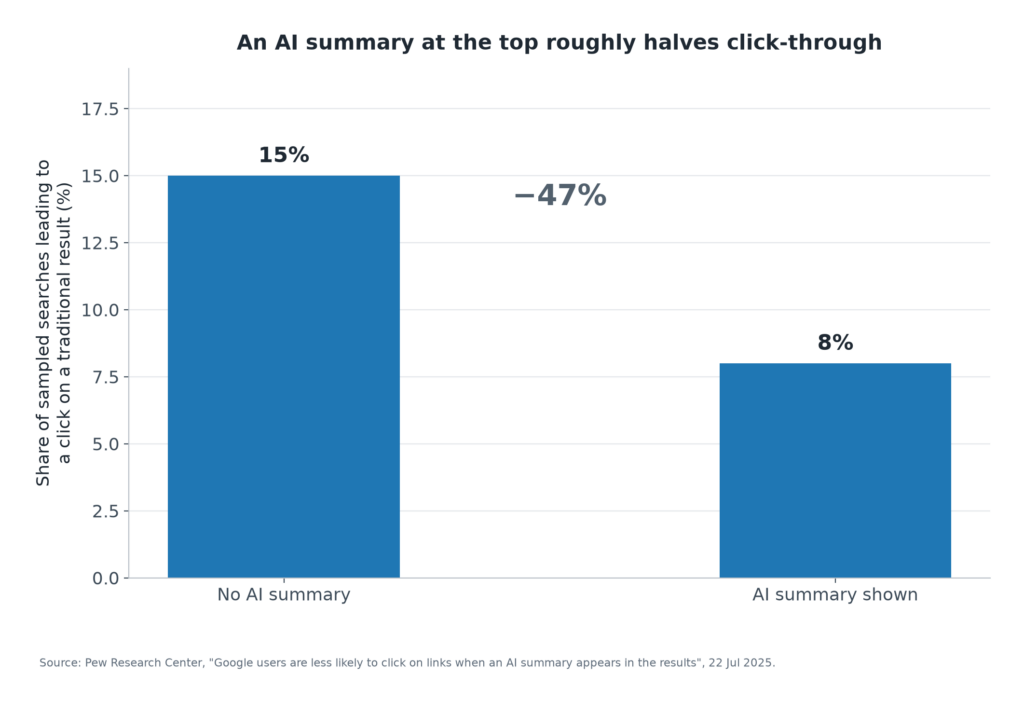
Third, click behavior collapses when an answer appears at the top. Pew Research Center analyzed Google searches in which an AI summary appeared and found that 8 percent of them led to a click on a traditional result, against 15 percent of searches without a summary.
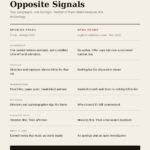
Put together: more people, asking more often, and clicking less. That is a different marketing environment, not a louder version of the old one.
The 2026 numbers at a glance
| Indicator | Latest reading | Comparison |
|---|---|---|
| Generative AI users | More than 700 million (end of June 2026) | 602 million at end of 2025 |
| Users as a share of internet users | About 62% | 1.125 billion internet users at end of 2025 |
| Users who use AI to answer questions | 76% | — |
| Users who use AI for images or video | 47.8% | — |
| Users who use AI for text tasks | 37.6% | — |
| Users who use AI for work summaries, minutes, or slides | 32.5% | — |
| Average daily tokens | More than 500 trillion (June 2026) | Nearly 4x December 2025 |
| AI computing capacity | 2,185 EFLOPS | +177% year on year |
A note on terms, because they get used loosely. A generative AI user here means a person who uses a generative AI product, as measured in a national survey rather than by app installs. The category includes assistants, image and video tools, and AI features built into other apps. The report itself describes penetration as above 50 percent of the population; measured against the internet-user base, the ratio is closer to 62 percent.
Why 700 million is a different number from 600 million
A 16 percent rise in users sounds unremarkable. Six months, one hundred million people, a line that goes up and to the right: you could file it under steady growth and move on.
Then look at what happened underneath. Token volume quadrupled while the user base grew by a sixth. Users did not simply arrive. They started leaning on the tools hard enough to multiply consumption several times over.
That gap is the story. Reach tells you how many people could see an answer. Intensity tells you how often they trust one enough to ask again.
There is also a price signal buried in the same dataset. CAICT found that the average domestic price for model services rose from 6.8 yuan in the second half of 2025 to 13.46 yuan in 2026, roughly doubling on a comparable billing basis. Usage grew anyway. When demand survives a price increase, you are not looking at novelty. You are looking at habit.
For contrast, typical models launched overseas in 2026 averaged about 117.8 yuan on the same basis, roughly 8.7 times the domestic level. Cheap inference is part of the reason Chinese usage curves look the way they do. It is also why similar curves are likely to appear elsewhere as inference costs fall.
What people actually ask an AI assistant
The usage breakdown is worth reading twice.
- 76 percent use generative AI to answer questions.
- 47.8 percent use it to process images or video.
- 37.6 percent use it for text-related work.
- 32.5 percent use it for work summaries, meeting minutes, or slide decks.
Notice where the commercial weight sits. Image and video processing is largely a production task. Text and office work are productivity tasks. Question answering is the only major category that sits directly on the decision path: the moment someone is trying to work out what to buy, which option is safer, or why two products differ.
Access counts to general-purpose assistants and AI productivity tools both more than doubled year on year. Not downloads. Access. People are opening these tools the way they once opened a search box: reflexively, several times a day, with a half-formed question.
Tokens are a better growth metric than users
Here is a number that rarely makes it into a marketing deck: 500 trillion tokens a day.
It is an awkward unit for a slide and a useful one for planning. A token is a fragment of text that a model reads or writes. A session in which someone asks one question and leaves burns very few tokens. A session in which someone pastes a specification sheet, asks for a comparison, pushes back on the answer, and asks again burns thousands.
Token growth therefore measures something user counts cannot: how many turns a conversation contains. And turns are where consideration happens. One question is curiosity. Four follow-ups mean a shortlist is forming in real time.
If your category is being weighed in those follow-up turns, you are either in the answer or you are the option being ruled out.
Why the answer box arrived in China first
It is tempting to treat this as a China story: large population, government push, homegrown models. Much of that is true. None of it explains the behavior.
Consider the shape of the market instead. Hundreds of millions of people went online on phones and never on desktops. They never learned to scan ten blue links, because they never had a reason to. Their default interaction with the internet has always been a box you type into, and the box has always answered.
Then the assistants moved inside the apps where transactions already happen. That matters more than any model benchmark. When the answer and the checkout live in the same place, the answer becomes the storefront.
There is an industry-level explanation as well. China had 10,740 companies working on large models, agents, and robotics as of mid-2026, backed by 2,185 EFLOPS of computing capacity (up 177 percent in a year) and more than 120,000 curated datasets. Competition at that density pushes prices down, capability up, and distribution onto every consumer surface available.
None of those conditions is uniquely or permanently Chinese. They are simply further along there.
What the click-through numbers really say
Pew’s finding is blunt: 8 percent against 15 percent. An answer at the top of a results page roughly halves the odds that a person leaves for another site.
Two readings are defensible.
The pessimistic one is that traffic compresses, and the compression is structural. If your business depends on informational pages pulling in sessions that later convert, that pipe narrows with every improvement to the answer layer.
The more useful one is that the clicks that remain are different clicks. Someone who reads a summary, decides it is not enough, and then clicks through is further along than someone who clicked the first result out of habit. Fewer arrivals, warmer arrivals.
One caution before you over-read the study. Pew measured searches in which an AI summary appeared, not all searches, and the data came from volunteered browsing histories in the United States in March 2025. Summaries still appear unevenly, and a summary on a definitional query behaves differently from a summary on a “which one is best” query. The direction is clear. The magnitude depends on your category.
The number finance will misread
Seven hundred million users do not amount to seven hundred million shoppers. Anyone who puts that sentence in a board deck should expect the follow-up question.
What the report does support is narrower and more interesting: purchasing tied to AI hardware is already mainstream. In the six months before the survey, 38.7 percent of Chinese internet users bought smart hardware online. Of those, 20.2 percent bought wearables and 18.2 percent bought smartphones, tablets, or comparable devices.
Those devices are not incidental. They are the physical delivery mechanism for assistants: earbuds that listen, watches that prompt, glasses that translate. Every unit sold puts another answer surface closer to a person’s face.
Three things that break when discovery moves into an answer
Measurement. Impressions and clicks assume a click. If the decision happens after a two-sentence summary, you are measuring the exhaust rather than the engine. Brand mention share inside AI responses is the metric most teams are missing, and almost nobody owns it yet.
Content supply. Most marketing pages are shaped by ranking incentives: long, hedged, keyword-dense, structurally repetitive. Models reward none of that. They reward a clean definition, a specific number, a stated caveat, and a comparison that survives being quoted out of context.
Brand voice. Your brand is already being described by systems trained on other people’s words: resellers, forums, old press releases, competitors’ comparison pages. If those sources disagree with your own site, the model picks a version of you that you did not write.
A five-question diagnostic
You do not need a research budget to find out where you stand. Ask an assistant your category’s core question in ten different ways and score the answers.
- Does it name you at all when asked what the options are?
- When it does name you, is the description accurate on category, price model, geography, and audience?
- Do the third-party pages it cites agree with your own product pages?
- Can your best explainer survive compression into two sentences without becoming wrong?
- Do you publish any number, definition, or side-by-side comparison that a model would prefer to quote?
Answer “no” four times or more, and the problem sits upstream of your funnel rather than inside it.
What to do in the next 90 days
Start with the answer layer, not the website.
Build a prompt set of twenty to thirty questions your buyers actually ask in every language your buyers use, and run it weekly across the assistants your market uses. Log who gets named, what gets said, and which sources get cited. That log becomes your baseline, and baselines are what make budget conversations possible.
Then fix the boring things. Entity consistency first: one name, one category, one set of claims, everywhere. Structure second: put the definition in the first sentence, the number in the second, the limitation in the third. Models are ruthless extractors and indifferent readers, so make extraction easy.
Publish comparisons and specifications rather than opinion. A page that says “here is how the two options differ across these six dimensions” gets quoted. A page that says “we are the leading solution” gets skipped, because there is nothing in it to repeat.
Give communications a seat at the table. Earned coverage in credible outlets still shapes what a model can verify about you, which is a different job from what it does for your traffic.
Finally, instrument mentions rather than sessions. Count how often your brand appears in AI answers, in what context, and beside which competitors. That number will move before your organic sessions do.
What could prove this wrong
Four counter-arguments are worth holding in mind.
Purchases still finish somewhere. High-consideration categories involve returns policies, financing, installation, and a human on the phone. The answer layer may shape the shortlist without ever owning the transaction, which limits how much of the funnel actually moves.
Trust is not settled. People check answers, especially when money is involved. A single confident error in a category where errors are expensive can slow adoption faster than any marketing push accelerates it.
Attribution will catch up. Some of what looks like lost discovery is lost measurement. Once AI referrals, brand search, and direct traffic are reconciled properly, part of the gap closes on its own.
And China’s starting conditions may not travel. Take away the mobile-only starting point, the density of super-apps, and cheap inference, and the same technology produces a slower shift.
What to watch over the next two quarters
Three signals will show whether this is a plateau or a slope.
Watch whether the 76 percent question-answering share holds as image and video use keeps climbing. If people drift toward generation and away from asking, the discovery argument weakens.
Watch whether token growth keeps compounding now that prices have risen. Demand that survives a price increase is demand you can plan against.
Watch whether enterprise adoption deepens. More than 30 percent of large manufacturers were already using AI across design, inspection, and maintenance as of mid-2026. Once the buyer’s own operations run on these systems, buyers start asking procurement questions the same way.
The bottom line
Seven hundred million users is a milestone. What matters more is what it normalizes: asking a machine before asking a search engine, and accepting a synthesized answer as a reasonable basis for a decision.
That shift does not delete marketing. It relocates it. The work moves from winning a ranking to becoming the source a model is willing to repeat, and repetition, not ranking, is what compounds from here.
FAQ
How many people in China use generative AI?
More than 700 million as of the end of June 2026, up from 602 million at the end of 2025. That is roughly 62 percent of the 1.125 billion internet users CNNIC counted at the end of 2025.
Is this comparable to ChatGPT’s weekly user figures?
Only loosely, and the comparison should be handled with care. The China figure is a survey-based estimate of people who use generative AI products. Platform figures usually report weekly active accounts for a single product. Different denominators, different definitions, different incentives. Treat them as two views of adoption rather than as a scoreboard. For reference, the most recent figure OpenAI has confirmed in a company announcement is 800 million weekly active users, released in October 2025.
Does 700 million users mean Chinese consumers buy through AI assistants?
Partly, and less directly than headlines suggest. The report shows heavy use of AI for question answering and office tasks, plus mainstream purchasing of smart hardware. Those devices are the delivery channel for assistants, so commerce and AI adoption reinforce each other. Most transactions, however, still complete inside marketplaces and apps, with the assistant shaping the shortlist rather than closing the sale.
What is GEO, and why does this report matter for it?
Generative engine optimization is the practice of making a brand’s facts easy for an AI system to find, trust, and repeat: clear definitions, sourced numbers, entity consistency, and content that holds up when compressed. It matters here because the evidence for a discovery shift is now quantitative rather than anecdotal. A majority of users ask questions, consumption has quadrupled, and click rates roughly halve when an answer appears.
If I sell outside China, why should I care?
Because the constraints that pushed China ahead are arriving elsewhere: mobile-only audiences, assistants embedded in the apps where people already transact, and inference cheap enough to use without thinking about it. China is less a separate market than an early print of a pattern. The lag is measured in quarters, not decades.