SpaceX Taps Qualcomm for Its Biggest-Ever 5G Deal, Edging Closer to Becoming America’s Fourth Carrier
SpaceX has spent a decade launching satellites. Now it wants to own the ground.
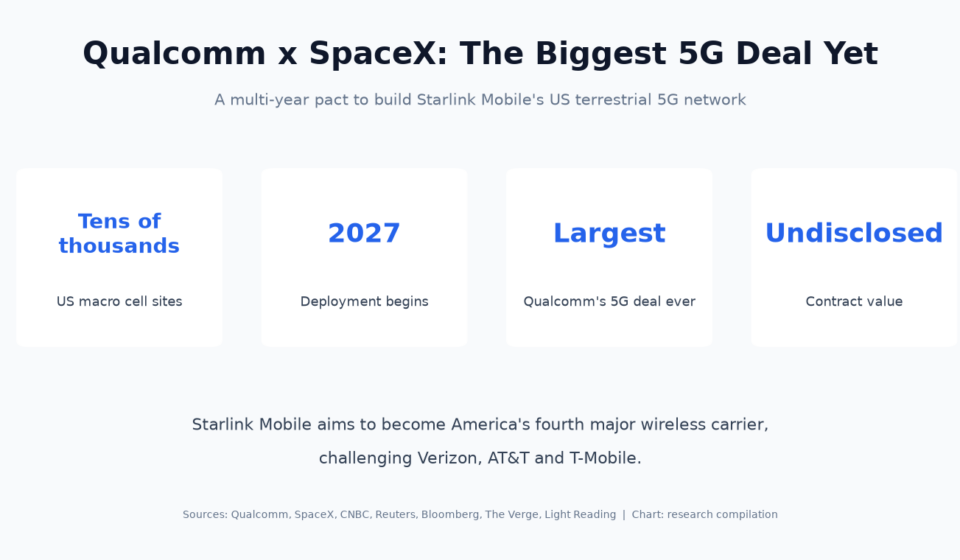
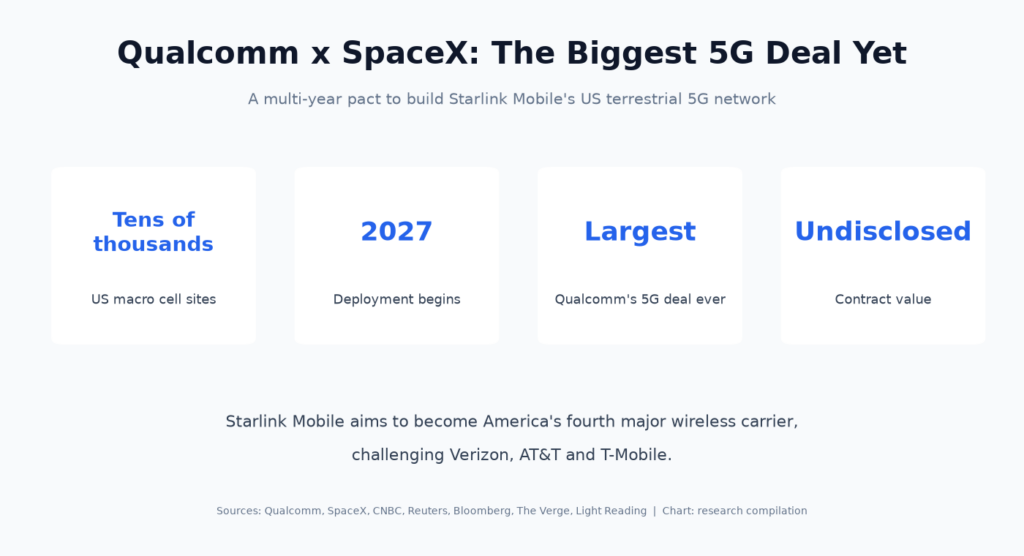
On November 4, SpaceX signed a multi-year agreement with Qualcomm to supply the radio units, baseband equipment, and Layer 1 software for Starlink Mobile’s planned nationwide terrestrial 5G network in the United States. Qualcomm described the contract as its largest 5G infrastructure deal ever. Deployment across tens of thousands of macro cell sites is scheduled to begin in 2027.
What is actually being built
Starlink Mobile is not a satellite service. It is a terrestrial mobile carrier — one designed to compete directly with Verizon, AT&T, and T-Mobile for ordinary smartphone customers on the ground.
The Qualcomm deal supplies the plumbing. Its Dragonwing Cellular Infrastructure platform includes the massive MIMO radios, baseband units, and software that turn spectrum into working coverage. SpaceX brings the spectrum, the brand, and the ambition. What it does not yet have is a network, customers, or revenue.
Why it matters
If it works, this is the biggest shake-up in US wireless since T-Mobile swallowed Sprint. America’s mobile market has been a three-horse race for years, and a credible fourth carrier with SpaceX’s capital and brand recognition would force the incumbents to compete harder on price and coverage.
If it does not work, the deal will be remembered as a very expensive bet on a network that never quite arrived.
There is also a strategic logic that goes beyond consumer phones. A terrestrial 5G footprint complements Starlink’s satellite constellation, allowing the company to offer seamless coverage — satellite where there are no towers, terrestrial where there are. That combination is difficult for any single competitor to match.
The money question
Neither company disclosed the value of the contract, which makes the phrase largest 5G deal ever something of a qualitative claim rather than a number you can verify. The scale of the deal depends on how many sites are ultimately built — and on a deployment timeline that stretches well beyond 2027.
That ambiguity is worth flagging. Headlines about record deals tend to outrun the underlying economics. Qualcomm’s revenue from this agreement will arrive gradually, tied to deployment milestones, not as a lump sum.
Qualcomm’s pivot
For Qualcomm, the deal is a timely win. The company’s core handset business has been under pressure, and its latest earnings outlook disappointed investors — the same weak guidance that helped trigger the broader chip selloff on November 4 and 5. A marquee infrastructure contract gives it a story beyond smartphones, and a foothold in the network-equipment market that it has long coveted.
SpaceX, meanwhile, gets a supplier capable of delivering at carrier scale. The two companies need each other: one wants diversification, the other wants a network.
What to watch
Four things will determine whether this becomes a genuine fourth carrier or a cautionary tale: the disclosed value of the contract, if it ever surfaces; the pace of site deployment through 2027 and 2028; regulatory approvals for Starlink Mobile’s commercial service; and whether the incumbents respond with pricing or partnerships of their own.
For now, the message is simple. Elon Musk’s assault on the US mobile market began in space, but it will be decided on the ground — one cell site at a time.