Why Everyone Uses AI in Marketing — and Almost No One Profits From It
AI Agents in Marketing: When the Software Starts Running the Campaign
The short version
Marketing has stopped arguing about whether AI can write. The argument now is whether software should be allowed to act: set budgets, launch variants, move money between channels, and report back on what it did. Agents make that possible, and most teams are not ready for the consequences. The 2026 evidence is blunt: usage is close to universal, measured value is rare, and failed projects usually fail on data, permissions and oversight rather than on model quality. Pick one narrow loop, keep a human in command, and measure incremental profit instead of activity.
1. The jump from “tool” to “operator”
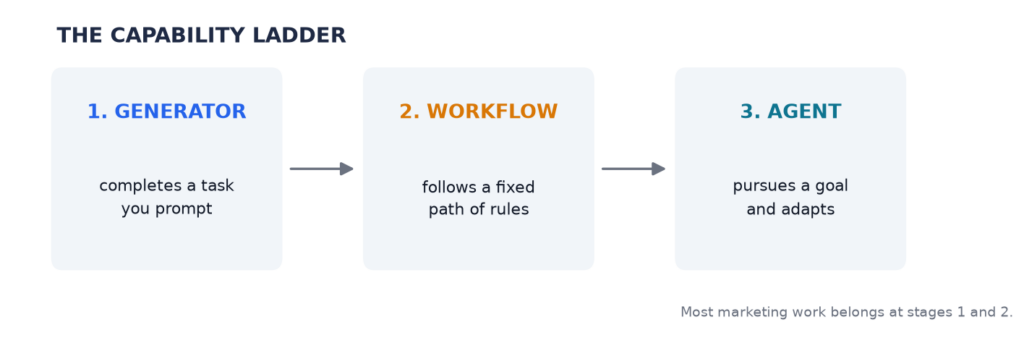
An AI agent is a system that receives a goal, breaks it into steps, calls tools and data on its own, checks whether the result matches the goal, and repeats until it does or a rule stops it. That definition matters because it separates two very different products. A generator waits for your prompt. An agent takes a shift.
You have already seen the difference in your own calendar. Someone opens a chat window, asks for ten headline options, picks one, pastes it into the ad platform, waits three days, exports a report. Nobody involved is doing anything wrong. The loop is just slow, and every handoff quietly loses context. An agent collapses those handoffs. It reads the brief, drafts the variants, pushes them live inside the guardrails you set, watches early performance, kills the weak ones, and writes the summary you would have written.
The catch: everything the loop touches must be machine-readable, permissioned, and bounded. Otherwise you have not hired an operator. You have automated your mess.
2. Why 2026 is the year the conversation changed
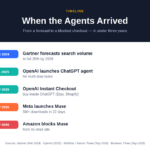
Three signals arrived in the same window, and they do not tell the same story. That tension is the actual market condition.
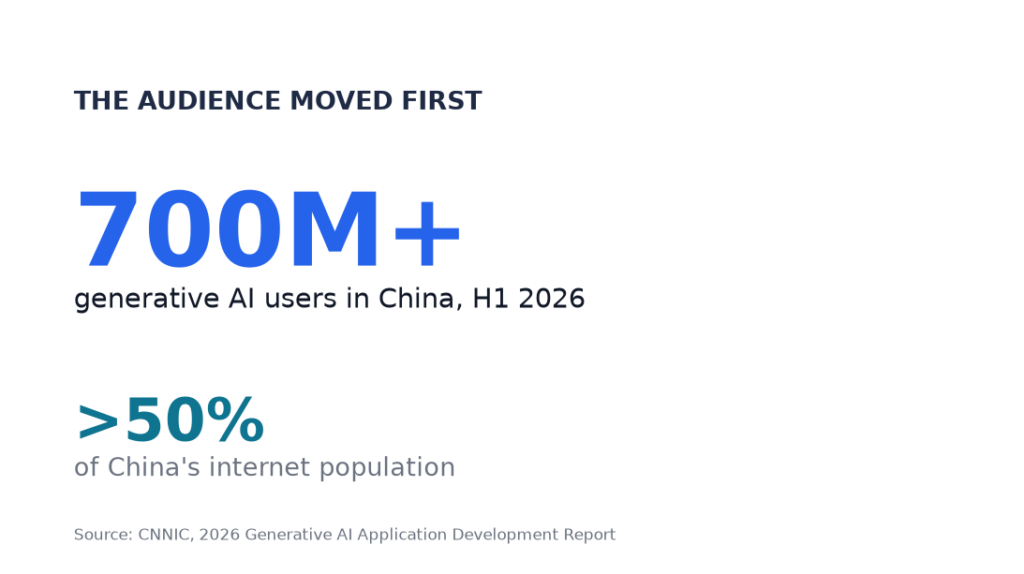
The audience moved first. In China, the China Internet Network Information Center reported in its 2026 Generative AI Application Development Report, released on 29 September, that the country had more than 700 million generative AI users in the first half of 2026, with penetration above 50 percent. Half the online population is now fluent in asking a machine for an answer, a recommendation, or a plan. Discovery behaviour changed before most marketing workflows did.
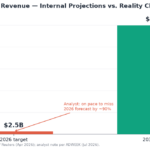
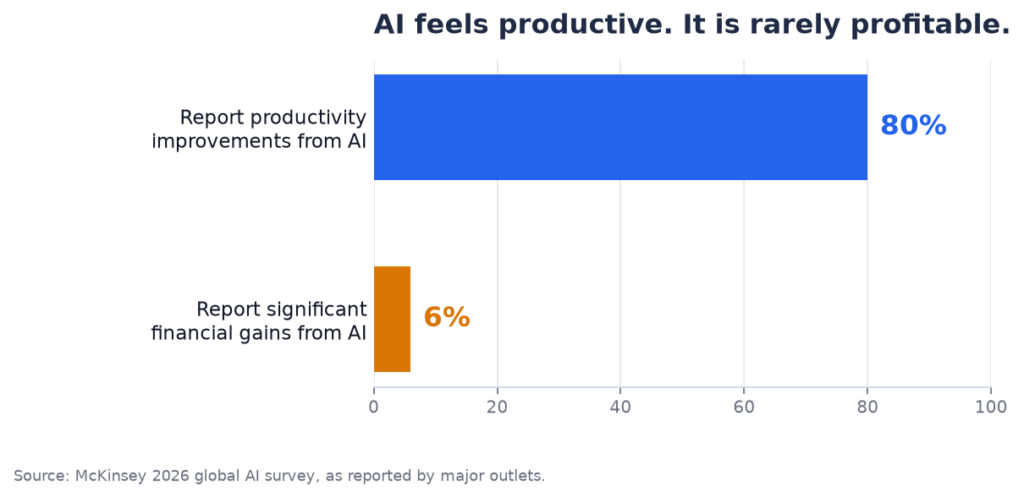
The productivity gain is real and the profit gain is not. A 2026 McKinsey global AI survey, as reported by major outlets, found that roughly 80 percent of companies report productivity improvements from AI, while only about 6 percent report significant financial gains. Read those numbers together: the tooling works, the value capture does not. That is a management problem wearing a technology costume.
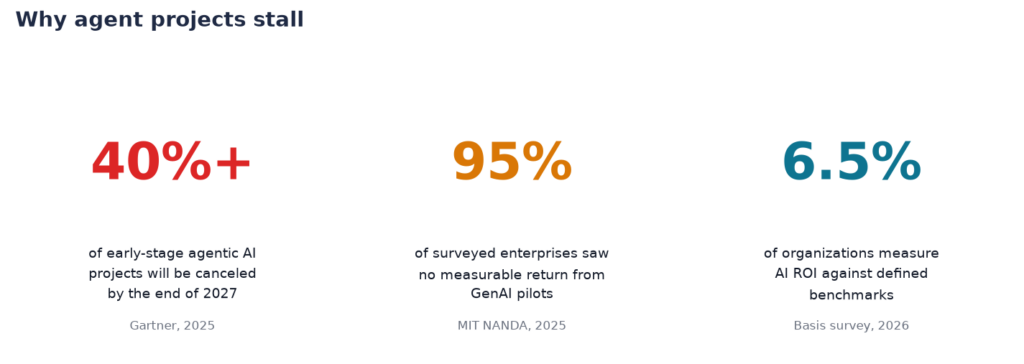
The failure rate is the headline nobody wants to print. Gartner expects more than 40 percent of agentic AI projects to be scrapped by the end of 2027, a forecast that applies specifically to proof-of-concept and early-stage initiatives. Earlier, an MIT NANDA study, “The GenAI Divide”, found that about 95 percent of surveyed enterprises had not yet seen a measurable return from their generative AI investments.
So: near-total experimentation, thin measurable return, high cancellation rates. If that sounds like a contradiction, it is. Agents are not a switch. They are an operating model change sold as a subscription.
3. The capability ladder
Most vendor decks blur three stages into one word. Splitting them apart is the fastest way to buy the right thing.
| Dimension | Stage 1: Generator | Stage 2: Workflow | Stage 3: Agent |
|---|---|---|---|
| Unit of work | A task | A sequence | A goal |
| Who decides the next step | Human | Predefined rules | The system |
| Input it needs | A prompt | Structured fields | Tools, data, permissions |
| Typical output | Draft copy, image, summary | Scheduled report, triggered email | Completed outcome |
| Failure mode | Generic, off-brand text | Brittle automation that breaks at edge cases | Compounding error, uncontrolled spend |
| Who is accountable | The person prompting | The process owner | The system owner, legally the brand |
The ladder is not a maturity contest. Plenty of marketing work should stay at stage one forever. Naming conventions, tone guidelines, and high-stakes brand films are judgment problems, and judgment is not a workflow.
4. What agents actually change inside the stack
Four things shift, and each one moves a different budget line.
The brief becomes a specification. Instead of a document a human interprets, the brief turns into constraints: allowed claims, required disclosures, banned comparisons, target audience segments, spend ceiling, escalation triggers. Vague briefs used to be survivable. With an agent, a vague brief is a bug.
Quality control becomes statistical. You stop reading every asset and start sampling, watching rejection rates, and auditing the tail. A media planner who reviewed fifty creatives cannot review five thousand. Sampling design is now a marketing skill.
Metadata becomes infrastructure. Product facts, price logic, legal claims, asset rights, region rules. If the product catalogue is messy, an agent will confidently produce five thousand wrong ads at industrial speed. Agent quality is downstream of taxonomy quality.
Media buying moves up a level. Bid and budget tactics get absorbed. The human work becomes setting the constraint envelope: what counts as a good outcome, how much risk is acceptable, which audiences are off limits, when to stop.
5. Four families of marketing agents worth naming
These are capability categories, not product recommendations. Each has a different risk profile, which is why they should never be procured as one bundle.
Insight agents read reviews, support tickets, social threads, search queries, and competitor moves, then cluster demand into themes and objections. The risk is false consensus: a fluent summary that sounds like research. Keep raw evidence attached and force the agent to show the sentences it counted.
Content agents turn a brief into variants, adapt one idea across formats and languages, and assemble the first cut of a landing page. Their weakness is sameness. When everyone optimizes against the same model, the output converges, and convergence is the opposite of distinctiveness.
Distribution agents sequence channels, adjust pacing, and increasingly handle a new job: making the brand legible to answer engines. Search is fragmenting into conversational surfaces, so visibility now depends on being quoted accurately, not just ranked. Consumer trust still runs through people. An IAB global study of 2,200 shoppers who had used AI for shopping research found that 65 percent said credible creator reviews made them more confident in AI-generated recommendations, 56 percent preferred AI suggestions that included a creator’s perspective, and 52 percent trusted everyday consumers over professional reviewers at 43 percent. An agent cannot manufacture that credibility. It can only route around it.
Attribution agents reconcile spend against outcomes, run incrementality checks, and rebuild reporting when platform-reported numbers conflict. Their trap is self-serving logic: an agent that optimizes the metric it also reports will look brilliant and tell you nothing. Holdouts and pre-registered definitions are the antidote.
A China note. Chinese marketing runs through closed loops inside super-apps, where creative, targeting, transaction and measurement sit in a single walled garden. That makes closed-loop optimization easier for an agent and cross-platform truth harder, because each platform reports its own version of success. Foreign teams studying China should read it as an integrated-loop model, not as a set of separate ad networks.
6. The unglamorous bottleneck: data readiness
Ask five people in the same company what a “qualified lead” is and you will get four answers and one spreadsheet. That is the real reason agent projects die.
Five conditions separate teams that ship from teams that stall. One shared definition of customer and conversion. Structured product and pricing content the machine can read. Clear permissions with an audit trail of every action taken. A clean feedback signal, meaning an agreed definition of success that arrives within the decision window. And a named owner who is accountable when the agent is wrong. Notice that none of these are model problems. All of them are bookkeeping problems, and bookkeeping is where the 6 percent comes from.
Before you buy anything, run this pre-flight checklist. If you answer no to any of these, fix the process first.
- Can you define your core conversion event in one sentence that everyone accepts?
- Is your product, pricing and claims data stored somewhere structured and up to date?
- Can you show, on request, exactly who changed an asset and why?
- Do you get a reliable success signal fast enough to act on it, or only at month-end?
- Is there one person whose job it is to answer for what the agent does?
7. Where autonomy breaks
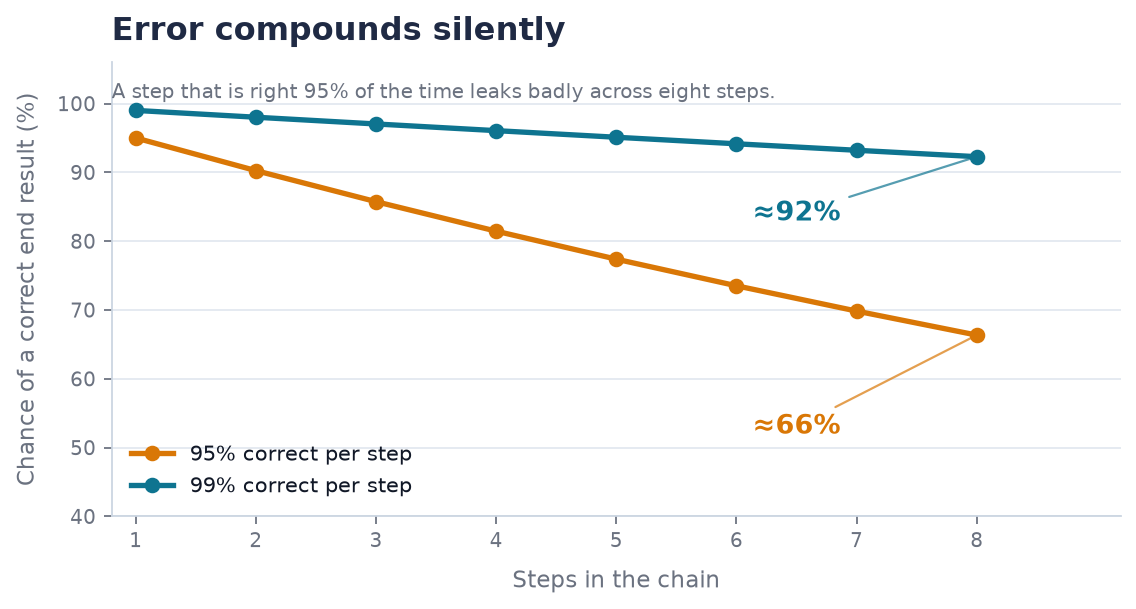
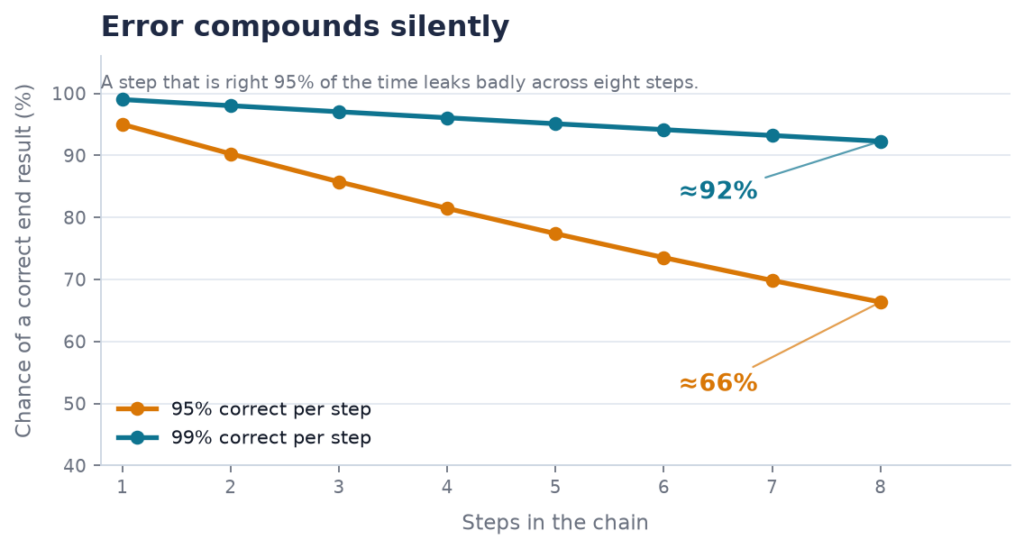
Error compounds silently. A step that is right 95 percent of the time looks excellent in a demo. Chain eight of them and the odds of an untouched correct outcome fall to roughly 66 percent. Raise accuracy to 99 percent per step and the chain still leaks about 8 percent. Agents fail not with a bang but with a plausible-looking deck.
Brand drift is structural, not cultural. Agents optimize what you measure. If you measure clicks, you get clickbait, delivered on brand colours. Guardrails have to name the unmeasurable things: the joke we do not make, the claim we cannot support, the tone we never use.
Cost arrives later than the demo. Per-token prices keep falling while the total cost of running a long agent chain rises, because agents run retries, tool calls and failed branches. Budget for the workflow, not the token.
Oversight capacity is the binding constraint. Dataiku and Harris Poll’s 2026 Global AI Reality Report, which surveyed 685 CIOs across eight countries in July 2026, found that 84 percent said employees were building AI agents and applications faster than their IT organisations could manage them. Agents create permissions, integrations and incident paths that most marketing departments have no way to staff.
Measurement lags deployment. A vendor-sponsored industry survey published in 2026 by Basis found more than half of organisations had begun using AI agents, while just 6.5 percent measured AI return against defined benchmarks. Treat that figure as directional, not audited: it tells you the scoreboard is missing, not the exact size of the gap.
8. Three red lines for human review
Draw them before procurement, not after an incident.
Strategy and money. Which markets, which audiences, which trade-offs, how much to spend against brand versus performance. An agent can model these choices. It should not make them.
Creative judgment and cultural nuance. Agents can produce range. Humans decide which of the range is worth saying out loud, especially across languages and subcultures where a literal translation is a reputational event.
Risk, legal and disclosure. In the United States, the IAB’s 2026 Transparency and Disclosure Framework places ultimate responsibility for AI disclosure on the advertiser, even when a platform applies the label, and states that this accountability cannot be delegated. It also warns about “label fatigue”, where audiences stop noticing disclosures altogether. When an agent generates and ships creative, the disclosure question becomes a systems question: where in the pipeline is the label attached, and who signs off.
A practical way to encode this is a four-level autonomy scale borrowed from driving. Level one: the agent suggests, a human executes. Level two: the agent executes, a human approves each action. Level three: the agent executes within limits, a human audits samples. Level four: the agent executes unsupervised, with a kill switch and a monitored exception queue. Most marketing use cases belong at level two or three for a long time. Level four is for reconciliation, tagging, and reporting, where errors are cheap and reversible.
9. A 90-day starting path
Days 1 to 14: choose a loop with cheap failure and clean data. Weekly reporting reconciliation. Creative variant production for one format. Search-query-to-brief conversion. Avoid anything touching pricing, legal claims, or crisis response.
Days 15 to 30: write the specification. Goal, allowed tools, data sources, stop rules, spend ceiling, escalation triggers, and the exact human review gate. If you cannot write this in two pages, the process is not ready.
Days 31 to 60: run it in shadow mode. The agent does the work, a human ships the output, and you compare against your current baseline. Measure cycle time, rework rate and rejection rate, not vibes.
Days 61 to 90: grant narrow autonomy. One workflow, one channel, capped budget, sampled audits, a kill switch someone has actually tested. Then run a holdout to see whether the gain is incremental or just better-attributed.
And when you evaluate vendors, ask five questions that separate operators from slideware. What does the agent do when the data is missing? Where is the audit log, and can I export it? What is the per-workflow cost at my volume, not the per-token price? How do you prevent metric gaming, and can I run a holdout? Who is legally accountable for the output, and does your contract say so?
10. What to measure
Split the scorecard in two, because leading and lagging indicators answer different questions.
Leading indicators tell you whether the system is healthy: cycle time from brief to live asset, human minutes per task, rework and rejection rate, escalation rate, cost per usable output, percentage of actions taken without a required approval, which should be zero.
Lagging indicators tell you whether it mattered: incremental revenue against a holdout, brand lift, share of voice inside AI-generated answers, retention by cohort, margin after production and media costs.
The number most teams forget is the error rate that got caught. An agent that fails loudly and often, with humans catching it, is safer than one that fails quietly and never gets flagged. Track escalations as a feature, not an embarrassment.
11. The 2027 view
Three shifts look likely from here, and none of them are about better models.
Software pricing moves from seats to outcomes. If autonomous systems become the primary users of business applications, vendors have to charge for work completed rather than for licences held.
Agents become an audience. Buying decisions increasingly start inside an assistant, which means brands will spend on being accurately represented in machine answers the same way they once spent on being ranked. Verifiable facts, consistent entity data, and quotable claims turn into media assets.
The marketing org chart gets flatter and more editorial. Fewer people produce first drafts. More people own systems, constraints, and taste. The scarce skills become specification writing, sampling-based quality control, and incrementality design. None of those appear in a prompt library.
12. Conclusion
Agents are not a bigger text box. They are a transfer of decision rights from people to software, and transfers of that kind need contracts, limits and receipts. The teams that win the next two years will not be the ones with the most autonomous tools. They will be the ones who can answer, in one sentence, what their agent is allowed to do, what it costs when it runs, and who is accountable when it is wrong.
Summary
The capability is real, the adoption is broad, and the measured return is thin. Agents collapse the handoffs between insight, production, distribution and measurement, which is genuinely new. But they inherit every flaw in your data, your briefs and your definitions of success, and they inherit them at machine speed. Keep humans in command of strategy, creative judgment and disclosure. Start with one loop, run it in shadow mode, cap the budget, test for incrementality, and treat the audit log as a product feature. The point is not to remove people from the loop. The point is to remove the waiting.
FAQ
Are AI agents going to replace marketing jobs?
Not in the way the headlines suggest. They remove coordination work: chasing approvals, reformatting assets, reconciling numbers. The roles that grow are specification writers, quality auditors, and systems owners. The roles that shrink are pure production and manual reporting. If your job is mostly moving files between tools, that is the part at risk.
Do agents work differently in China’s platform ecosystem?
Yes, mainly in where the data lives. Chinese marketing runs through closed loops inside super-apps, where creative, targeting, transaction and measurement sit in one place. That makes closed-loop optimization easier for agents and makes cross-platform truth harder, because each walled garden reports its own version of success.
How is an agent different from the automation I already have?
Automation follows a path you defined in advance. An agent chooses the path. If a step fails, rules-based automation stops and pings someone. An agent tries another route, which is useful when the environment changes and dangerous when the guardrails are vague.
What is the smallest useful first agent?
One that reconciles something. Pick a weekly report that two systems disagree about, give the agent read access to both, require it to explain each discrepancy in plain language, and have a human sign off. It is low-risk, it exposes data quality immediately, and it saves real hours. Content agents come later, once your facts are clean.
How do I stop an agent from damaging brand or budget?
Four controls, all boring: a hard spend ceiling enforced outside the model, a mandatory approval gate on anything with legal or regulatory surface, sampled human audits with a rejection log, and a kill switch that has been tested in a drill. Add a disclosure rule that names who attaches the label and who signs the final creative.