SoMark’s OXR-1.0: A 1.3B Model That Beat Gemini 3 Pro at Parsing Documents
A 1.3B Open Model Topped Document-Parsing Benchmarks by Learning From Its Own Mistakes
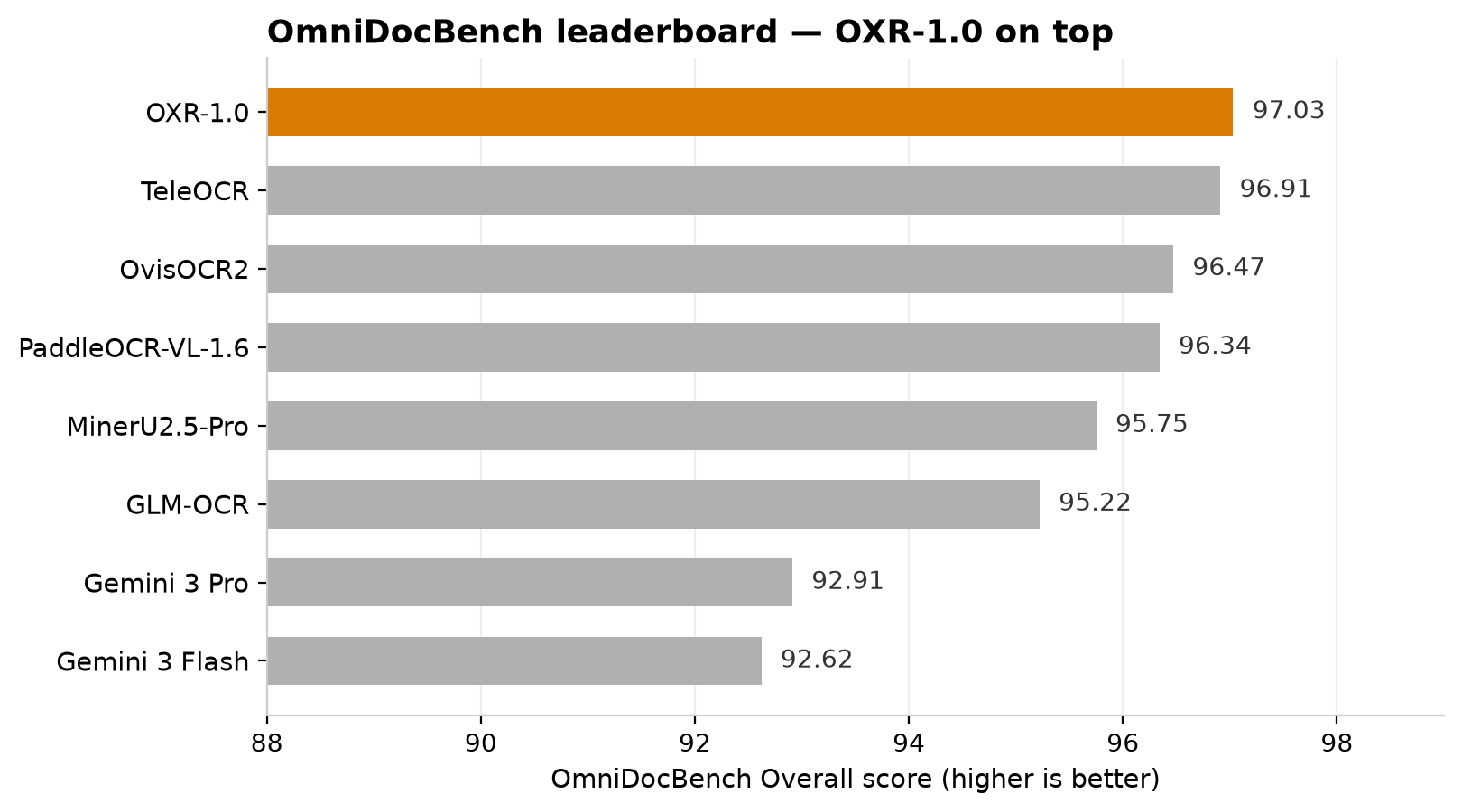
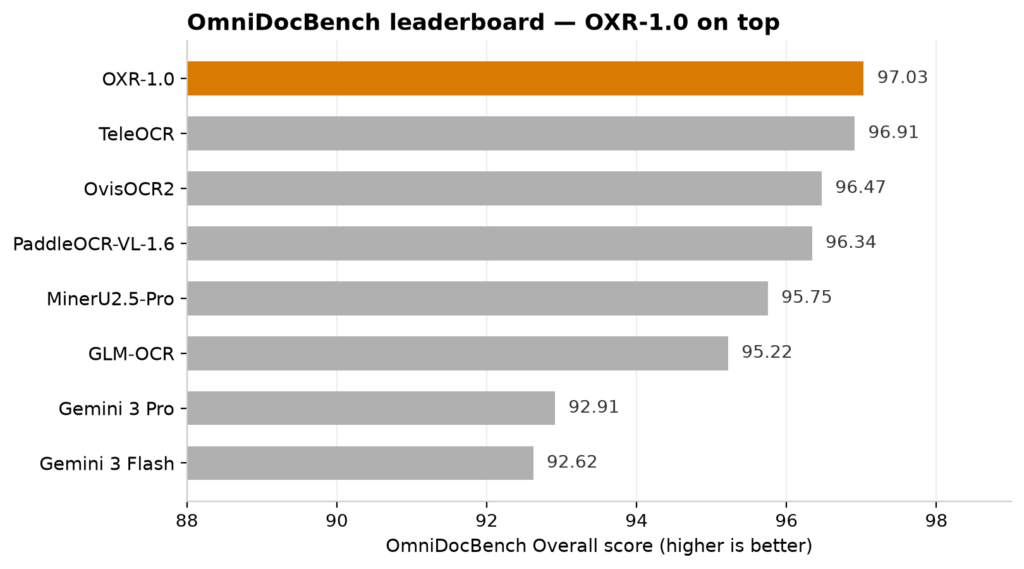
Some of the quietest AI progress right now is happening far from the frontier labs. SoMark, a small company focused on document AI, has released OXR-1.0: a 1.3-billion-parameter, open-weight model that converts PDFs and document images into structured Markdown and JSON. By SoMark’s own reporting, it ranks first on three benchmarks — 97.18 on OmniDocBench, 87.84 on olmOCR-Bench, and 87.76 on DocParsingBench.
The OmniDocBench claim is independently corroborated, at least. The public leaderboard maintained alongside that CVPR 2025 benchmark lists OXR-1.0 at the top.
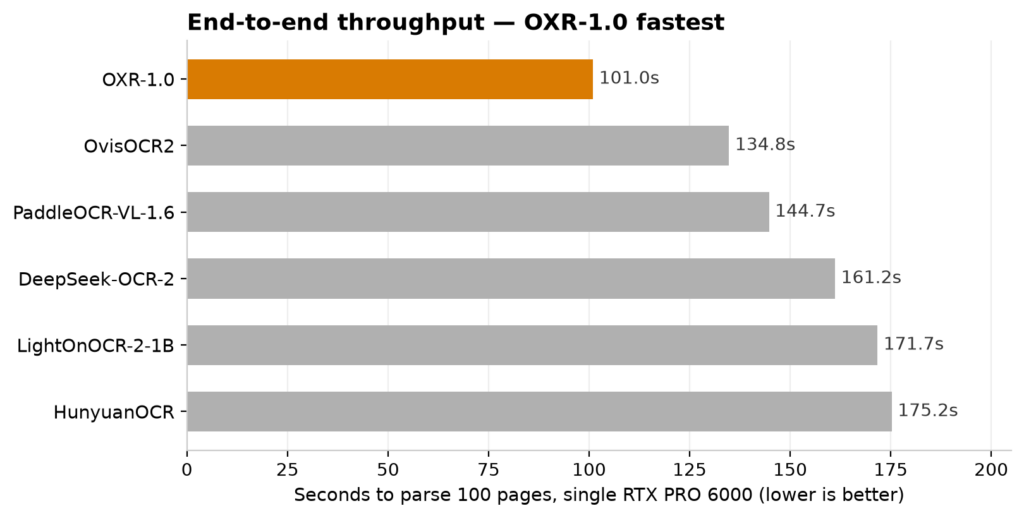
The model’s size is the real story. Parsing 100 mixed document pages end to end took about 101 seconds on a single RTX PRO 6000 workstation GPU — the fastest of the 21 open implementations SoMark tested. It recognizes 13 element types in one pass, from tables, formulas, and code blocks to chemical equations, chemical structures, seals, footnotes, and headers.
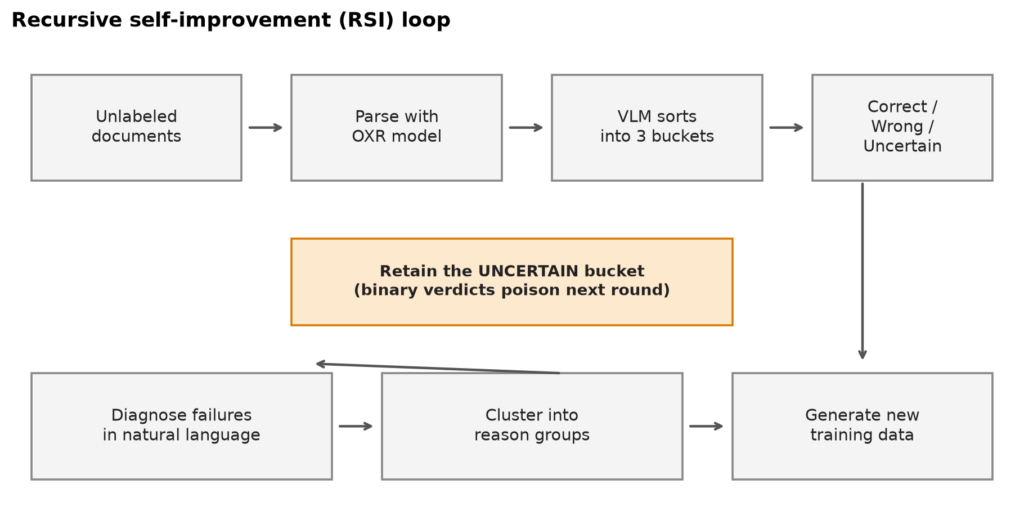
The training method deserves more attention than the scores. During post-training, OXR ran a recursive self-improvement loop rather than commissioning more human annotation. Unlabeled documents are parsed, and a general vision-language model sorts the output into three buckets: correct, wrong, and uncertain. The non-obvious choice is keeping the uncertain bucket. Forcing a binary verdict turns a model’s hesitation into a confident — and possibly wrong — label, which then poisons the next training round.
Failures are handled the same way. Bad and unstable parses are diagnosed in natural language, clustered into recurring “reason groups,” and used to generate targeted new data — with layout styles sampled from real documents and known visual fragilities deliberately reintroduced.
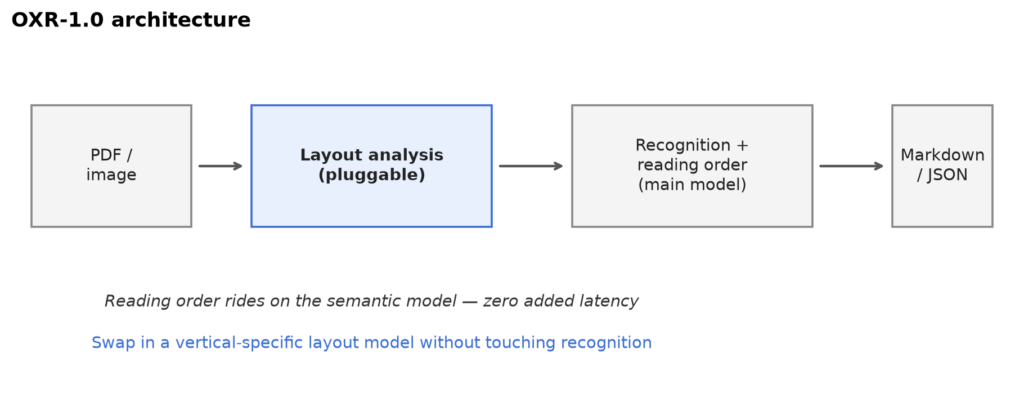
Architecturally, the pipeline splits into a pluggable layout-analysis module plus recognition and reading order inside the main model. Reading order costs nothing extra because it rides on a model that already understands the page. And because layout analysis varies the most across domains, teams can swap in their own layout model without touching recognition — a real advantage for legal, medical, or financial pipelines.
Why this matters goes well beyond OCR. Retrieval quality has been capped by PDF extraction for as long as RAG has existed: poor extraction feeds confident, wrong answers downstream. A model this accurate at this size runs on a single workstation GPU, and a free hosted endpoint removes the cost barrier for anyone who wants to try it.
The deeper point is methodological. Recursive self-improvement works when a task has objectively checkable ground truth — which is exactly why document parsing succeeded where open-ended generation has not. Whether the recipe transfers to tasks with no verifiable answer remains the open question.
The one caveat to keep in the copy: the comparison figures are self-reported, and no technical report has been published yet. The evaluation code and weights ship with the release, so independent reproduction — especially on non-Latin and historical documents — is the test that matters next.