Brands Begin Budgeting to Be “Correctly Interpreted” by AI
Brands Begin Budgeting to Be “Correctly Interpreted” by AI
For most of the digital advertising era, a brand’s job on search was simple: get found. Buy the keyword, rank the page, win the click. Through 2026, a growing number of larger advertisers began funding something quieter and harder to measure — not just appearing in front of an answer engine, but being described correctly by it.
The new line item
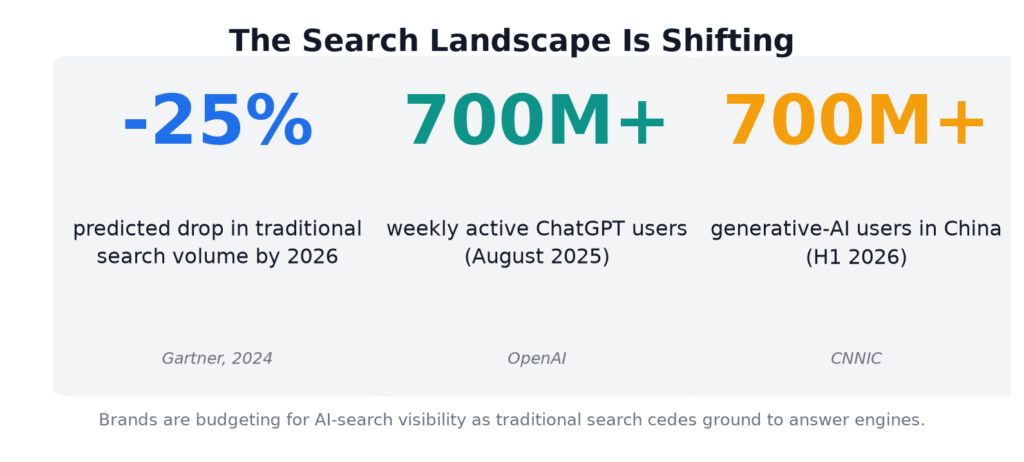
The shift has a clear early timestamp. In June 2024, Gartner predicted that traditional search-engine volume would drop 25 percent by 2026, with search marketing losing share to AI chatbots and virtual agents. The warning has since become a planning assumption. When the destination stops being a ranked list of blue links and becomes a single synthesized paragraph, visibility and accuracy collapse into a single problem: a brand can be found and still be wrong.
The scale of the audience now in play is hard to ignore. OpenAI reported more than 700 million weekly active users for ChatGPT as of August 2025, and China’s generative-AI user base passed 700 million in the first half of 2026. That is why, across 2026, AI-search visibility and accurate AI representation moved out of the experimental sandbox and onto the budget sheet as standing line items. Paid search and SEO now have a sibling, and it carries a name of its own: generative engine optimization, a discipline first formalized in a 2023 academic paper out of Princeton.
Watching the model, not the results page
The second change is operational. A new class of monitoring tools now tracks, on an ongoing basis, what ChatGPT, Google Gemini, Claude, Perplexity, Copilot and similar assistants actually say about a brand, a product, or a category — the way reputation platforms once tracked mentions across news and social feeds.
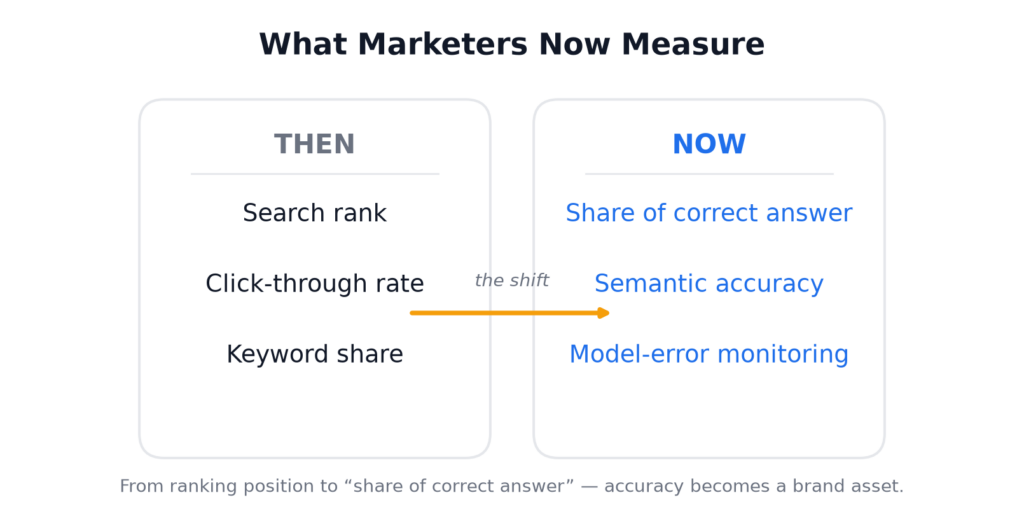
The unit of measurement is shifting with them. Ranking position and click-through rate are giving way to something closer to “share of correct answer.” A company that appears in an AI response but is described with an outdated claim, a wrong price, or a rival’s framing carries a new kind of exposure: the error sits invisible until someone goes looking for it.
The Chinese market runs the same experiment, faster
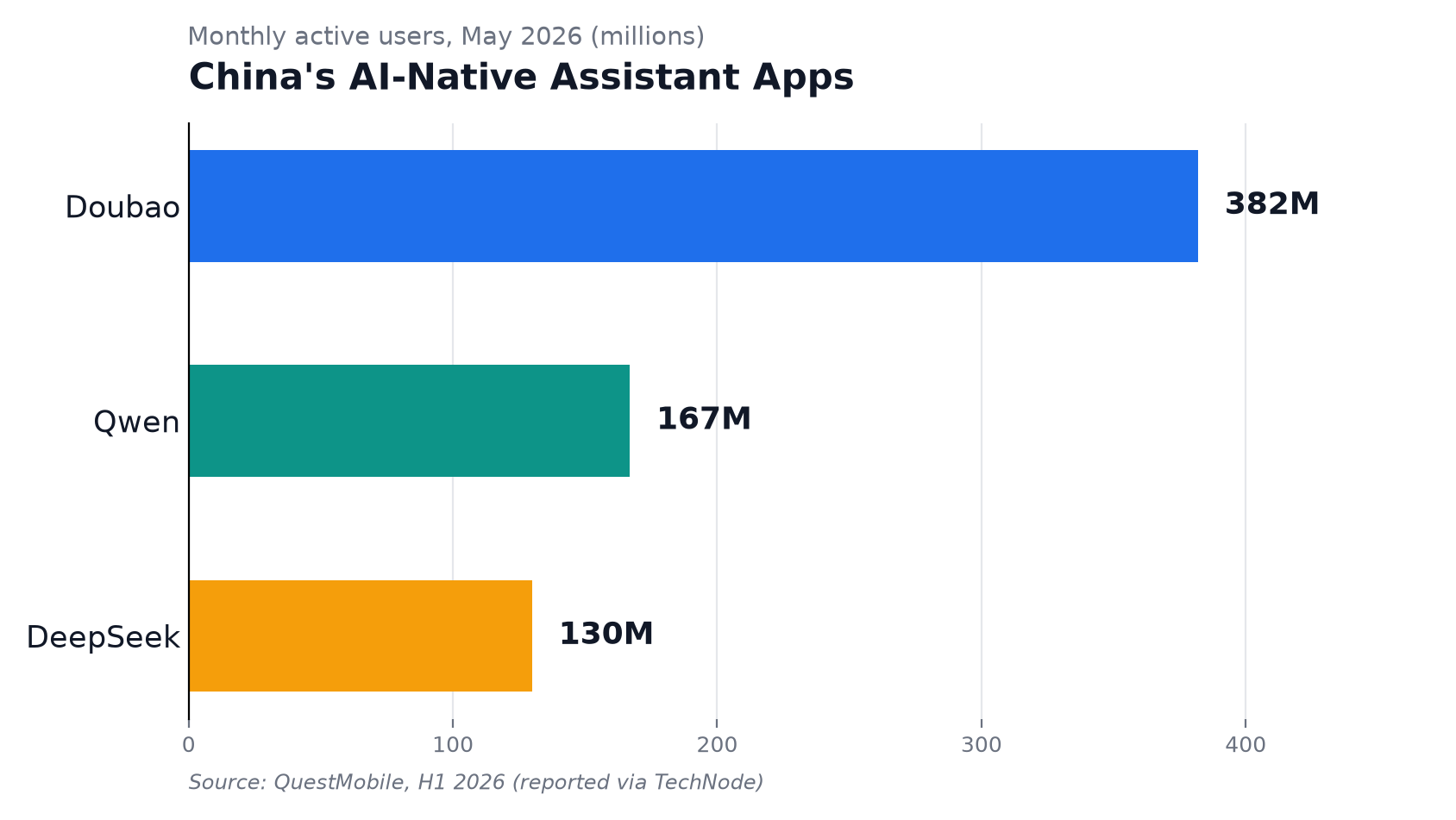
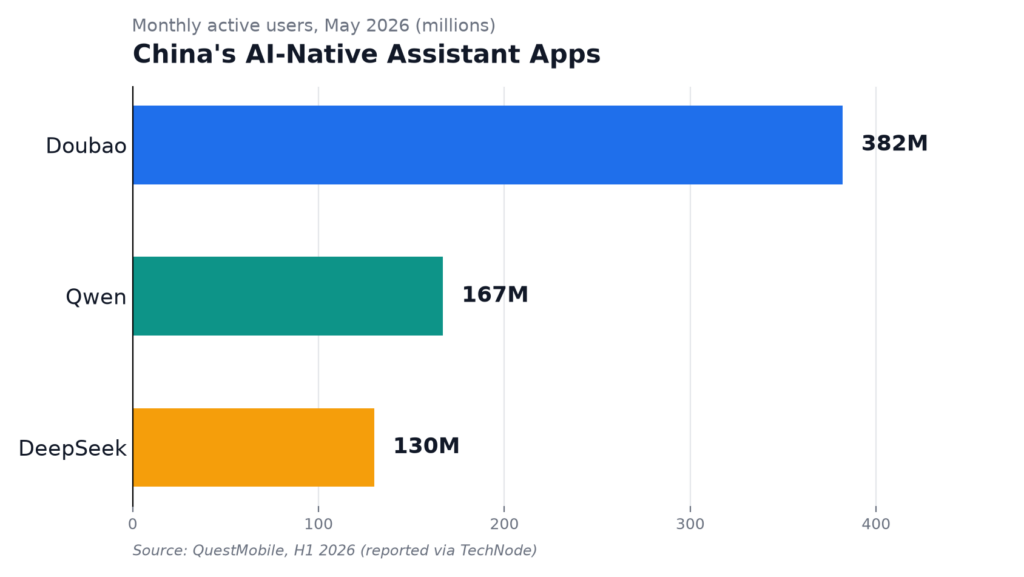
The trend is running in parallel on both sides of the Pacific, and China offers the clearest read on where it is headed. In the first half of 2026, China’s AI-native assistant apps reached 499 million monthly active users, led by ByteDance’s Doubao at 382 million, followed by Qwen at 167 million and DeepSeek at 130 million. With that many people asking questions to a model instead of a results page, brands face the same question in a different wrapper: whether the assistant they cannot see is describing them the way they would describe themselves.
Brand safety, reframed
Here is the reframing. Traditional brand safety asked whether an ad appeared next to harmful or off-brand content. Answer-engine brand safety asks a stranger question: does the model describe the company accurately when no human is watching — and does a hallucinated fact, a stale figure, or an omitted attribute quietly reshape demand?
The goal, as practitioners now put it, is no longer merely to be cited. It is to be correctly interpreted. Global companies with China operations are folding AI-answer accuracy into the same reputation playbooks they use for Western assistants, treating “what the model says” as a market-visible fact rather than a technical footnote.
For marketers, the practical consequence is a budget line and a discipline that did not exist two years ago: monitor the answers, correct the model’s inputs, and treat accurate representation as a brand asset with a price. Reputation management, in the answer-engine era, now includes the conversation no human is present to hear.