Search Is Shrinking by 25%. China Shows What Comes Next.
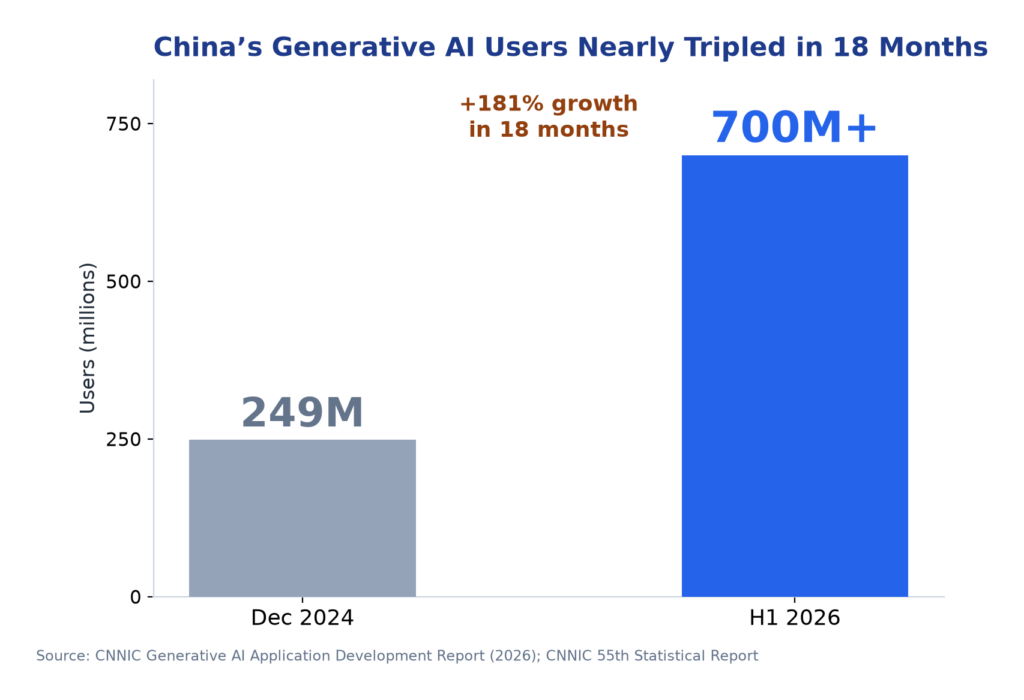
Sometime in the first half of 2026, China crossed a quiet threshold. The number of people using generative AI passed 700 million — more than half of the country’s internet population. What made the moment matter wasn’t just the scale. It was the behavior.
Most of those users are not writing essays or generating images. They are asking a question and taking the answer. For anyone who earns a living on search visibility, that habit changes the game. Generative engine optimization — getting your brand cited inside AI answers — has stopped being a forward-looking experiment. In China, it is now a required capability, the way search engine optimization was two decades ago. And China, as it usually does, is simply showing the rest of the world where discovery is headed.
The number that changed everything
China’s internet population is roughly 1.1 billion people. The state-run China Internet Network Information Center, known as CNNIC, now counts more than 700 million of them as generative AI users, pushing penetration past the 50 percent mark. That is not an early-adopter niche. That is the mainstream.
What should worry marketers who still treat AI visibility as a side project is the speed. CNNIC put the figure at 249 million as recently as December 2024. In about eighteen months, the user base grew by roughly 181 percent — nearly tripling. Growth like that does not wait for brands to catch up.
The same report found that intelligent question-and-answer is now the single most common way people use these tools. Not writing, not image generation, not coding. Answering questions.
What 76 percent of them are actually doing
Here is the detail that turns a big headline number into a strategic problem. CNNIC’s data shows 76 percent of generative AI users say they use these tools to answer questions. That dwarfs every other use case: 47.8 percent process images or video, 37.6 percent work with text, and 32 percent turn to them for work summaries, meeting notes, or slides.
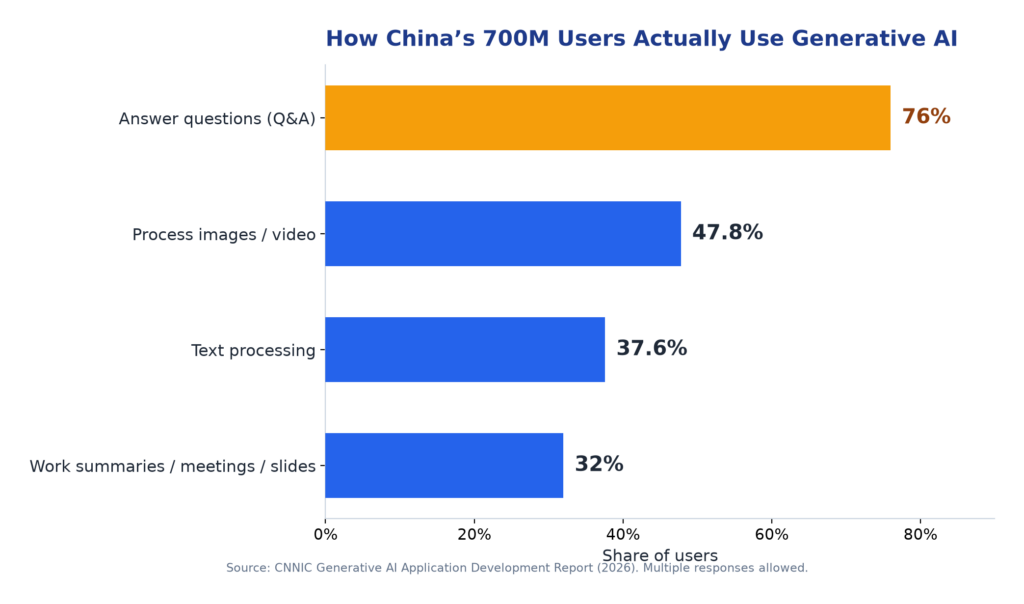
Think about what that means. For three out of four users, the tool functions as a direct-answer engine — a search box that returns one synthesized response instead of a page of blue links. There is no second query, no click-through to a website, no scanning results to compare sources. One question in, one answer out.
That is exactly the behavior that breaks the old search model. When 76 percent of users never go past the first answer, the entire fight moves to who gets named inside that answer. If your brand is not there, it effectively does not exist for those users.
The global benchmark: search is shrinking everywhere
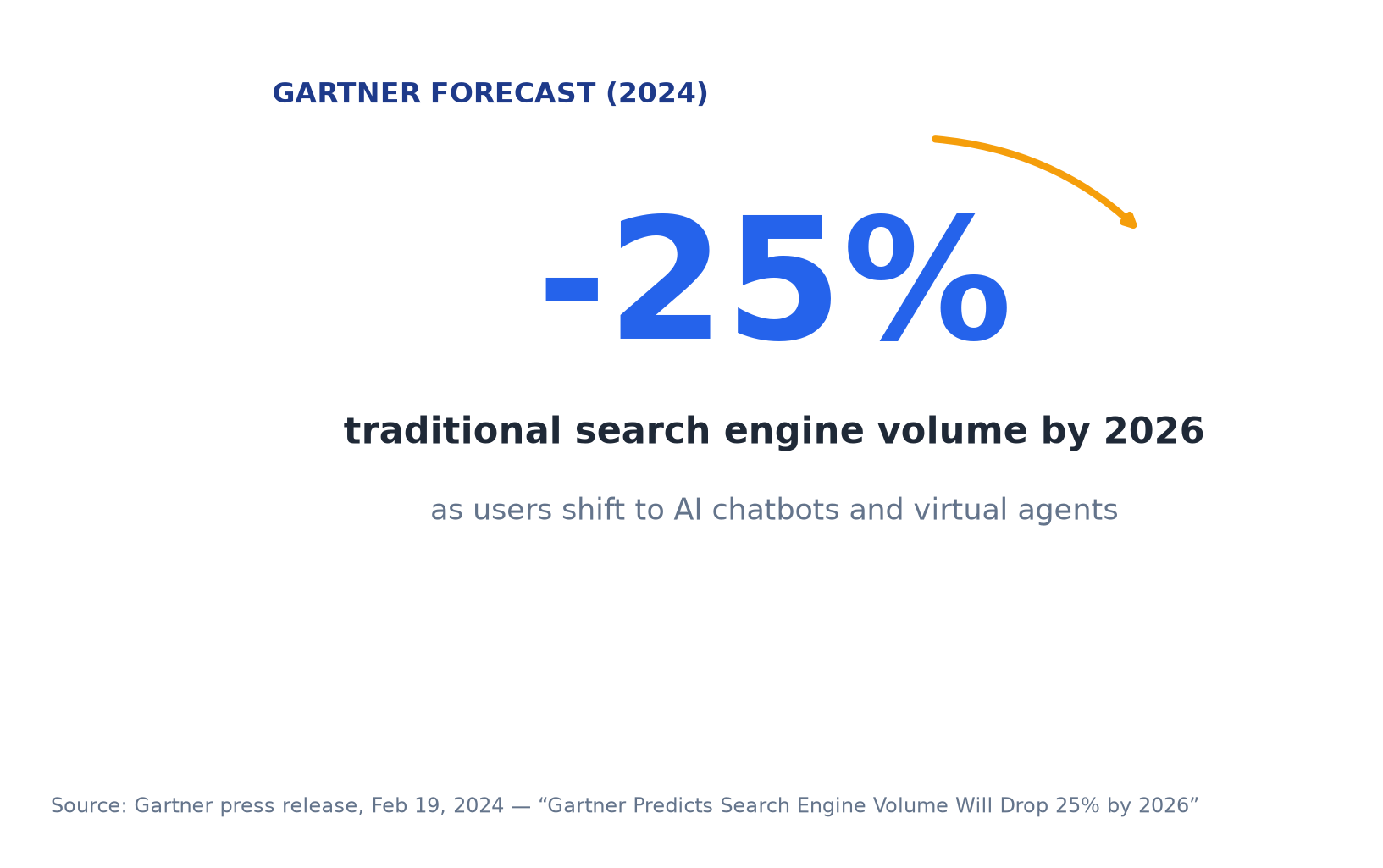
If you are tempted to dismiss this as a China-only quirk, the global forecast says otherwise. Gartner projected that traditional search engine volume will drop by 25 percent by 2026, with search marketing losing market share to AI chatbots and other virtual agents that answer questions directly. That prediction dates to early 2024 — before most Western marketers had even heard the term generative engine optimization.
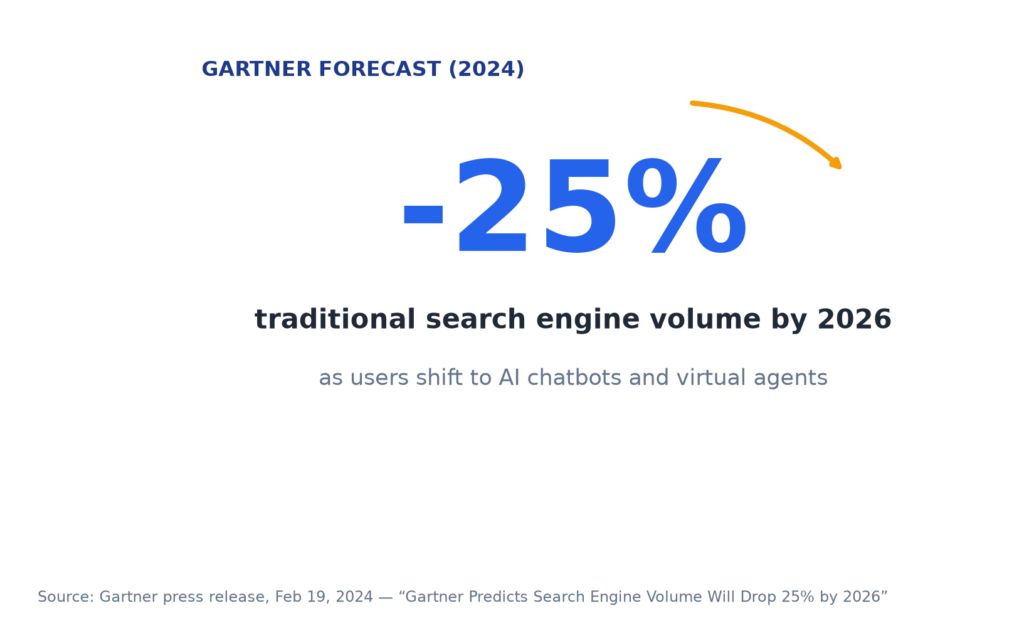
China is not an outlier. It is the leading edge. Its 700 million AI users are simply arriving first at a destination a quarter of the world’s search volume is already walking toward. What is mandatory in Beijing today is a preview of what will be mandatory in Berlin and Boston tomorrow.
The new rule: visibility means being cited, not indexed
For two decades, the playbook was simple: get indexed, rank high, earn the click. Visibility was a function of position on a results page, and every optimization tactic — keywords, backlinks, technical fixes — existed to move you up that page.
That playbook is now incomplete. In an AI-mediated discovery environment, the page of links is often skipped entirely. The new currency is citation: being named, quoted, or referenced in the answer an AI system generates. If a model does not see your content as authoritative enough to cite, your ranking on a search engine you are no longer in front of does not matter.
This is the quiet redefinition of visibility. It is no longer enough to be findable. You now have to be quotable — clear, structured, and backed by data a model can confidently attribute to you.
What this means for your brand
The implications are uncomfortable but straightforward.
First, budget follows behavior. Just as SEO once graduated from a technical afterthought to a standalone line item, generative engine optimization is being pulled out of the SEO umbrella and funded on its own. When the cost of being invisible to 700 million people is measured in lost market share, the line item pays for itself.
Second, content has to be built for citation. That means precise, verifiable statistics; direct answers to the questions people actually ask; and a clear structure an AI can parse and quote. Vague, keyword-stuffed prose that once gamed a search algorithm is now invisible to the systems deciding what gets answered.
Third, the window is closing. Every month your content is not citable inside AI answers is a month a competitor’s content is. And with three out of four users taking the first answer they get, there is no second chance to earn the click.
The bottom line
China just crossed a threshold that redefines what marketing visibility even means. More than 700 million people now ask AI directly instead of searching, three-quarters of them use it primarily to get answers, and a quarter of global search volume is on track to disappear. In that world, being indexed is no longer the same as being seen. The brands that win will be the ones that get cited. The ones that still treat GEO as optional will quietly stop being found at all.