Tencent’s AI Now Buys 30% of Its Ads — What That Means for Media Buying Everywhere
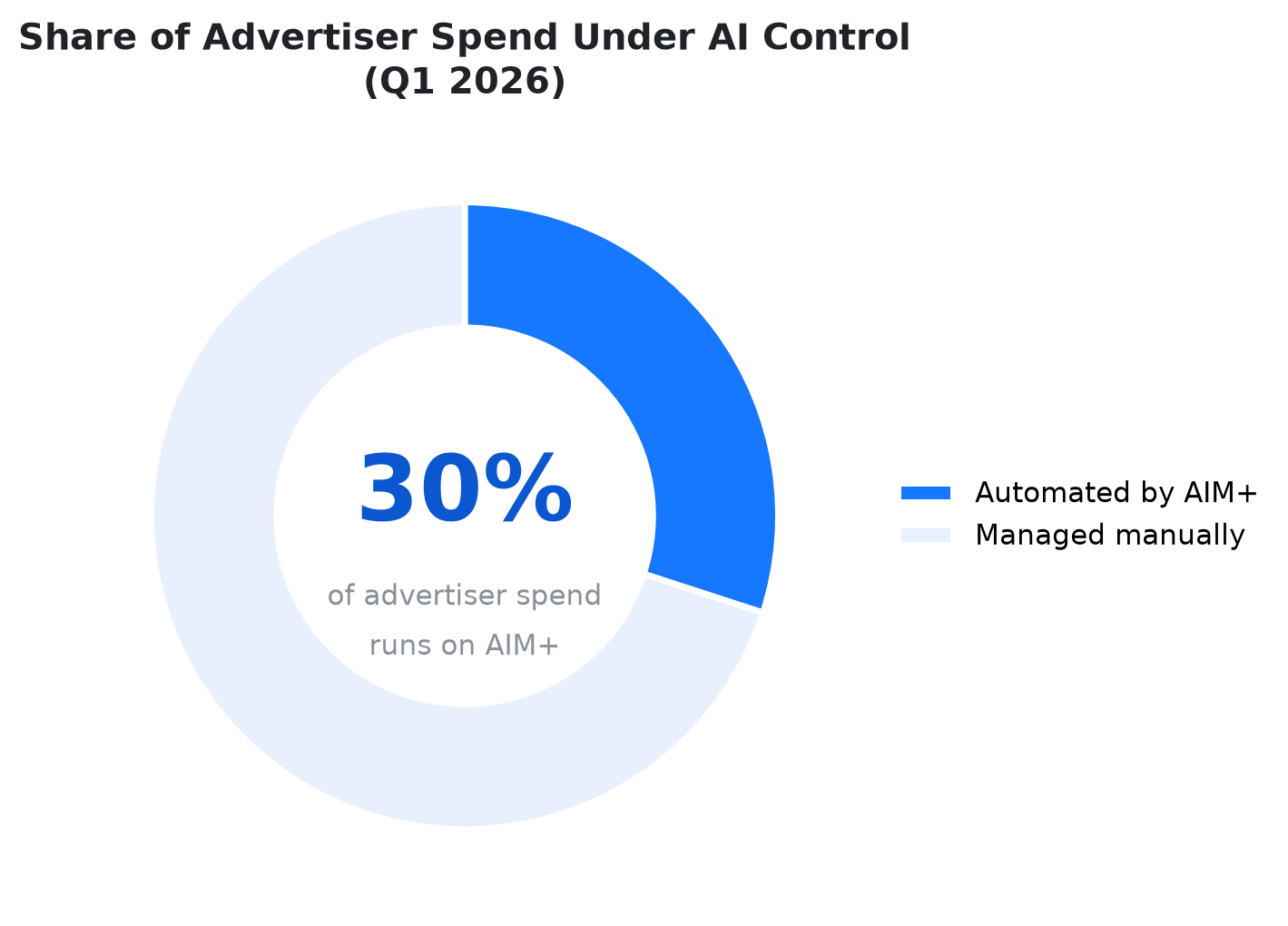
Tencent’s AIM+ Now Runs Roughly 30% of Advertiser Spend
Tencent’s marketing services business grew 20% year over year in the first quarter of 2026, reaching 38.2 billion RMB. That headline number, on its own, is not the interesting part. The interesting part is how the money behind it is now being spent.
An estimated 30% of advertiser budgets on Tencent’s platforms now flow through AIM+, the company’s AI-driven automated campaign suite. Advertisers set an objective, pick a scenario, and hand the rest to the system. Targeting, bidding, placement selection, and creative optimization all happen without a human touching the controls day to day.
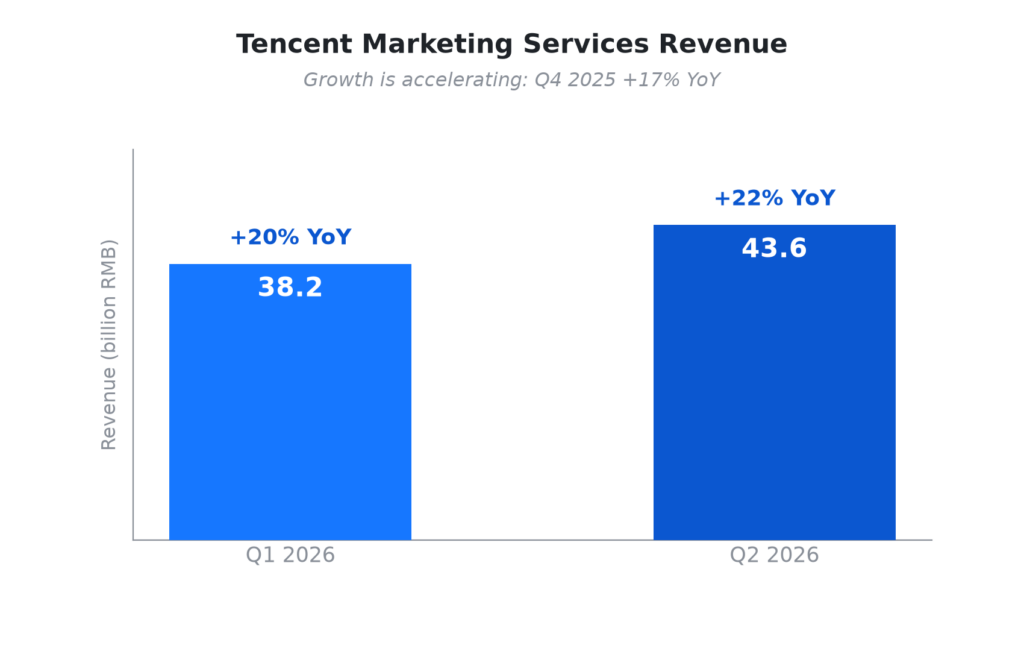
Marketing services is now Tencent’s fastest-growing major business line, accounting for roughly 19% of total revenue in the first quarter. The acceleration is real. The same segment grew 17% in the fourth quarter of 2025, then stepped up to 20% and 22% in the following two quarters. Three drivers sit behind the move: an upgraded AI recommendation model, WeChat’s expanding closed-loop marketing capability, and the rapid adoption of AIM+.
What AIM+ actually does
AIM+ launched in November 2025, announced alongside Tencent’s third-quarter earnings. The suite is built in three layers: scenario-based products, single-capability tools, and an underlying AI decision engine. An advertiser specifies the goal — a target return on ad spend, a volume target, a conversion event — and the machine makes the granular calls that used to belong to a media buyer.
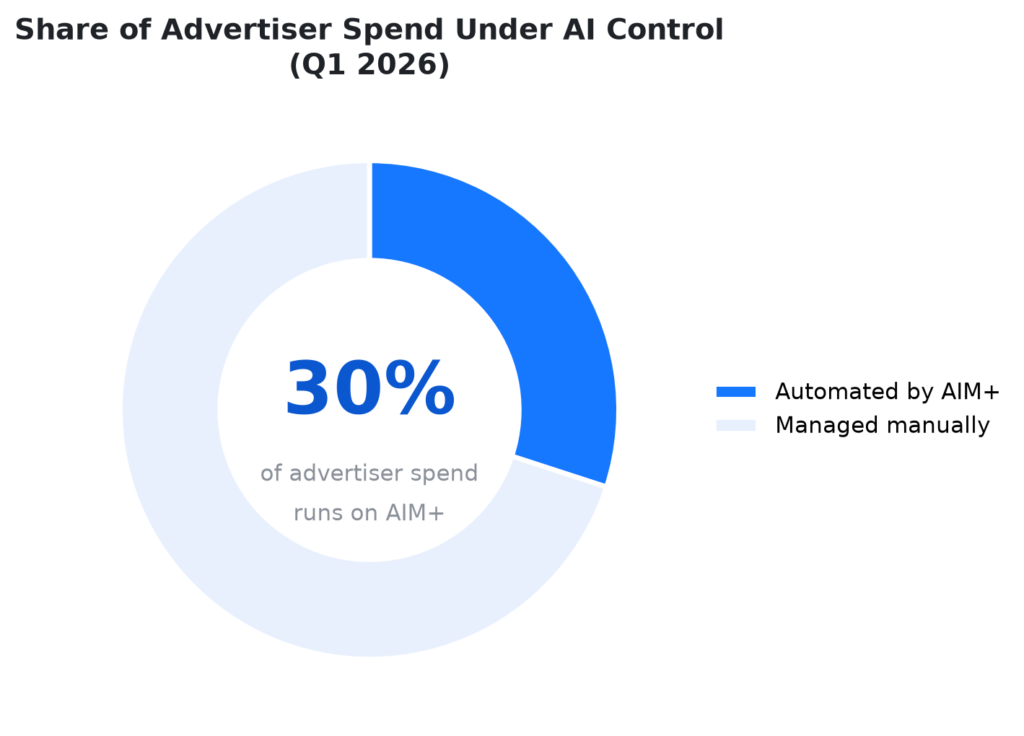
That is a real shift in the division of labor, not a cosmetic one. The traditional workflow was manual and repetitive: choose an audience, set a bid, pick placements, refresh creative, repeat. It spread across specialists and burned hours on tuning rather than thinking. AIM+ collapses most of that into automated routines. What stays with the human operator is the part that cannot yet be delegated: deciding what good looks like, setting the guardrails, and knowing when to step in.
The optimizer’s job is changing
The implication for the people who used to do this work is direct. The media buyer or ad optimizer is being pushed out of execution and into strategy and governance. Instead of pulling levers all day, the operator now writes the rules the machine follows and audits the results it produces.
This is the same direction Western platforms have been moving for years. Google’s Performance Max and Meta’s Advantage+ have steadily pushed advertisers toward systems that decide placements and bids on their behalf. What stands out about China’s case is the speed.
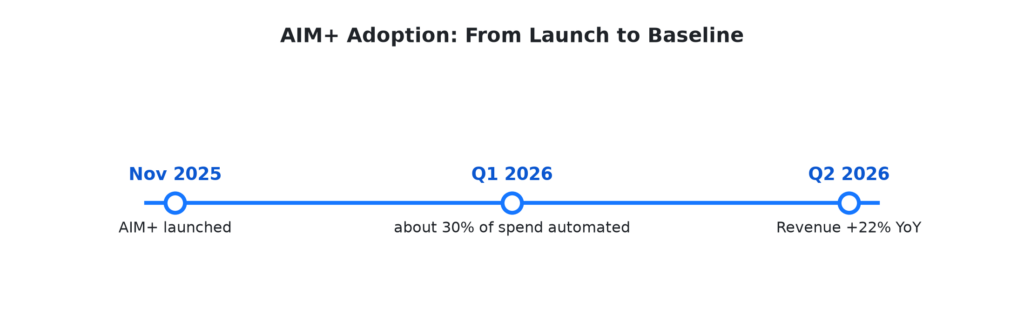
Tencent went from launching AIM+ to having it run roughly 30% of its advertising volume in about two quarters. By the second quarter of 2026, marketing services revenue had climbed to 43.6 billion RMB, up 22% year over year, with the company again crediting AI model optimization and the AIM+ suite as key contributors.
Why this matters outside China
For a foreign audience, the signal is worth watching for two reasons. First, it confirms that the largest platforms in the world’s biggest digital ad market no longer treat AI as a helper layered on top of human work. They treat it as the default way media is bought. Second, the pace of adoption suggests the bottleneck was never the technology. It was trust and product maturity. Once advertisers see an automated system reliably hit its targets, the switch happens fast.
The 30% figure is not a ceiling. Growth is accelerating into the second half of the year, and the automated share of spend is still climbing. What remains unclear — and worth watching — is whether the efficiency gains land as higher margins for the platforms or as better returns for advertisers. On Tencent’s own numbers, the cost side is already moving: AI-related depreciation and operating costs have begun to pressure gross margin even as revenue accelerates.
The takeaway
What automation is removing is the repetitive middle of media buying — the daily tuning, the manual placement picks, the constant bid adjustments. What it is not removing is strategy, target-setting, and governance over what the machines are allowed to do.
For marketers watching from outside China, the lesson is not that AI is coming. It is that in the largest ad market on earth, AI media buying has already stopped being a pilot and started being the baseline.