How Chinese Brands Actually Use AI Shopping Assistants to Sell
If your store gets buried under ten thousand versions of the same three questions every day—“do you have it in stock?”, “when does it ship?”, “how is this one different from that one?”—what do you actually do? You hire more people, or you find a machine that never clocks out.
China picked the machine.
The Myth: AI Shopping Assistants Are Still a Demo
Somewhere in the Western marketing conversation, AI shopping assistants are still a concept. A demo. A chatbot in a keynote that nobody uses twice.
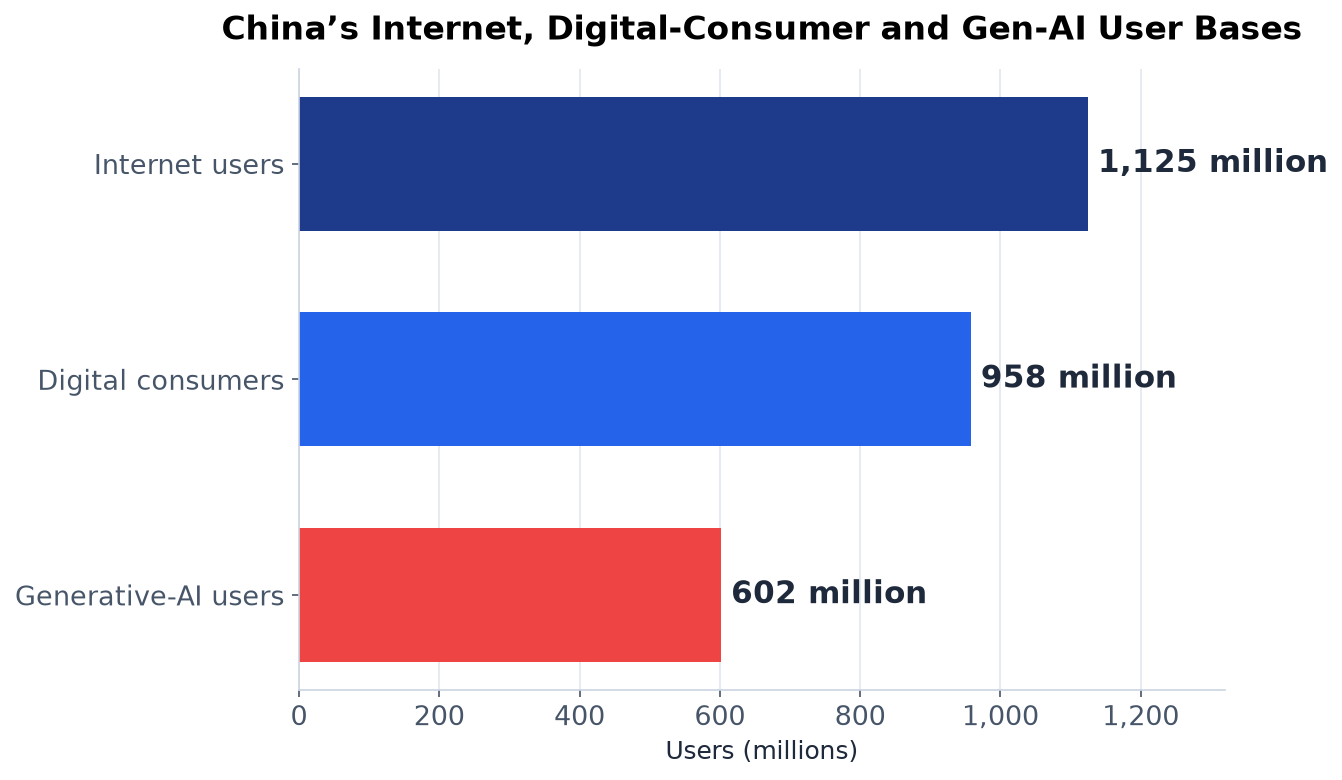
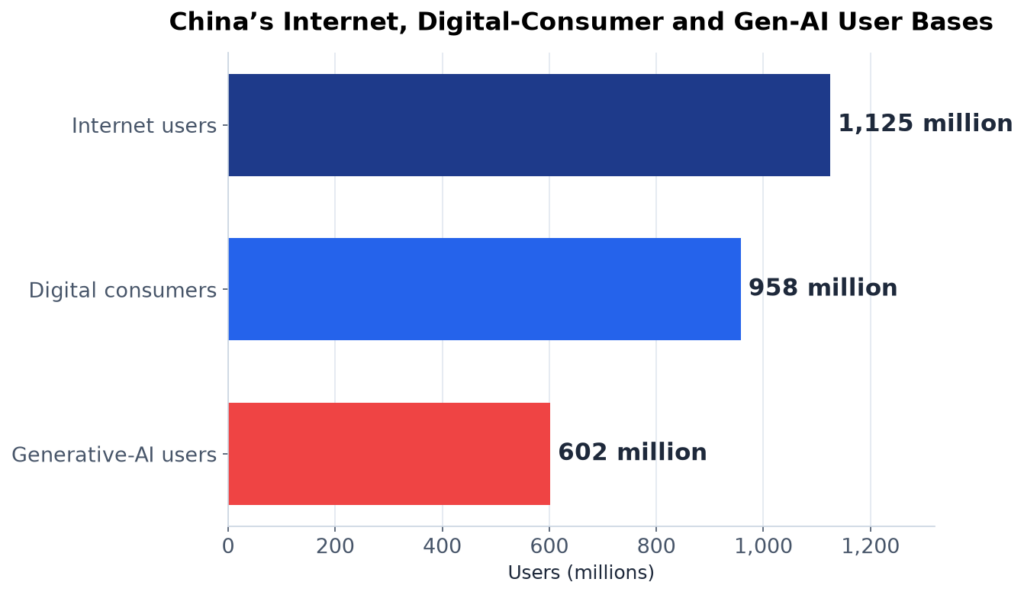
That story is out of date. In China, generative AI is not a pilot program. More than 602 million people used it by the end of 2025. That is not a niche—it is nearly half the country’s internet users. And those people are not just asking a chatbot for life advice. They are shopping.
Nor is this a China-only story. The numbers point the same way everywhere. Analysts project global agentic commerce—where an AI agent does the searching and the buying—to reach trillions of dollars in annual volume by 2030, with a meaningful share of all e-commerce flowing through AI channels within a few years. Nearly two in five consumers already use AI to discover products. China is simply where the plumbing was already in place.
The real surprise is not that the technology exists. It is that Chinese merchants stopped treating it as a magic trick and started treating it as labor. That shift, from wonder to workflow, is the entire story.
What “AI Shopping Assistant” Means in China’s Marketplaces
Let’s pin down the term, because it is misleading. An “AI shopping assistant” in China is not one product. It is a layer of automation bolted onto the marketplace apps people already open every day.
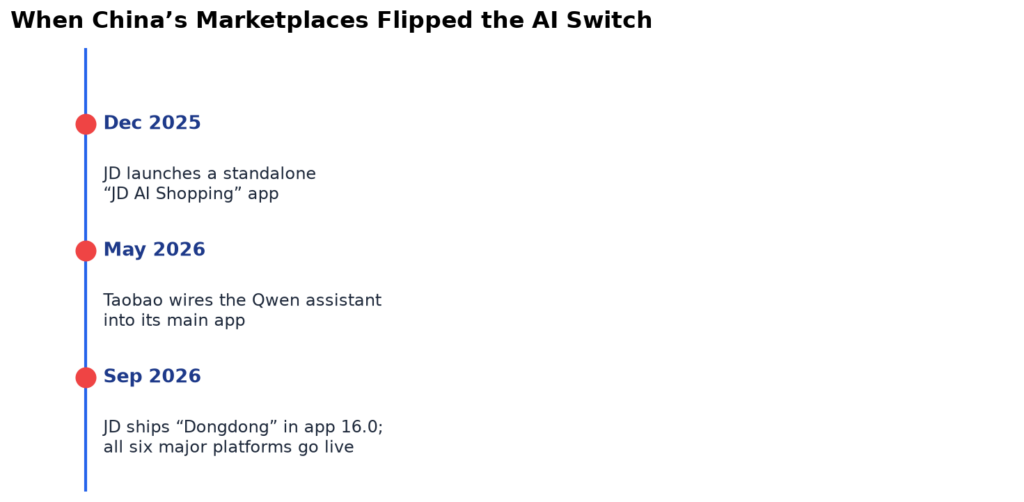
Taobao wired its Qwen assistant directly into the main app in May 2026. JD launched a standalone “JD AI Shopping” app at the end of 2025, then shipped a full shopping agent called “Dongdong” inside its main app in September 2026. Douyin pushed its Doubao assistant onto the front page, one tap from checkout. By September 2026, all six major platforms—Taobao, Tmall, JD, Douyin, Pinduoduo, Meituan, and Kuaishou—had AI shopping switched on.
None of these are chatbots floating off to the side. They live in the search bar, the product page, the checkout flow. That placement matters more than the model underneath it.
Where the Assistant Sits in the Purchase Path
Think about where a sale actually gets lost. Not at the product, usually. It gets lost in the gaps—the questions nobody answers fast enough, the comparison nobody explains, the doubt nobody resolves.
AI assistants in China sit exactly in those gaps. They do not replace the human seller. They absorb the high-frequency, low-margin work: the questions, the matching, the explaining. The human seller keeps the parts a machine cannot fake—trust, negotiation, taste.
That division of labor is the insight. AI does not sell more by being smarter. It sells more by being tireless.
Task One: Answering the Repetitive Pre-Sales Questions
The most boring job in retail is also the most important. “Is this in stock?” “Does it ship to my city?” “What size should I get?”
A human rep answers the same ten questions all day and burns out by lunch. An assistant answers them instantly, in the buyer’s language, at 2 a.m., without ever getting tired. This is the “shop assistant that never sleeps” idea made literal.
The payoff is not the answer itself. It is speed. A question answered in seconds keeps a buyer moving toward the cart instead of wandering off to a competitor. Multiply that by a few thousand questions a day and you have saved a real number of abandoned carts.
Task Two: Matching Inventory to Intent
The second job is matching. A buyer says “I need a gift for a friend who runs,” and the assistant has to turn that vague intent into a specific product from a catalog of millions.
China’s marketplaces are enormous. Taobao alone holds a product library measured in the hundreds of millions of items. No human can hold that in their head. An assistant can. It reads the intent, filters the catalog, and returns a handful of matches instead of a wall of options.
This is recommendation with a crucial difference: the assistant can explain why it chose what it chose. That turns a black-box suggestion into a conversation, which is what actually closes a sale.
Task Three: Explaining the Difference Between Similar SKUs
Here is where the assistant earns its keep. Two phone cases look identical. Two vacuums differ by one spec. Two sweaters are the same price but different fabric.
A buyer staring at near-identical options often freezes—and a frozen buyer does not buy. The assistant’s job is to un-freeze them: name the difference, translate the spec into plain language, and tell them which one fits their stated need.
This is the highest-value task of the three, because it is the one humans are worst at doing consistently at scale. A tired rep gives up and says “they’re basically the same.” An assistant never does.
Why This Works in China Before It Works Elsewhere
So why did this happen in China first? Three reasons, all structural.
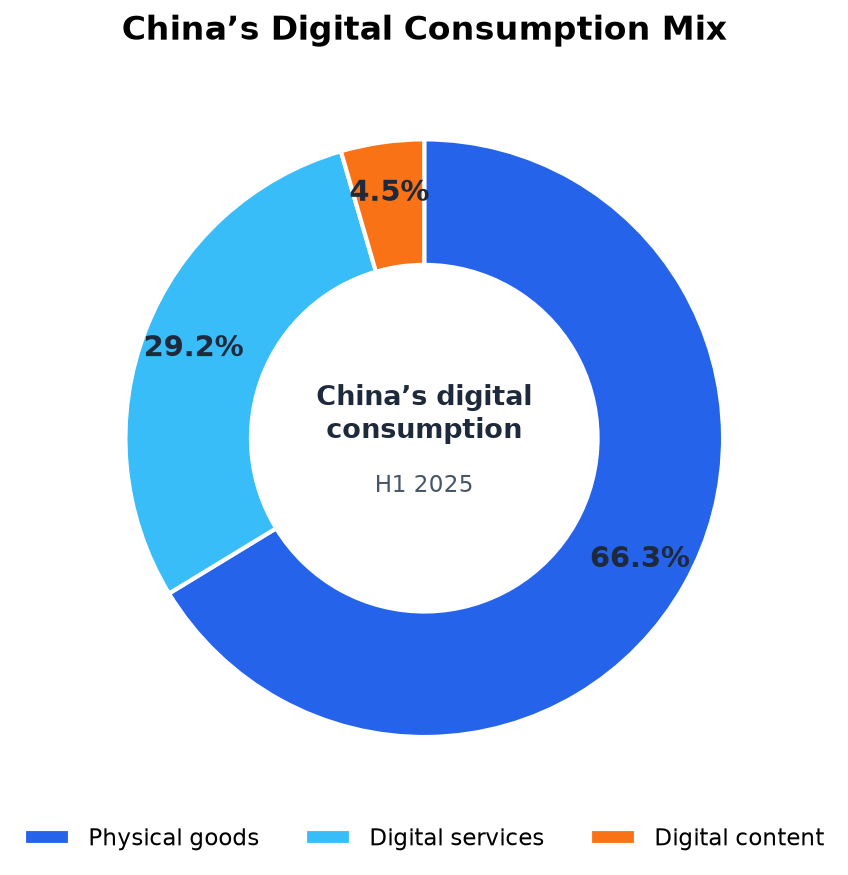
First, the scale is staggering. China has 958 million digital consumers who spent 9.37 trillion yuan online in the first half of 2025 alone. When that many people transact that often, automating the boring parts pays off instantly.
Second, the habit already exists. Nearly half of online shoppers—45%—had already bought smart devices, gadgets, or wearables online. The “AI plus shopping” muscle was already built before the assistant arrived.
Third, the platforms are closed loops. The assistant, the catalog, the payment, the logistics—they all live in one app. That means the assistant can actually do things, not just say things. On the open web, an assistant gives you a link. In a Chinese super-app, it moves you from question to order without leaving.
The Trust Layer That Makes Automation Safe
None of this works without trust, and trust is the part Western observers usually skip.
Think of the assistant as a recommendation engine with a seal on it. That seal—product authenticity, refund policy, platform guarantee—is what lets a buyer hand a purchase decision to a machine. Remove the seal and the machine is just a robot making claims.
China’s platforms spent years building that seal: escrow payments, buyer-protection policies, instant refunds. The AI assistant inherits all of it. The automation is only “safe” because the trust infrastructure was already there. The algorithm is the clerk; the platform is the guarantee.
What Breaks When You Copy the Model Abroad
Take this playbook to a Western market and three things snap.
The open web is not a closed loop. Your assistant can answer a question, but it cannot complete the purchase the way a super-app can. That one gap cuts the conversion math in half.
There is a cleaner proof of this gap. Independent research shows that recommendations from a general-purpose chatbot convert far worse than a good affiliate link—and AI referrals still account for only a sliver of all e-commerce sessions. A generic assistant can tell a shopper about a product; it cannot finish the job the way a platform-native assistant can. The assistant inside the app, with the catalog and the checkout attached, is the one that actually sells.
Returns and trust work differently. A Western buyer is more likely to trust a brand than a platform, which flips the assistant’s role from closer to informer.
And the economics differ. Chinese platforms monetize through massive volume and closed data loops. On the open web, an assistant that answers ten thousand questions costs you compute before it earns you a single conversion.
The lesson is not “don’t copy it.” It is “copy the division of labor, not the interface.” Automate the boring questions wherever you are. Just do not expect the super-app magic to transfer.
A Practitioner’s Pre-Flight Checklist
If you want to run this playbook, here is the honest checklist.
Log your top twenty pre-sale questions. If a machine can answer them, they are your automation target.
Map where buyers drop off. If the drop-off is a question nobody answered in time, an assistant fixes it. If it is price, no assistant will.
Keep a human in the loop for anything involving taste, trust, or money. Automate the rest.
Measure speed, not sentiment. The metric that matters is time-to-answer and its effect on conversion, not how clever the replies sound.
Start with the questions you already have data on. You cannot automate what you have never written down.
The Honest Limits of Today’s Assistants
Let’s be blunt about what these assistants still cannot do.
They hallucinate. They will confidently describe a spec that does not exist, which is why the human hand-off exists.
They cannot build real relationships. A returning customer who trusts you personally is still worth more than any automated reply.
And they do not create demand. An assistant answers the buyer who already showed up. It does not bring new buyers in. The top of the funnel is still your job.
Treat the assistant as a closer, not a rainmaker.
What to Watch in the Next Twelve Months
Three signals matter over the next year.
Watch whether the assistants start charging. Right now they are free and un-monetized. The moment platforms attach a price to an AI-recommended slot, the whole game changes for merchants.
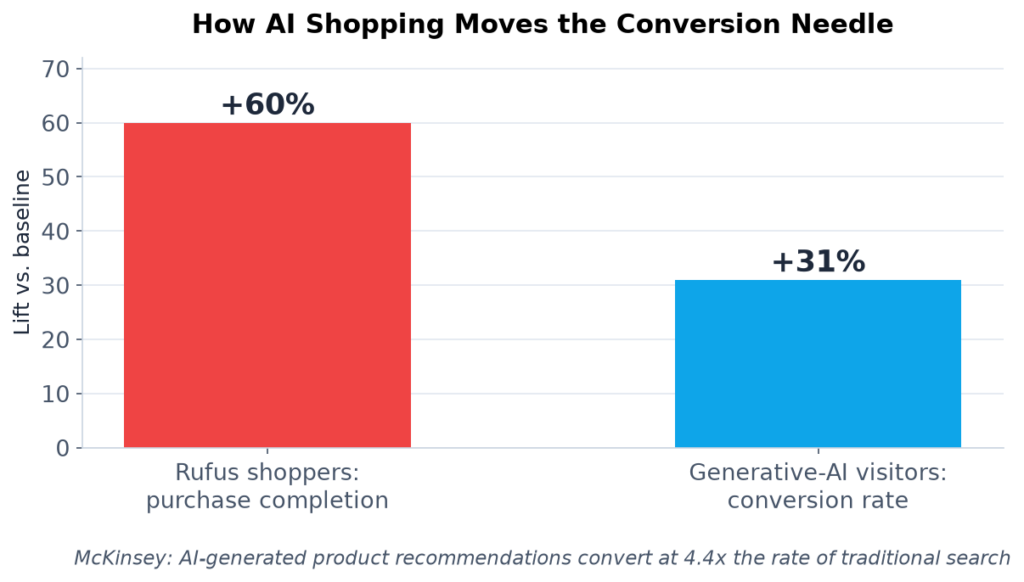
Watch the overseas proof. Amazon’s Rufus is already past 300 million users and, by Amazon’s own numbers, makes shoppers 60% more likely to complete a purchase. That is the first Western benchmark that looks like China’s playbook. Separately, generative-AI traffic to retail sites converts about 31% higher than traditional channels, and AI-generated product recommendations convert at 4.4 times the rate of traditional search.
Watch for agentic checkout. The step from “assistant that answers” to “assistant that buys” is smaller than it looks. When it lands, the division of labor flips again. The scale of that flip is enormous: forecasts put US spending through AI agents in the hundreds of billions within a few years, and a double-digit share of all e-commerce flowing through agentic channels by the end of the decade.
The brands that win will be the ones that stopped asking whether AI can sell, and started deciding which parts of selling they are willing to hand over.
FAQ
Do Chinese AI shopping assistants replace human sales?
Not for the jobs that matter. They absorb the repetitive pre-sale questions and product matching, freeing humans for trust, negotiation, and relationships. It is a division of labor, not a replacement.
Which Chinese platforms have AI shopping assistants?
All six majors. Taobao and Tmall run the Qwen assistant, JD runs “Dongdong” (plus its standalone “JD AI Shopping” app), and Douyin, Pinduoduo, Meituan, and Kuaishou all have AI shopping switched on.
Can Western brands use the same playbook?
Partly. The “automate the boring questions” part transfers anywhere. The closed-loop super-app magic—where the assistant completes the purchase—does not. Copy the division of labor, not the interface.
How is data privacy handled in China’s AI commerce?
Platforms operate under China’s data and personal-information regulations, and AI-generated content is required to be labeled. The assistants inherit the platforms’ existing buyer-protection and payment-trust systems.
What is the ROI of an AI shopping assistant in China?
The clearest signal is speed-to-answer driving fewer abandoned carts, backed by platform data showing AI traffic and recommendations convert measurably higher than traditional search. The exact multiple depends on category and whether a human stays in the loop for the high-stakes moments.
Summary
The value of China’s AI shopping assistants is not the chatbot. It is the automation of high-frequency, low-margin selling work—answering repetitive questions, matching inventory to intent, and explaining SKU differences—so humans can focus on trust and fulfillment. This works in China first because of staggering scale (958 million digital consumers), an already-formed AI-shopping habit (45% of online shoppers), and closed-loop super-apps. Copying it abroad means copying the division of labor, not the interface, and keeping a human in the loop for anything involving trust, taste, or money.