Alphabet Suffers Historic $496 Billion Single-Day Loss on AI Spending Fears
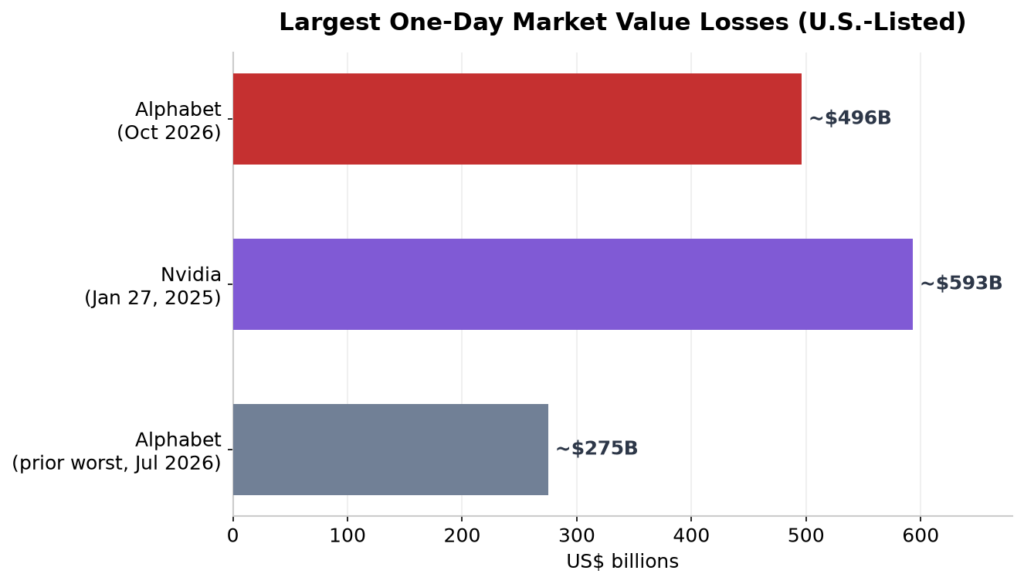
Alphabet, the parent company of Google, saw its stock tumble roughly 13% in a single session — the steepest one-day decline since the company’s 2004 initial public offering. The selloff was on track to erase about $496 billion in market value, according to Yahoo Finance estimates.
That would rank as the second-largest single-day market-value loss ever recorded for a U.S.-listed company, behind only Nvidia’s roughly $593 billion drop on January 27, 2025. It also eclipsed Alphabet’s own previous worst day, when it shed about $275 billion on July 23, 2026.
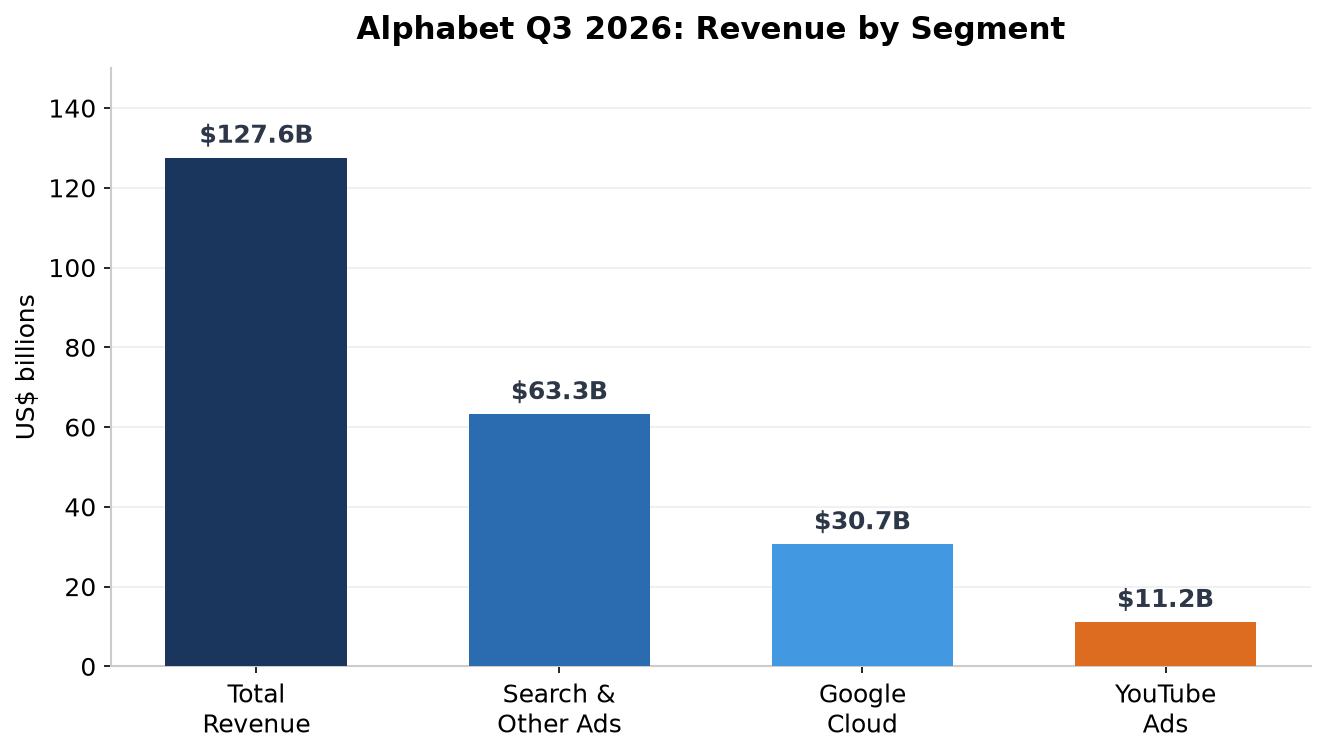
The trigger was a third-quarter report that unsettled investors on several fronts at once. Revenue reached $127.6 billion, up 25% year over year and slightly ahead of expectations — the company’s 13th consecutive quarter of double-digit revenue growth. The trouble sat below the headline number. Earnings per share came in at $2.12, far below the $3.02 consensus, pulled down in part by an $8.2 billion hit from an unrealized loss on Alphabet’s investment in SpaceX.
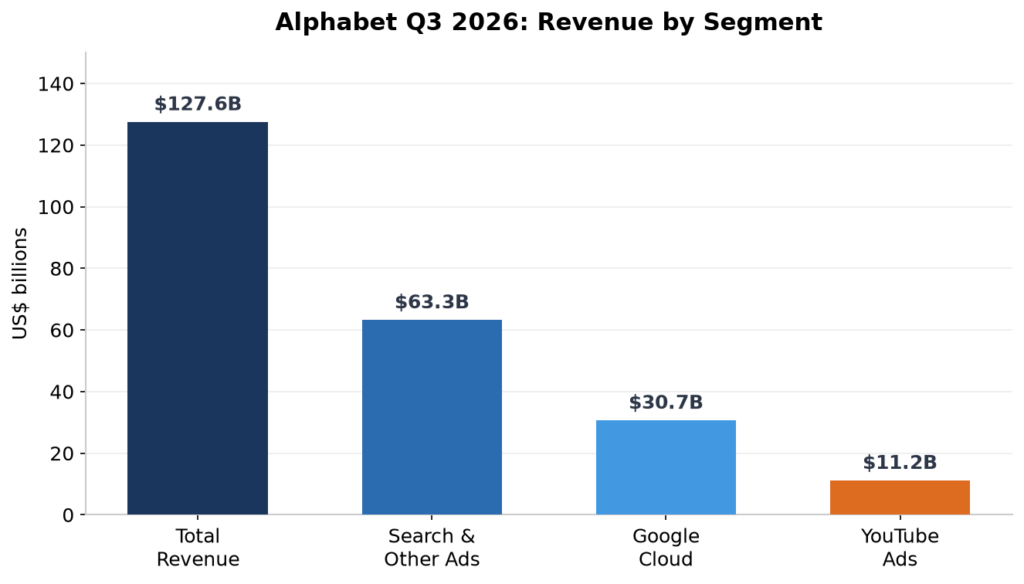
Search, the engine that has funded nearly everything Google has built, showed the clearest cracks. Search and other advertising revenue rose 12% to $63.3 billion but missed the roughly $65 billion Wall Street had modeled. YouTube advertising grew 9% to $11.2 billion. Some analysts argued the quarter marks the first sign that AI is beginning to pressure the core search franchise, though management pushed back — CEO Sundar Pichai noted that year-over-year query growth was the highest it has been in five years, and executives attributed the slowdown largely to foreign-exchange effects and retail and media factors.
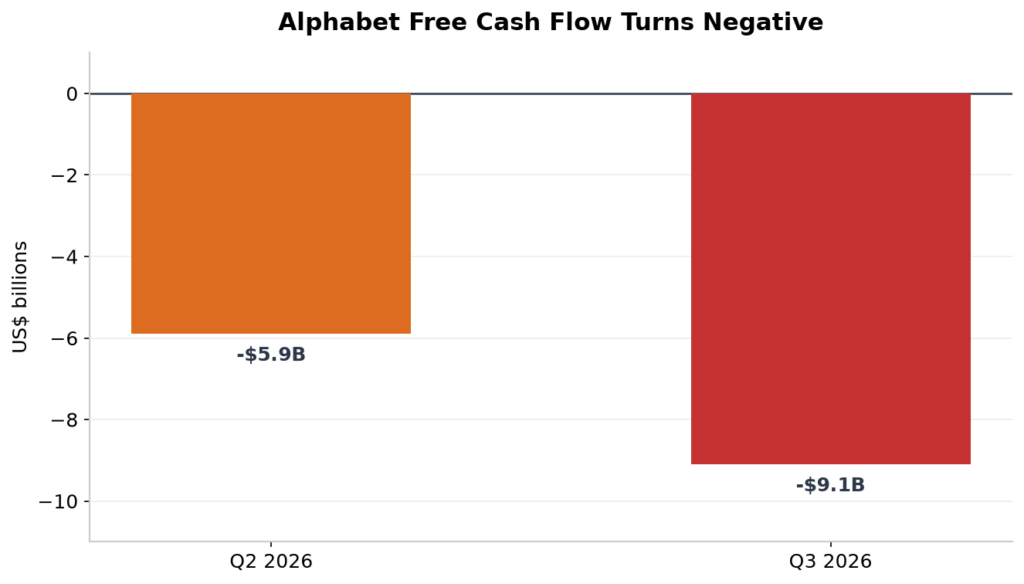
The loudest alarm was cash. Alphabet posted negative free cash flow of $9.1 billion for the quarter, a deeper hole than the negative $5.9 billion reported in the second quarter. That marks the company’s first sustained stretch of cash burn in more than two decades as a public company. Capital expenditures more than doubled from a year earlier to $51.4 billion, poured into data centers and AI chips.
Alphabet held its full-year 2026 capital-spending guidance at $195 billion to $205 billion and warned that spending will rise significantly again in 2027. That forward commitment — not just the current quarter’s miss — is what many investors found hardest to swallow, because it converts a single bad quarter into a multi-year question about when the AI buildout pays for itself.
Not everything disappointed. Google Cloud was the standout: revenue more than doubled to $30.7 billion, operating income tripled to $11.1 billion, and the unit’s operating margin widened to 36.2% from 23.7% a year earlier. Its contracted backlog reached $561 billion, with just over half expected to be recognized within 24 months. The Gemini app has also passed 1 billion users.
The drop lands amid a broader reckoning over Big Tech’s AI spending. Hyperscalers are projected to pour around $2 trillion into AI infrastructure over a two-year window. Alphabet’s stumble stood in sharp contrast to Microsoft, whose shares rose a day earlier after reporting strong cloud growth and healthier cash flow. The market’s next read comes from Amazon’s cloud results.
For marketers and digital-ad operators, this is a signal worth watching closely. When the world’s largest search advertiser faces questions about search’s growth trajectory at the exact moment it is spending aggressively on AI, the downstream effects on ad pricing, auction dynamics, and platform strategy tend to ripple outward across the entire digital economy.