Why the IMF is nervous about the AI boom, in two charts
The International Monetary Fund is keeping a close eye on the AI boom, but it isn’t ready to declare the party over.
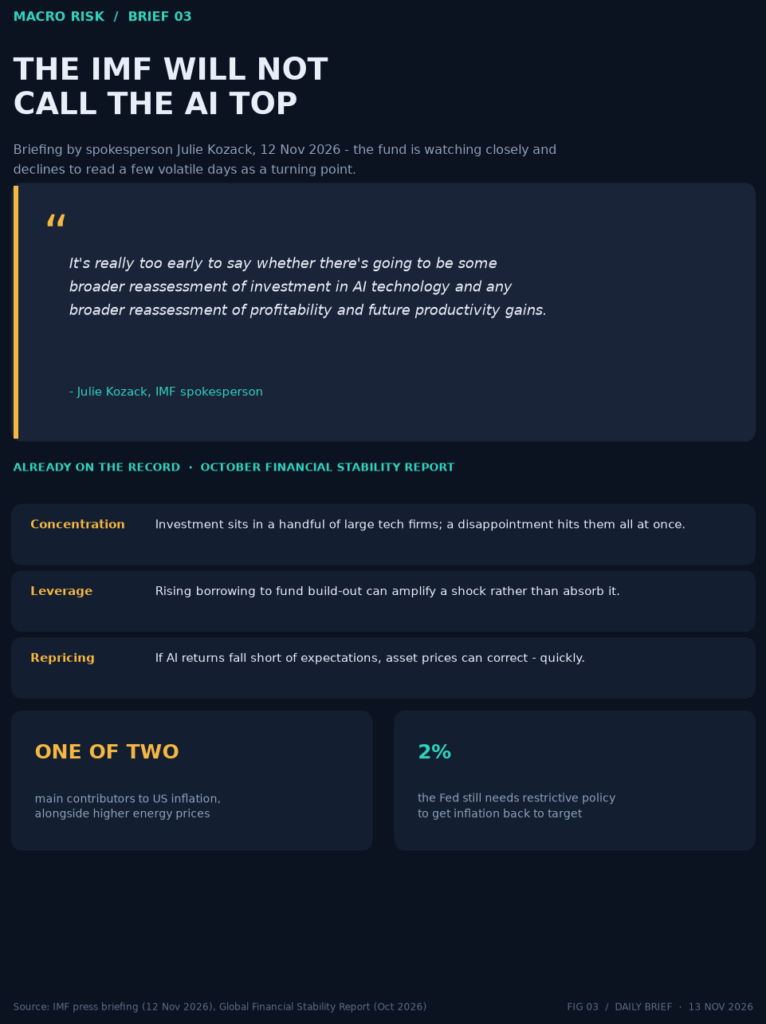
At a regular press briefing Thursday, IMF spokesperson Julie Kozack said the fund is “closely monitoring” the volatility in AI-related equity valuations and the U.S. political shift that could slow data center development. Asked about the market gyrations following Nvidia CEO Jensen Huang’s resignation, she refused to call a turning point: “It’s really too early to say whether there’s going to be some broader reassessment of investment in AI technology and any broader reassessment of profitability and future productivity gains.”
That careful wording matters. The IMF has already flagged the risk in writing — its October Global Financial Stability Report warned that if AI investment and profitability fall short of expectations, asset prices could adjust, and that the growing concentration of investment in a small group of big tech firms, plus rising leverage, could amplify any shock. So the concern is on the record; what Kozack is declining to do is read a few volatile days as proof.
There are two sharper-edged points buried in the briefing. First, the IMF now treats AI investment and data center construction as one of the two biggest contributors to U.S. inflation, alongside higher energy prices tied to the Iran conflict. Second, the fund believes the Fed will still need to keep policy restrictive to get inflation back to 2%.
It’s a useful counterweight to the market’s manic energy this week. Investors have spent days deciding whether the AI trade is broken or just bruised. The IMF’s answer, for now, is: we’re watching, and we’ve already told you where the risk sits.