When a Discount Stops Persuading and Starts Explaining
This month’s Double 11 largely retired the cross-store spend thresholds — the coupon maths that turned November into a spreadsheet drill — in favour of platform-set markdowns and single-item price cuts: one markdown, one item, one price. Taobao, JD, Douyin and Pinduoduo all made the same swap. Shoppers noticed, and not because they saved more. They got a shorter sentence.
The argument in miniature: in the West a discount is a lever pulled to make you act. In China it is a claim you are expected to read — and increasingly, one someone can check.
The law already treated coupons as statements
China’s rules do not treat “was ¥399, now ¥199” as salesmanship. State Administration for Market Regulation Order 56, in force since July 2022, defines a compared price as no higher than the lowest actual transaction price in the seven days before the promotion, and bans pre-discount price inflation. Every discount ships with a reference and a window: disclosure in a promotional costume.
The Internet Platform Price Behaviour Rules — issued by three agencies in December 2025, in force from 10 April 2026 — go further. Promotion mechanics must be published, discount bases must be truthful, merchants cannot be forced to discount — and big-data price discrimination, charging loyal customers more for the same item, is banned. Personalised pricing is now a sentence you have to defend.
What the number is saying
Price cuts are read as quality cues, not just savings. In a 2025 European Journal of Marketing study, Mengmeng Liu and Maureen Morrin found that shoppers who fight hardest to maximise value devalue discounted products, because they infer lower quality. A 2025 Chinese working paper by Lu Changbao and colleagues at Fuzhou University tested the other end of the range: deep discounts trigger defensive behaviour, the deeper the cut the stronger the defence, and brand strength can reverse it.
So the polarity flips. A shallow, calendar-fixed markdown says our price is real and our margin is known. A sudden, permanent 55% off says the sticker was fiction, or we are drowning in stock. Neither asks for a click; each answers a question the shopper already asked.
The market is already voting
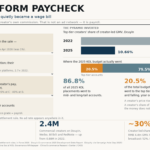
Bain and Worldpanel’s China Shopper Report 2025 supplies the macro version. In the first three quarters of 2025, the share of fast-moving consumer goods sales value sold on promotion fell from 24.1% to 23.0% while prices fell 2.4%. Brands discounted less, not more. Meanwhile formats selling a standing low price, not an event, grew hard: discount stores up 92%, snack chains 51%, membership clubs 40%.
Not a contradiction: a market separating a signal from a stunt.
Three costs nobody budgets for
- Reference-price erosion. Every deep, permanent cut re-anchors what the product is worth; the next promotion must beat the new anchor.
- Signal mismatch. Distress clearance and confident markdown look identical in a dashboard, opposite in a shopper’s head.
- Personalisation as a verdict. A discount sized to your willingness to pay reads as a judgment about you. China Consumers Association still lists algorithmic differential pricing among the harms it cannot yet police — leaving shoppers primed to notice, and to resent.
So price the signal, not the click
Anchor markdowns to the calendar and let the off-calendar price sit still. Protect the reference price like the brand asset it is. And frame personalised discounts as recognition, never concession: same number, opposite message.
The takeaway
A Western discount asks a shopper to hurry. A Chinese one tells a shopper what the seller believes about the product, the market, and them. With a seven-day audit window and a regulator now reading the algorithm, someone is always parsing the coupon — and increasingly, checking it.