The verdict closes a case that began in 2019. The acquittal on the top charge is the part both sides will argue about.
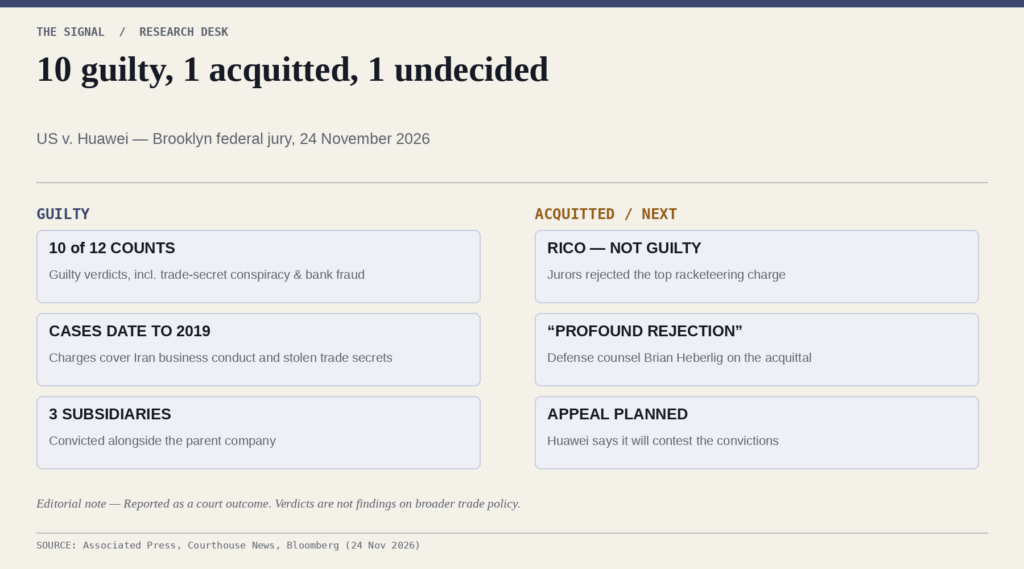
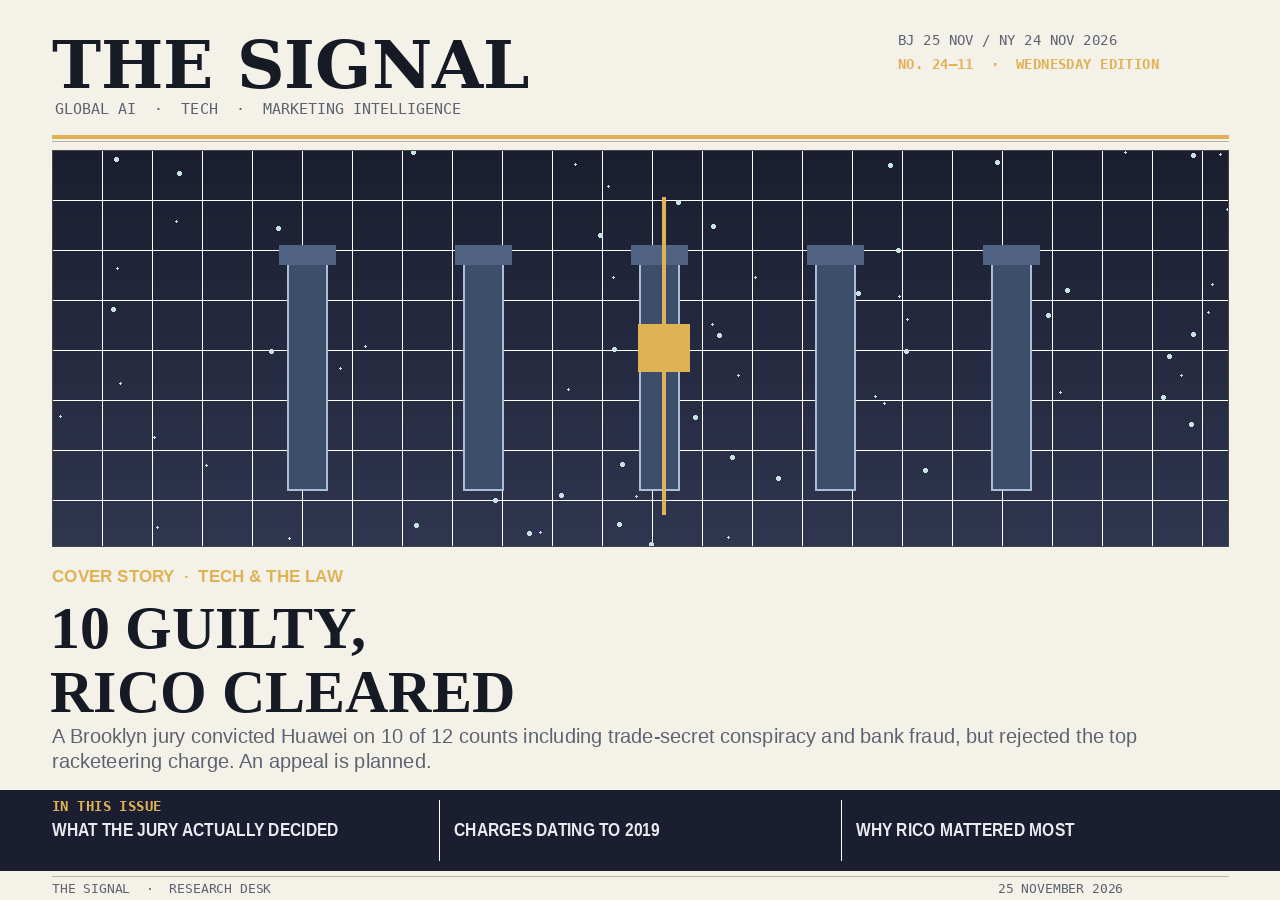
A federal jury in Brooklyn on Tuesday found Huawei Technologies guilty on 10 of 12 criminal counts, including conspiracy to steal trade secrets, bank fraud and money laundering related to the company’s business in Iran and North Korea. Three subsidiaries were convicted alongside the parent. Jurors acquitted on the most serious charge, racketeering (RICO), after a trial that ran for more than two months. The charges trace back to a 2019 indictment.
Both sides claimed the part that favored them. Defense attorney Brian Heberlig called the RICO acquittal “a profound rejection” of the government’s central theory. Huawei said it plans to appeal the convictions, and said in a statement that the acquittal showed the allegations lacked a factual basis. Prosecutors pointed to the ten guilty verdicts.
The split matters because RICO was the charge that would have framed the conduct as a coordinated criminal enterprise, with the broadest penalties and the widest narrative reach. Without it, the result is a set of specific fraud and conspiracy convictions rather than the sweeping characterization the government had sought. Sentencing has not been scheduled. An appeal will likely take years.
This is a court outcome, not a ruling on trade policy, and it should be reported as one. Its practical significance is that a long-running U.S. criminal case against the company has now produced a verdict that both sides can cite — at a moment when export controls, entity-list designations and standards-setting are all live questions. Any effect on supply chains or on Huawei’s ability to operate in specific markets will come from what regulators and courts do next, not from Tuesday’s verdict alone.