Every market has a tell. In Thailand, it is this: consumers do not browse, add to cart and check out. They ask. Price? In stock? Can you show me a photo? Will it arrive Friday? The sale closes inside a chat thread, sealed with a PromptPay transfer slip. Foreign observers call this a cultural quirk — Thais like talking. True, but lazy. Cultures do not explain why LINE’s own Japanese teams fly to Bangkok to study the behavior. Price signals do.
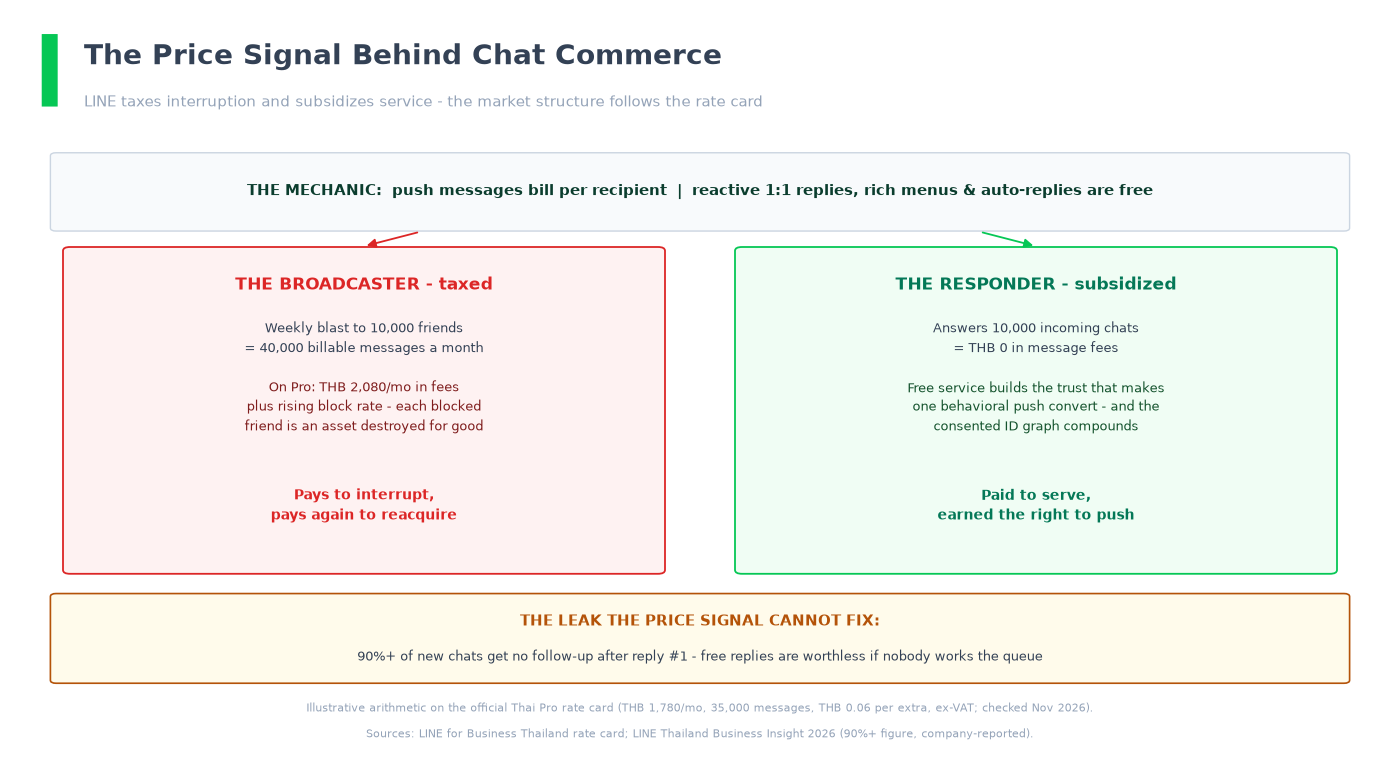
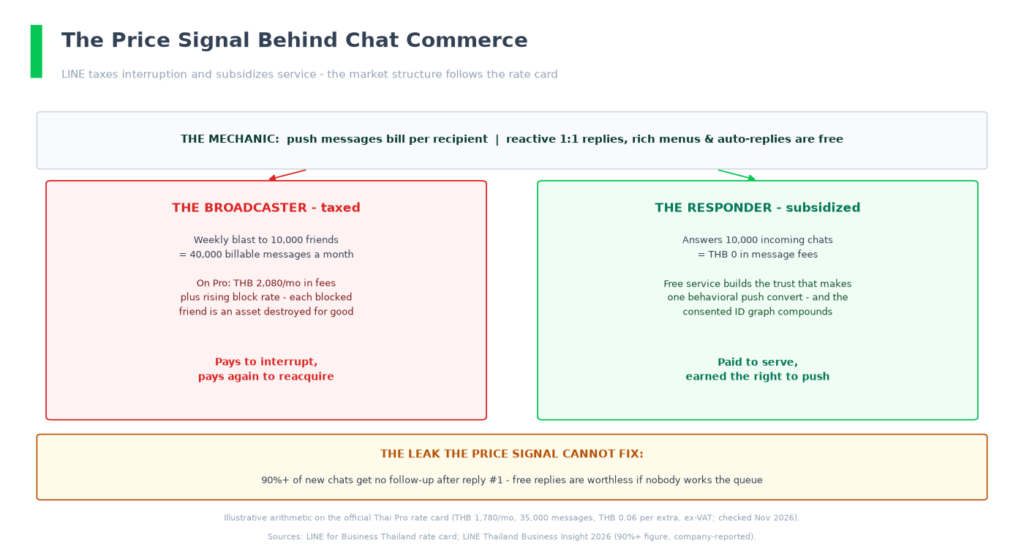
Look at LINE’s Thai rate card and the miracle stops being mysterious. Push messages bill per recipient: one broadcast to 10,000 friends costs 10,000 messages. Reactive replies — answering a customer who wrote first — are free, unlimited, forever. Rich menus and auto-replies, also free. The platform has quietly legislated a tax on interruption and a subsidy on service.
Markets obey that kind of legislation. Run the arithmetic: a brand blasting its 10,000-friend base weekly burns 40,000 messages a month — THB 2,080 on the Pro plan, plus a block rate that compounds like debt, because a blocked friend is an asset destroyed permanently. Now run the other motion: answer 10,000 incoming chats and the message bill is zero. The only cost is staff. One model pays to annoy people twice — once for the blast, again to reacquire the friends it burned. The other gets paid in trust, and spends that trust on rare, behavioral pushes that convert.
That is why Thailand’s chat commerce looks the way it does. The 85–98% close rates LINE reports for fast-replying sellers are not a national talent for conversation; they are what happens when the cheapest path to revenue is also the most human one. The 67% same-thread repurchase figure is the subsidy compounding: every good answer makes the next answer cheaper to convert. The culture came first, but the pricing made the culture profitable — and profitable behaviors scale.
Here is the twist the price signal cannot fix. Free replies are worthless if nobody sends them. LINE discloses that over 90% of new chats get no follow-up after the first reply. The platform made service free; most merchants still treat it as a cost center. So the subsidy flows to whoever staffs the queue — and the tax flows from whoever does not. Two brands, same rate card, opposite economics.
The generalizable lesson travels far beyond Bangkok. When a platform prices interruption and subsidizes response, it is not selling you a channel. It is telling you which business model it intends to reward. Read the rate card before you read the case studies. The economics were never hidden. They were on the pricing page.






