Here’s a puzzle the agentic-commerce headlines skip. If AI assistants need money so badly — and they do, serving 800 million-plus weekly users on someone else’s compute bill — why not just sell ads? It’s the oldest monetization playbook on the internet. Google built a trillion-dollar company on it. Yet every major lab, when pushed toward revenue, keeps reaching for the checkout instead. OpenAI only began testing ads in January 2026, months after shipping Instant Checkout. Something makes the checkout the first choice, not the fallback.
The something is trust — but not trust as a vibe. Trust as a balance-sheet asset with a burn rate.
Think about what an assistant actually sells. Not answers; answers are commodity output now. It sells belief — your willingness to act on its recommendation without opening ten tabs to verify. That belief is the entire product. And it behaves like a depletable resource: every time you catch the assistant steering you toward whoever paid, you don’t just discount that answer. You discount every future answer. The asset burns retroactively.
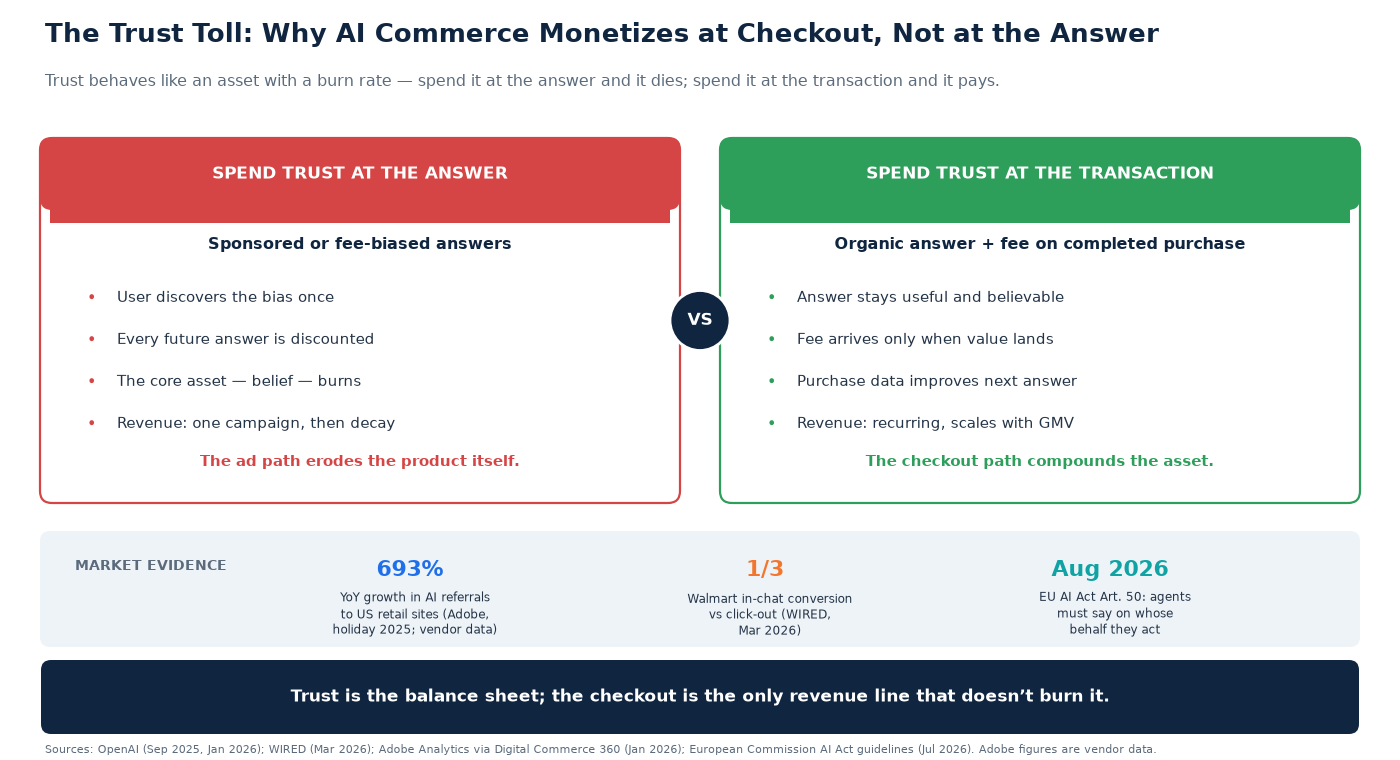
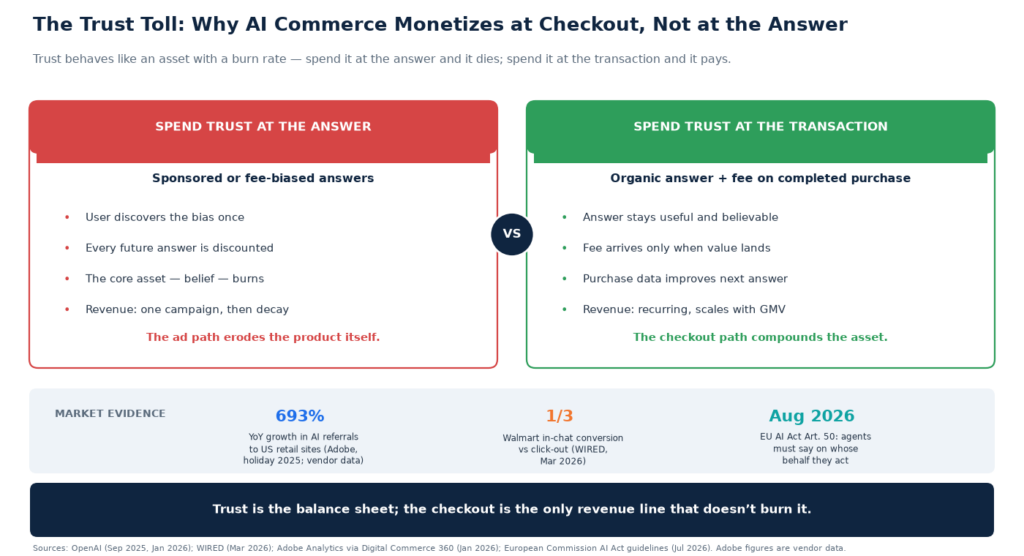
Now compare the two monetization doors. Door one: sponsored answers. Revenue arrives upfront, but the payment is denominated in belief. One discovered bias, and the user’s mental model flips from “my agent” to “their salesperson.” Door two: a small fee on completed purchases, with answers kept organic. Revenue arrives only when value lands — you got the thing you wanted — and the transaction generates preference data that makes the next answer better. Door one spends the asset. Door two compounds it.
That’s why OpenAI’s September 2025 announcement reads like someone guarding a vault: results are organic, unsponsored, fees don’t influence rankings. It’s also why the fine print matters — “whether Instant Checkout is enabled” appears among tie-break factors for identical products. The labs understand the burn-rate math intimately. They’re trying to collect the toll without letting you see the booth.
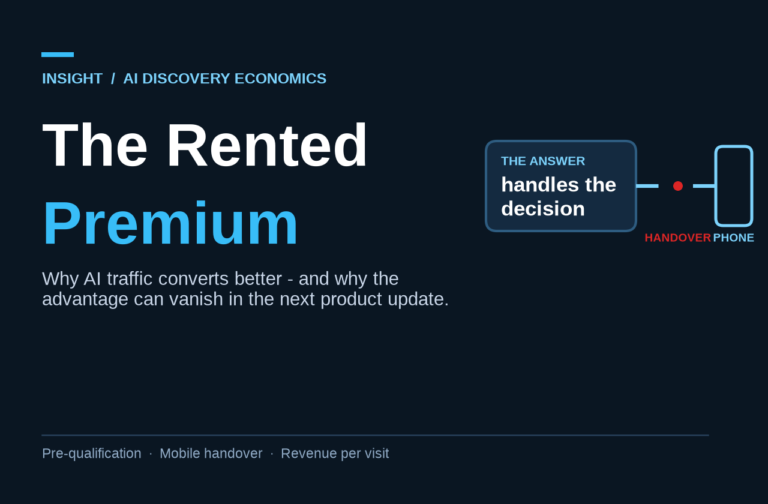
The market keeps confirming the asymmetry. Adobe Analytics — a vendor dataset, and Adobe sells AI marketing tools, so hold it loosely — found AI-referred retail traffic up 693% year over year in holiday 2025, converting better than other sources. Belief transfers into commerce beautifully. But Walmart’s disclosure to WIRED in March 2026 showed in-chat checkout converting at one-third the click-out rate: the belief survives the handoff, yet the interface still leaks it. And regulators have now priced the asset legally — the EU AI Act’s Article 50, live since August 2026, requires agents to disclose on whose behalf they act. The law is essentially an audit of the trust balance sheet.
So the incentive chain from the main story has a hidden accounting rule underneath: every revenue line is also a trust expense, and the checkout is the only line where the expense is nearly zero. That’s not a product preference. It’s asset management. The assistant becomes a merchant because merchant revenue is the only kind its core asset can afford.