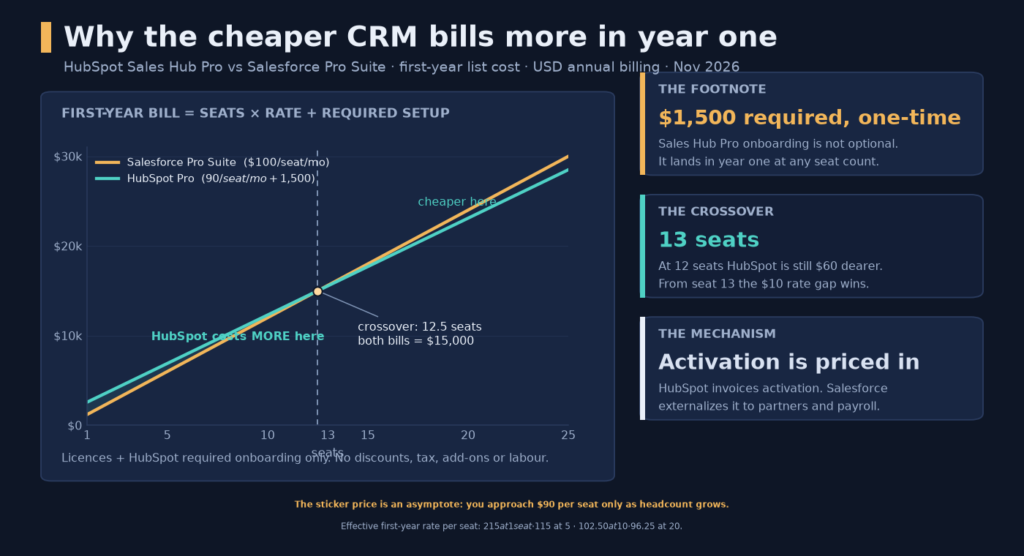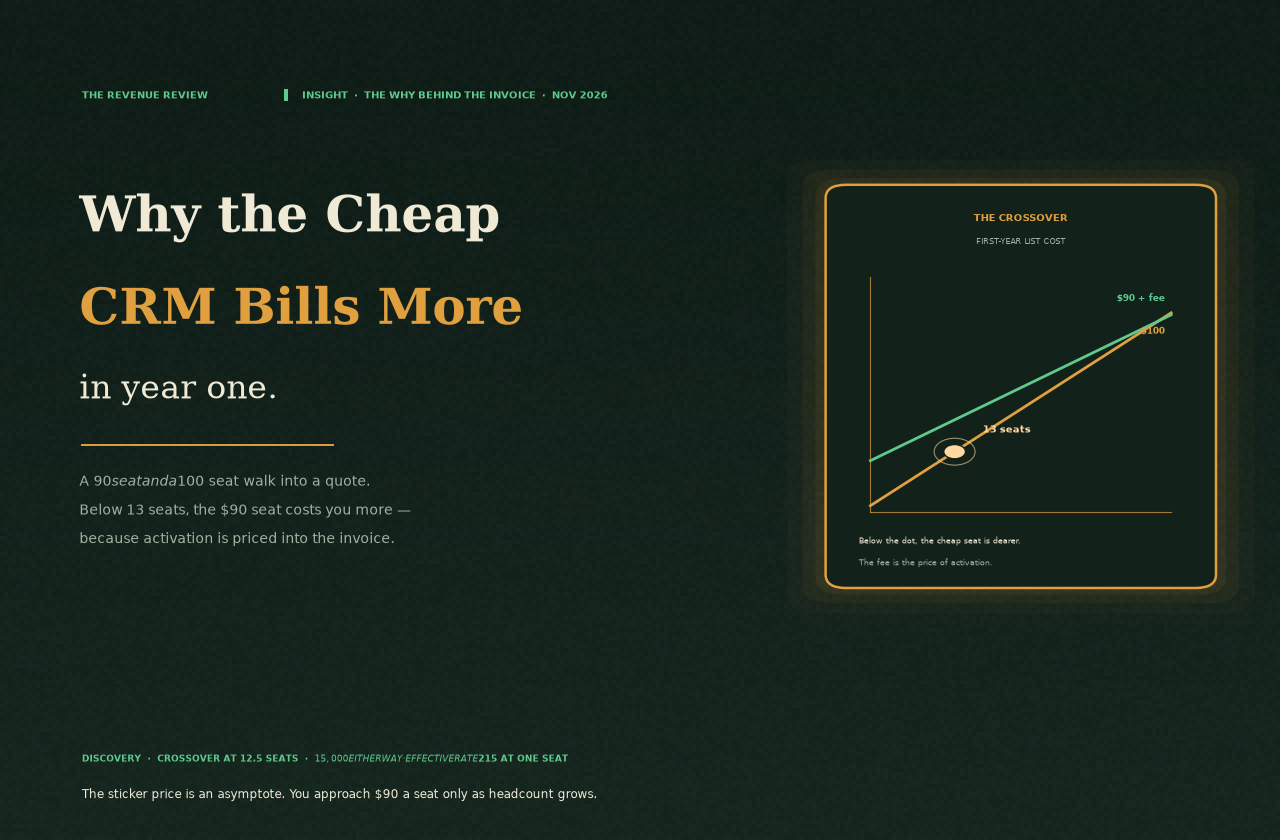
Here is a small discovery that reframes the whole HubSpot-versus-Salesforce argument. Compare the two mid-tier products on their published list prices — HubSpot Sales Hub Professional at $90 per seat per month against Salesforce Pro Suite at $100 — and HubSpot wins by $10 a seat. Now compute the actual first-year invoice, and the winner flips: at five seats HubSpot costs $6,900 against Salesforce’s $6,000. At ten seats, $12,300 against $12,000. The cheaper seat keeps billing more until seat thirteen.
The mechanism is one required line item: HubSpot’s mandatory, one-time Professional onboarding fee of $1,500, disclosed in a footnote on its own pricing page. Divide that fee by the annual rate gap — $120 per seat — and you get 12.5. Below that crossover, the fee outweighs the discount; above it, the discount compounds. At exactly 12.5 seats both first-year bills equal $15,000. This is arithmetic from vendor list prices, not opinion.
What makes it worth an insight rather than a gotcha is what the fee represents. HubSpot prices activation into the invoice; Salesforce externalizes it into partner statements of work and, eventually, an admin salary. Neither model is free — implementers put comparable Salesforce projects at months of work versus HubSpot’s weeks — but only one of them shows up on the pricing page. The sticker price of $90 is an asymptote: your effective first-year rate is $215 per seat at one seat, $115 at five, $102.50 at ten, and only approaches the advertised number as headcount grows.
The incentive logic follows. A required onboarding fee lets a vendor fund customer success while keeping the sticker competitive in every comparison grid, because grids quote seats, not first-year totals. It also quietly segments the customer base: the fee is trivial at fifty seats and punishing at one, which nudges solo buyers toward Starter and teams toward annual commitment. The footnote is not an oversight. It is a pricing instrument.
The takeaway for buyers: never compare seat rates across vendors with different activation models. Compare first-year totals at your real seat count, then add the activation cost the other vendor hid off-invoice. The cheapest sticker and the cheapest year are different questions — and below thirteen seats, they have different answers.