Ask a Western growth team who owns the landing page and you’ll get a puzzled look. Of course the brand owns it — the domain, the analytics, the A/B testing backlog. Ask the same question inside a Chinese performance team and the answer is murkier: the page lives on a platform-assigned domain, renders through the platform’s engine, submits data into the platform’s backend, and gets scored by the platform’s crawler before a human ever sees it.
This didn’t happen because Chinese marketers love templates. It happened because trust broke down, and somebody had to become the verifier.
The Market Failure Underneath
For two decades, the Chinese web ran an uncontrolled experiment in unverifiable claims. Bait-and-switch pages, fabricated testimonials, countdown timers that reset on refresh. When every seller can claim anything and no buyer can cheaply check, economists call it a lemons market: bad pages drive out good ones, because lying is cheaper than proving. Consumers adapted with a verification reflex — they don’t admire your brand story, they hunt for test reports, filings, and real reviews.
But individual verification is expensive. Every visitor re-checking every claim is a tax on the whole market, paid in bounce rates and abandoned carts.
Why the Platform Stepped In — and What It Charges
Here’s the incentive that explains everything: an ad platform earns when clicks convert into lasting advertiser spend. Fraudulent pages poison that loop twice — burned consumers stop clicking ads, and burned advertisers stop buying them. So Baidu and Tencent had a direct revenue interest in doing what no individual visitor could: verifying pages wholesale, at machine scale.
The mechanics follow the money. Baidu’s systems crawl pages and throttle impressions when query, ad and page disagree. Tencent went further, retiring its own legacy Fengye builder in late 2024 and consolidating five landing-page products into one official, natively rendered page. Hosted pages arrive pre-approved: instant load, native forms, one-tap consent compliant with privacy law. The platform checks so the visitor doesn’t have to.
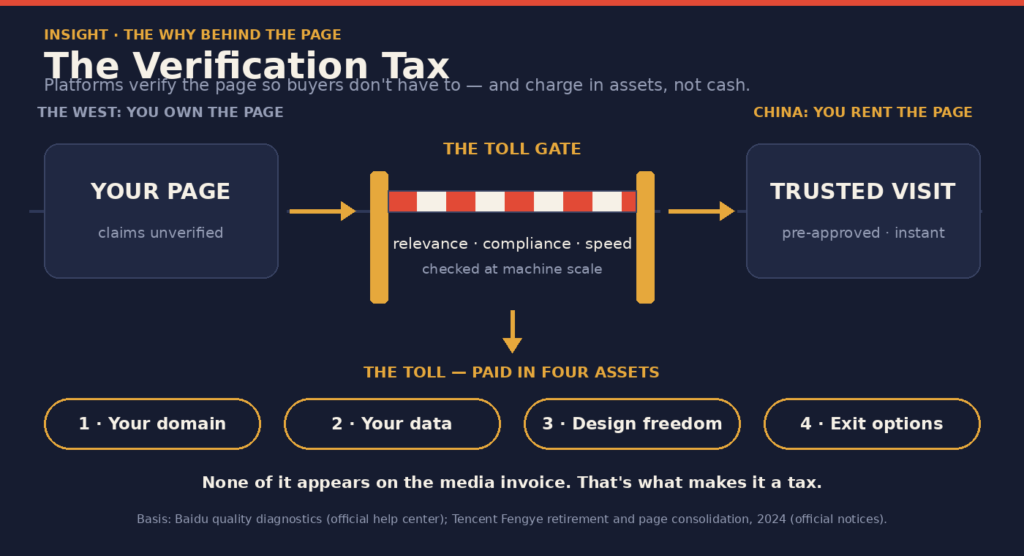
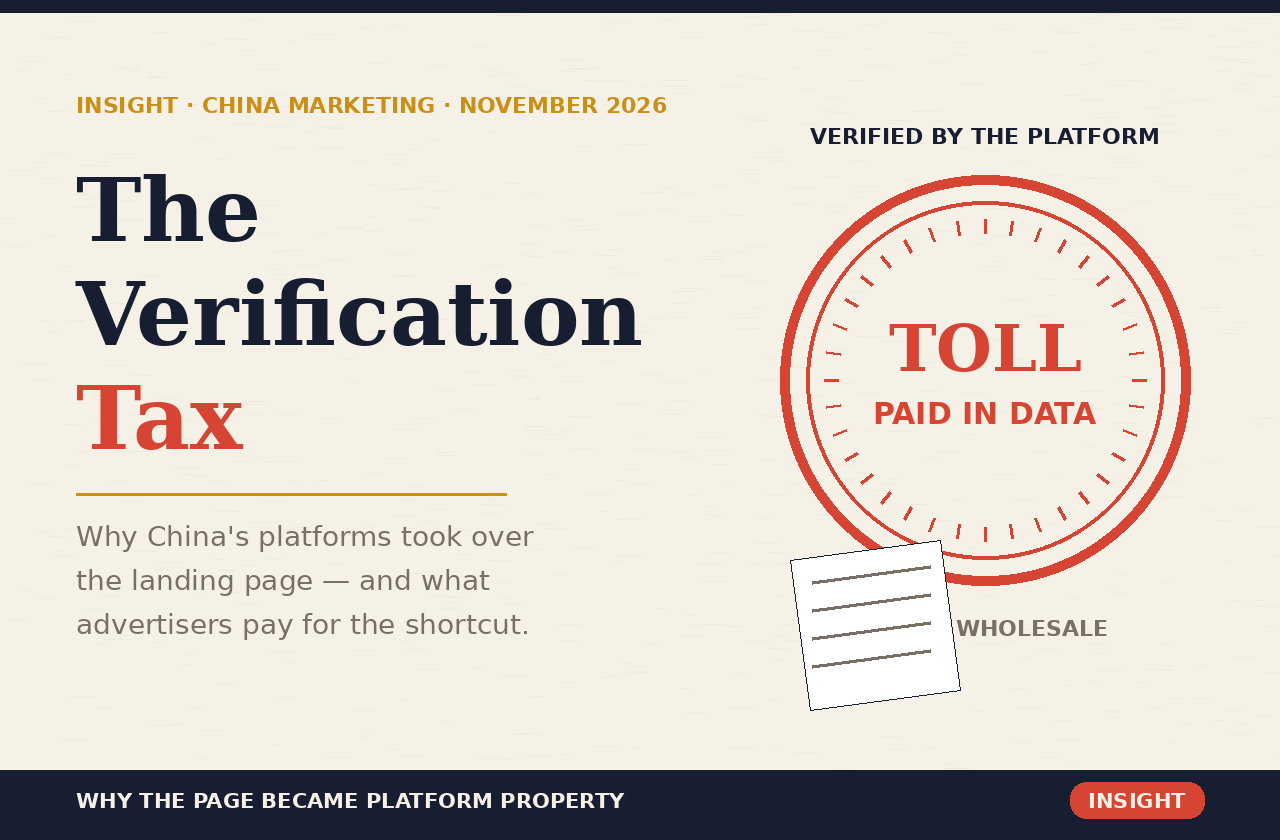
The service isn’t free. The toll is paid in four currencies: your domain (you get a platform-assigned one), your data (it lands in their backend), your design freedom (templates), and your exit options (ecosystem lock-in). Notice that none of these show up on the media invoice. That’s what makes it a tax rather than a price — you pay it in assets, quietly, every campaign.
The Trade Nobody Names
Western marketers optimize pages they own; Chinese marketers optimize pages they rent. Neither is naive. In a low-trust market, rented verification converts better than owned credibility — a pre-approved page inside WeChat will beat a beautiful standalone site almost every time. The rational move is to pay the tax where traffic is bought, and build owned ground — mini-programs, private-domain contacts — where relationships compound.
The deeper lesson travels beyond China: wherever verification costs exceed what buyers can bear, some intermediary will offer to absorb them — and take a piece of the infrastructure as payment. AI shopping assistants are running the same play right now. Watch who verifies, and you’ll know who ends up owning the page.