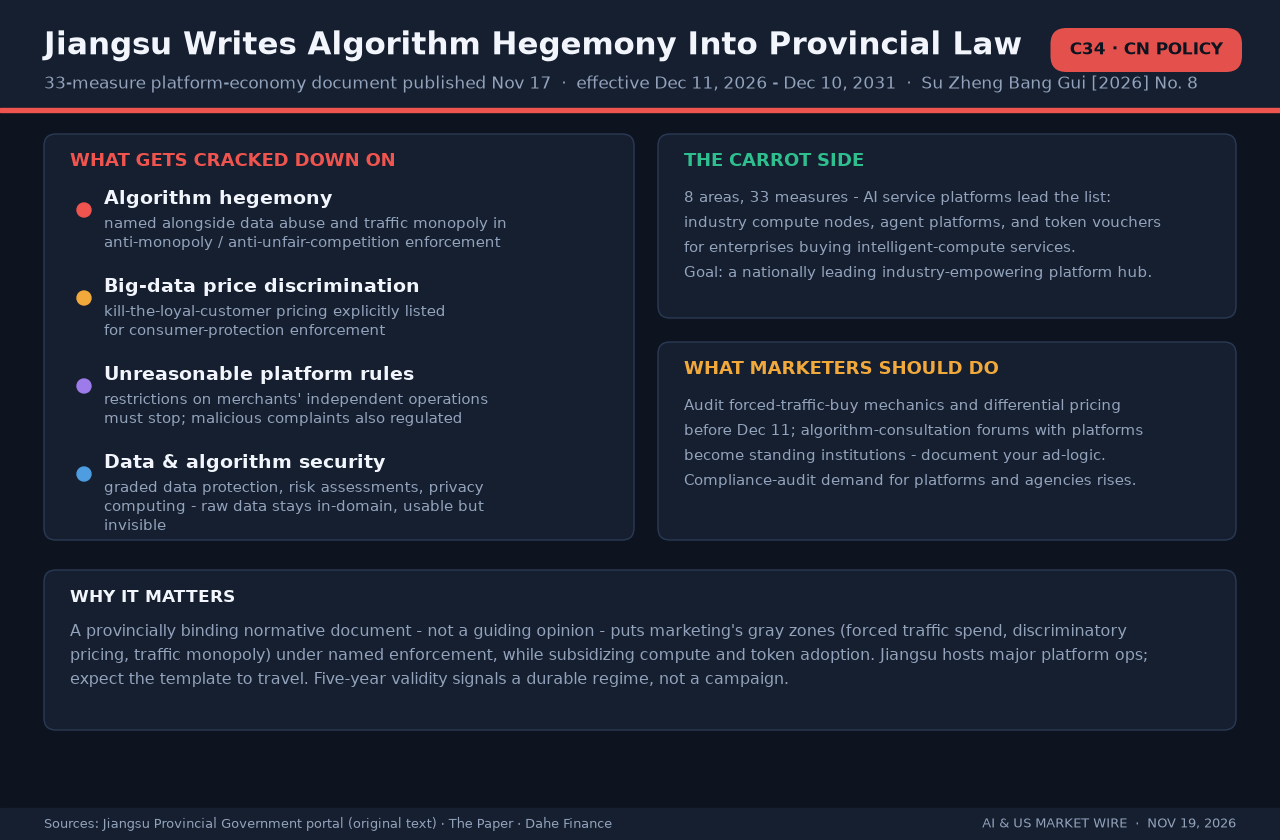
Jiangsu’s provincial government published on November 17 a formally binding normative document — “Measures to Promote Innovative and Regulated Healthy Development of the Platform Economy” (Su Zheng Bang Gui [2026] No. 8, signed November 11, effective December 11, 2026 through December 10, 2031) — whose 33 measures across 8 areas pair incentives with named enforcement: the anti-monopoly section explicitly targets “algorithm hegemony, data abuse and traffic monopoly,” consumer-protection provisions name “big-data price discrimination” (differential pricing against loyal customers) for crackdown, platform rules unreasonably restricting merchants’ independent operations must stop, and data governance mandates graded protection, risk assessments and privacy-computing techniques ensuring “raw data stays in-domain, usable but invisible.” The carrot side leads with AI: industry compute nodes, agent-service platforms, and token vouchers subsidizing enterprises’ intelligent-compute purchases, aiming to build a nationally leading industry-empowering platform hub. For marketers the practical clock starts now: forced-traffic-buy mechanics, discriminatory pricing logic and algorithm-driven merchant restrictions — long gray zones — become named enforcement targets in a five-year regime, with standing algorithm-consultation institutions between platforms and stakeholders; audit before December 11, and expect the template to travel beyond Jiangsu.