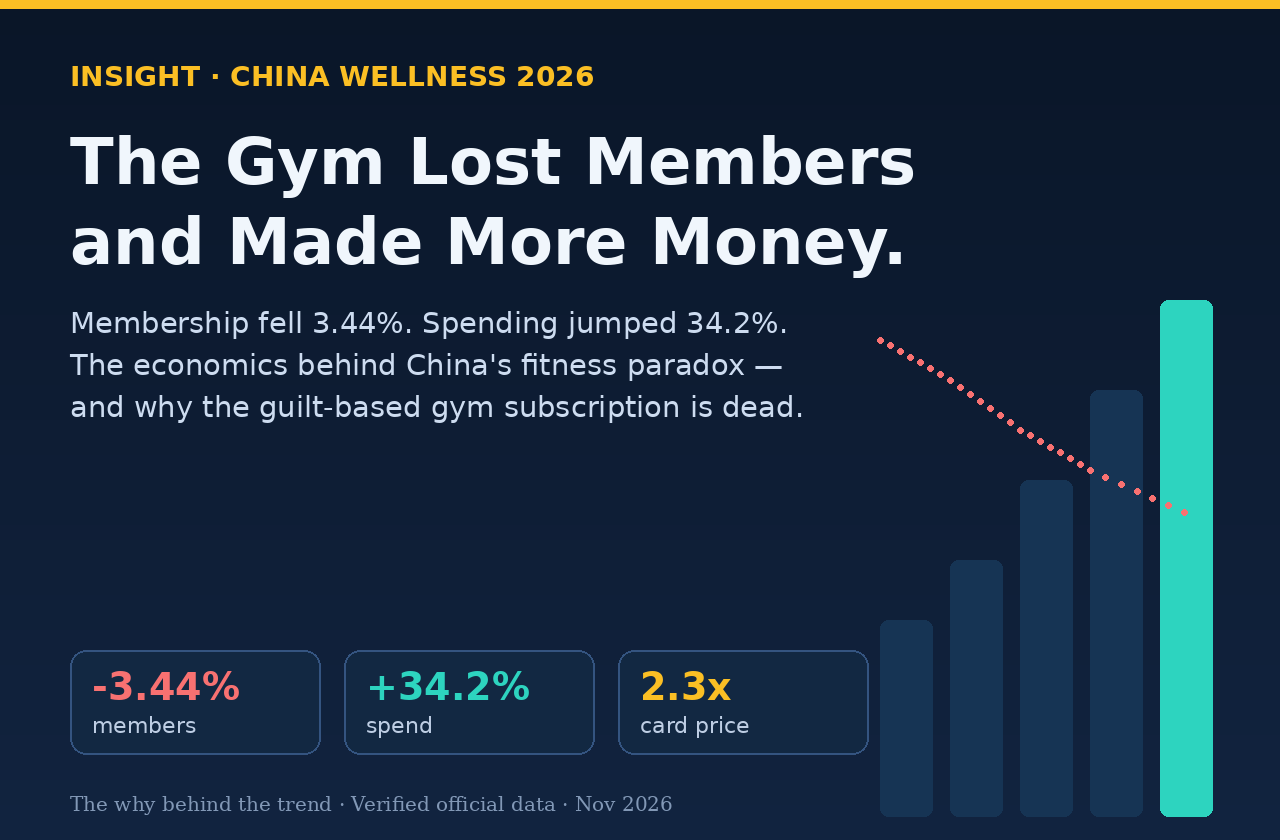
Membership fell 3.44%. Spending jumped 34.2%. Both numbers are true — and together they explain why the guilt-based gym subscription is dying while the gym itself survives.
The Number That Shouldn’t Exist
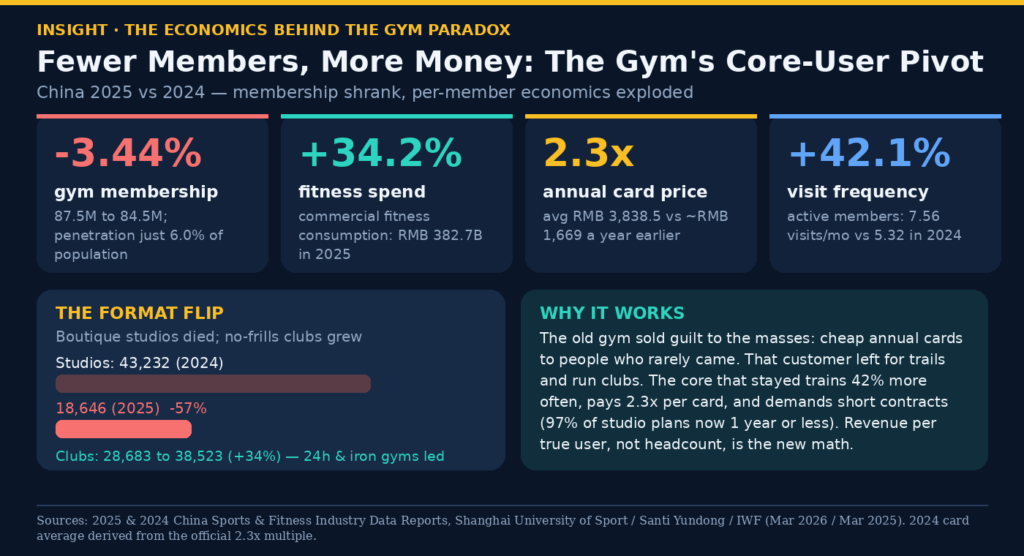
Here is a pair of statistics that looks like a typo. In 2025, China’s gym membership fell to 84.5 million, down 3.44% from 87.5 million a year earlier. Over the same year, commercial fitness consumption grew 34.2% to 382.7 billion yuan. Fewer customers, a third more money. If you learned economics from headcount dashboards, this is impossible. If you learned it from gyms, it’s Tuesday.
The resolution is simple once you see it: the industry stopped selling to everyone and started selling to someone.
The Old Machine Ran on Guilt
The traditional Chinese gym was never really a fitness business. It was a prepayment business. Sell cheap annual cards to thousands of people who intend to work out, collect the cash upfront, and quietly hope most of them never show up. Every absent member was pure margin; every regular was a cost. The economics literally rewarded non-consumption. Price wars pushed annual cards down toward 1,669 yuan — cheap enough to buy on impulse, cheap enough to forget by February.
That machine needed a steady supply of optimistic quitters. In 2025, the supply ran out.
Where the Quitters Went
They didn’t quit fitness. They quit the building. Outdoor participation passed 500 million, and the No.1 outdoor consumption scene is now the urban commute — 68%, ahead of hiking and cycling. The casual exerciser discovered that a trail, a run club or a bike lane delivers the feeling the gym membership only promised. Free, social, and no contract. The guilt economy’s customer base defected to a better product.
The Core That Stayed Pays Like a Fanatic
What remained is a smaller, harder, better customer. Active members now visit 7.56 times a month — up 42.1% from 5.32. The average annual card price hit 3,838.5 yuan, 2.3 times the 2024 level. And these heavy users refuse lock-in: 97.1% of studio contracts now run a year or less. Read that again — the most committed customers demand the shortest contracts. They don’t need a contract to make them show up. They show up.
The format flip follows the money. Boutique studios, built for casual premium drop-ins, collapsed 57% to 18,646. No-frills clubs — 24-hour access, iron gyms, monthly pricing — grew 34% to 38,523. Infrastructure for people who actually train beat décor for people who might.
Why This Matters Beyond China
The same math is repricing fitness everywhere: budget chains and hybrid models win while mid-market annual-contract clubs hollow out. The lesson for any subscription business selling aspiration: your revenue was never the members. It was the gap between intention and attendance. When a cheaper, better substitute closes that gap — trails instead of treadmills — the guilt premium evaporates, and only real usage can carry the price. China’s gyms didn’t recover. They finally started charging for the thing people actually consume.