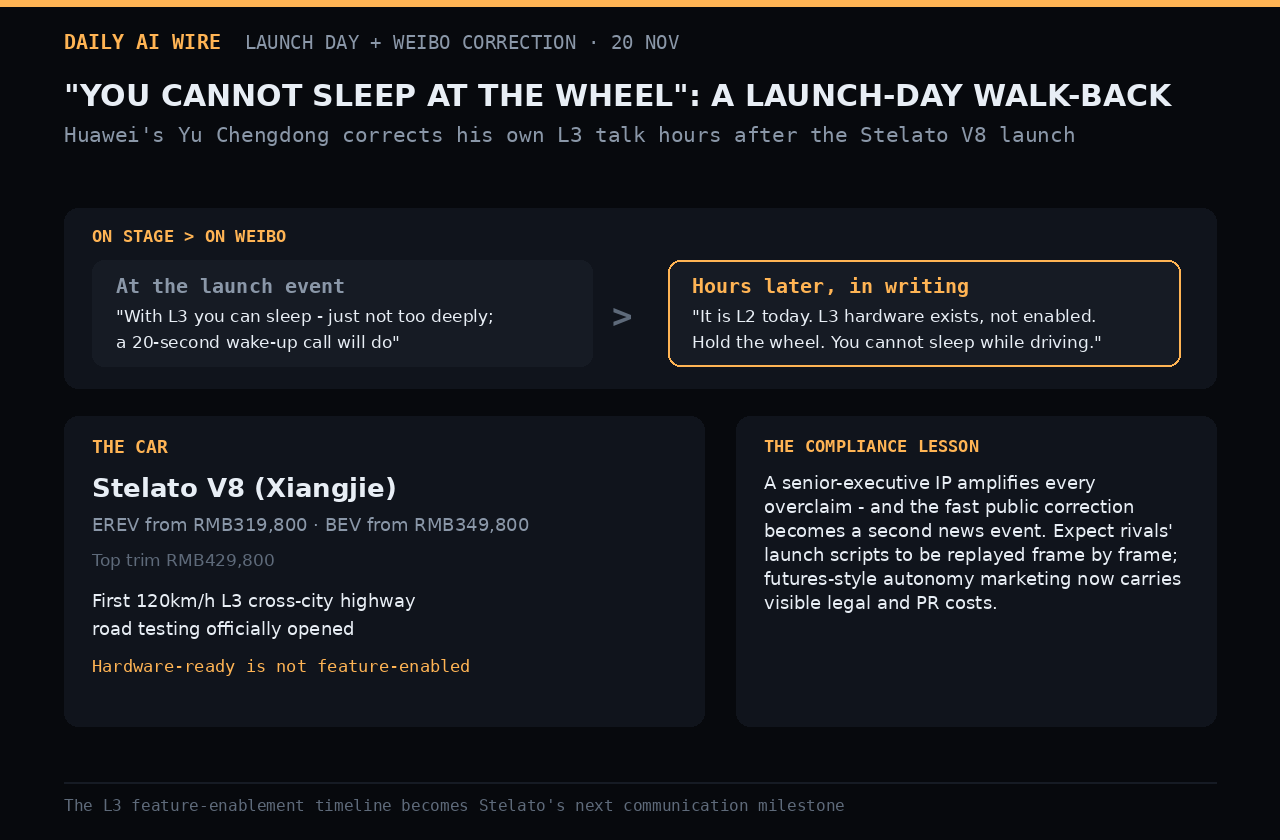
Hours after launching the Stelato V8 on November 20 — EREV from RMB 319,800, BEV from RMB 349,800, topping out at 429,800, with China’s first 120km/h L3 cross-city highway road testing opened — Huawei’s Yu Chengdong corrected his own stage remarks in writing on Weibo: on stage he had said that once L3 arrives drivers could sleep, “just not too deeply”; afterward he clarified that the car delivers L2 assistance today, L3 hardware exists but is not enabled, and drivers must hold the wheel and stay attentive — “you cannot sleep while driving.” The episode draws the industry’s bright line between hardware-ready and feature-enabled, at exactly the moment regulators are tightening autonomy-advertising rules: futures-style launch claims now carry visible legal and PR costs, and a senior executive’s fast public correction becomes a second news event in itself. Expect rivals’ launch scripts to be replayed frame by frame and industry wording to converge; the L3 enablement timeline is Stelato’s next communication milestone.