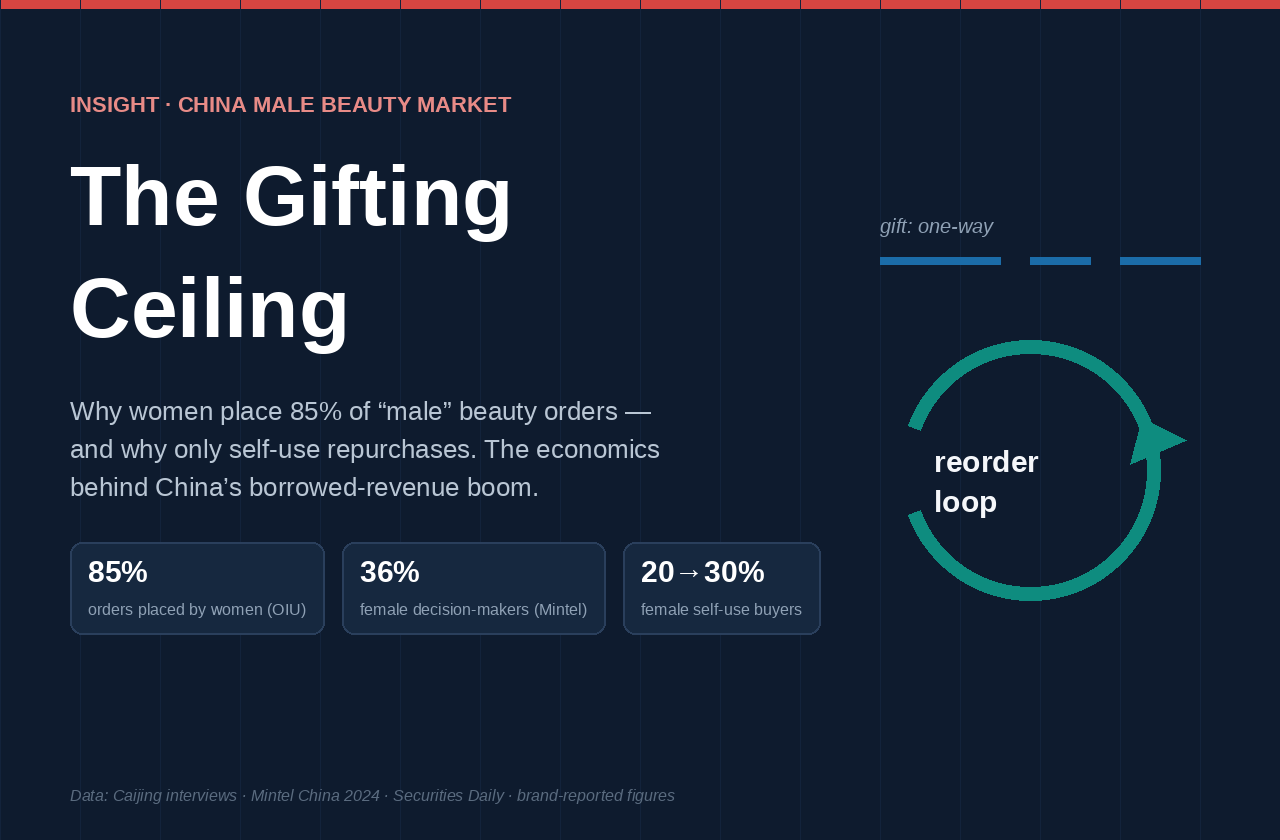
Here’s a number that should make every growth chart in this category nervous: 85% of OIU’s 2025 orders were placed by women — girlfriends and wives buying for men who then use the products. The brand’s founder told Caijing magazine as much, and Mintel’s 2024 China research backs the pattern at category level: women make 36% of purchase decisions in men’s grooming.
So when the dashboards say “male beauty is booming,” ask the uncomfortable question: booming for whom? The user is male. The payer is often female. And those two people have completely different reorder triggers.
Borrowed Revenue vs. Owned Revenue
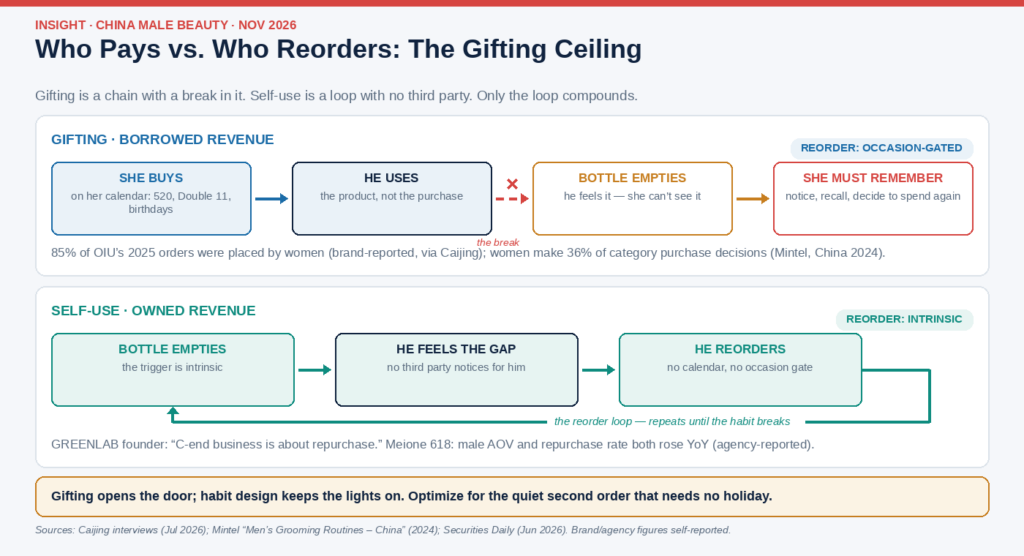
Think of gifting as borrowed revenue. She buys on her calendar — the 520 romantic holiday, Double 11, a birthday. He uses the product on his. For a second order to happen, she has to notice the bottle is empty, remember the brand, and decide to spend again. Every step is friction owned by someone who doesn’t use the product. L’Oréal’s stated playbook — push gifting around 520, push self-use during big sales festivals — is an honest admission that these are two different machines.
Self-use is owned revenue. The bottle empties, he feels the absence, he reorders. No third party, no calendar dependency, no gift-occasion gate. GREENLAB’s founder Xu Zhiwei puts it bluntly: “C-end business is about repurchase.” His brand’s most interesting metric isn’t the female order share — it’s that female buyers grew from 20% to 30% of customers while buying for themselves. The “refined lazy” convenience proposition travels across gender precisely because it sells a habit, not a present.
The Habit Is the Asset
This reframes what the early signals mean. Meione’s 618 data — male average order value and repurchase rate both rising, per Securities Daily — matters more than any GMV spike, because repurchase is the fingerprint of a habit forming. A gift produces a transaction. A habit produces an annuity.
The strategic implication is uncomfortable for festival-driven budgets: gifting opens the door, but only habit design keeps the lights on. One-step routines, instant visible effects, products that earn their place on a busy man’s sink — that’s the compounding asset. The brands that win the silent category won’t be the ones with the best 520 campaign. They’ll be the ones whose second order needs no occasion at all.