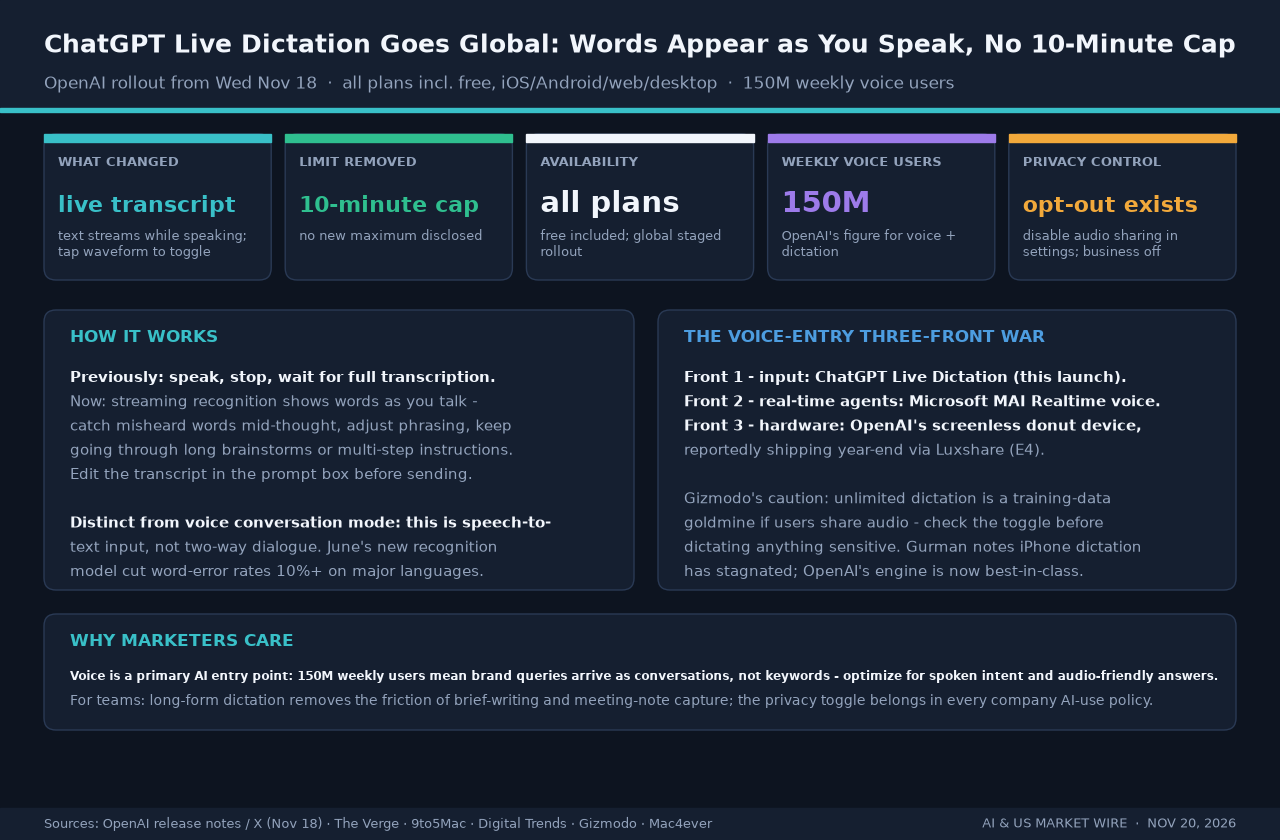
OpenAI began rolling out Live Dictation on Wednesday, November 18 across all ChatGPT plans including free, on iOS, Android, web and desktop: speech-to-text now streams as you talk — tap the waveform to show or hide the live transcript, catch misheard words mid-thought, edit in the prompt box before sending — and the previous 10-minute recording limit is removed, with no new maximum disclosed; voice engineer Atty Eleti confirmed the cap’s removal alongside the streaming upgrade, and OpenAI cites 150 million weekly users of voice and dictation. The feature is distinct from two-way voice conversation mode (this is input, not dialogue), builds on June’s recognition model that cut word-error rates 10%+ on major languages, and carries a privacy toggle — consumer audio may train models if sharing is enabled, business outputs are excluded by default, which Gizmodo flagged as a potential training-data goldmine worth checking before dictating anything sensitive. The strategic frame is the voice-entry three-front war now fully formed: input (this launch), real-time agents (Microsoft’s MAI Realtime), and hardware (OpenAI’s screenless donut reportedly shipping year-end via Luxshare, E4) — with Gurman noting iPhone dictation has stagnated while OpenAI’s engine is best-in-class.
For marketers: 150 million weekly speakers means brand queries arrive as conversations, not keywords — optimize for spoken intent and audio-friendly answers, and put the privacy toggle in every company AI-use policy.