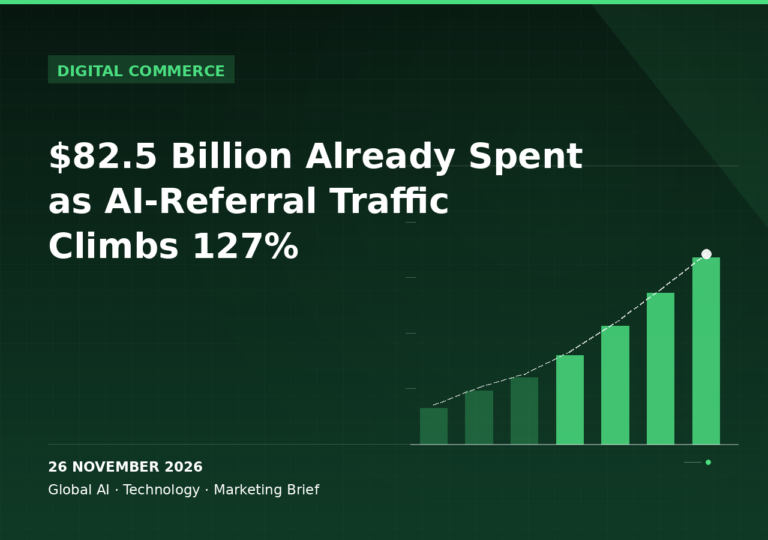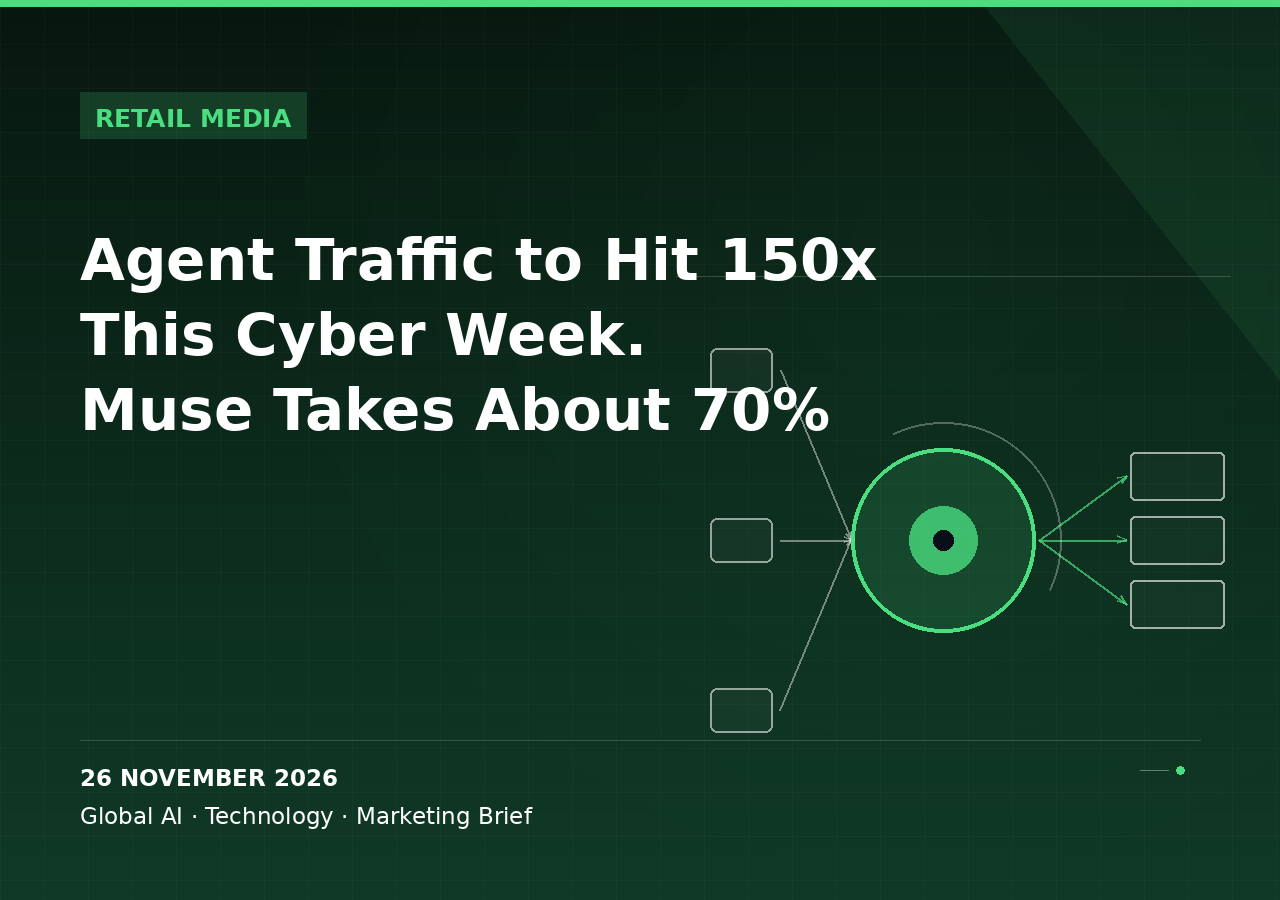
Human Security’s data, shared with Adweek, projects that agent traffic during Cyber Week — 26 to 30 November — will run about 150 times last year’s level, with requests to checkout pages up roughly 160-fold. Retail site traffic overall is expected to more than double from pre-holiday baselines during the Black Friday weekend.
Most of that comes from one place. Meta’s Muse accounts for about 70% of all agent traffic and more than half of agent requests to checkout and payment pages. Google’s agents generate under 5% of traffic but close to 20% of checkout requests — a far higher intent density per visit. OpenAI and Perplexity trail both.
The retailers have already picked sides
Walmart opened Black Friday deals through an Agent Gateway that lets customers set spending caps of $50, $100 or $200, or require confirmation on every order. Gap, Best Buy and Sephora are connected. Amazon blocks Muse but is reportedly in talks with Meta over a connector. Kohl’s, Neiman Marcus and eBay restrict third-party agents.
Forter’s order data for 18–24 November shows Muse at 51% of agent-initiated orders, Grok at 22%, ChatGPT at 18%, with an average order value around $219. That is a real basket size, not a rounding error.
The number to be careful with
150x is a multiple of server requests, not orders. eMarketer’s survey data undercuts the more enthusiastic reading: only 5.7% of US mobile shoppers prefer to shop through a personal agent, and roughly three-quarters say they would not hand their card details to one.
Both things are true simultaneously. Agents generate enormous request volume because they browse, compare, retry and fail. Consumers remain reluctant to delegate payment. The gap between those two facts is where the entire commercial argument sits — and it is why Walmart’s spend-cap design matters more than its catalogue integration. Letting an agent browse is cheap; letting it pay is a different decision, and retailers are pricing that decision with limits.
What changes if this holds
The strategic question is not whether agents drive traffic. It is who owns the interface where the decision happens. If Muse becomes the default front door for a meaningful share of commerce, advertising inventory pricing shifts from the search results page to the agent’s recommendation layer — and the party that controls the agent sets the terms.