Every metric on your brand dashboard has a sponsor. Awareness studies are commissioned by the brand. Engagement numbers are reported by platforms selling ads. Even review scores can be farmed. So here is the discovery worth sitting with: there is exactly one brand metric nobody sponsors, and it updates every hour. It is the resale price — and the reason it stays honest is not technology. It is incentive design.
Three Strangers, Zero Reason to Lie
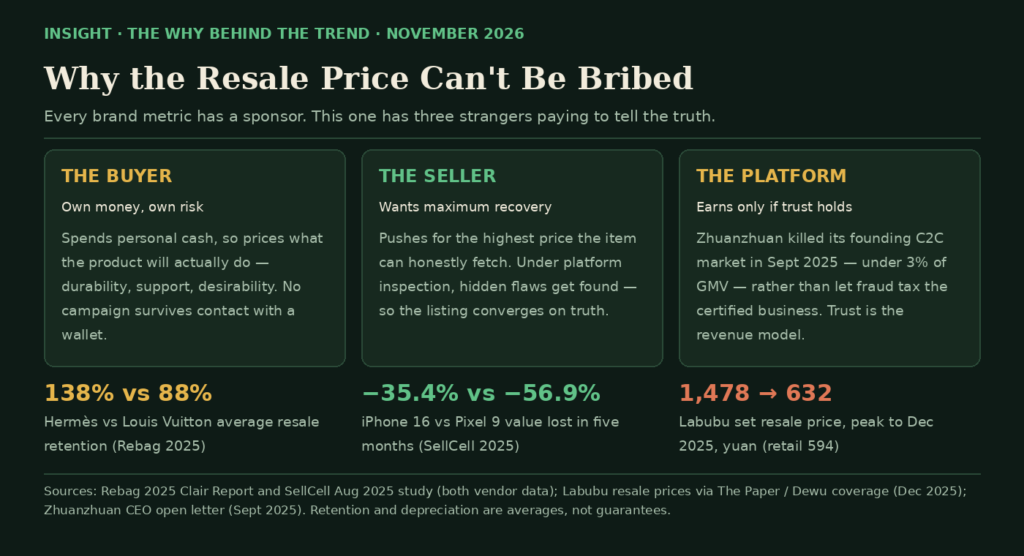
Think about who produces that number. The buyer spends personal cash and personally lives with the consequences, so she prices what the product will actually do: hold up, get updates, stay desirable. The seller wants maximum recovery, but under platform inspection every hidden flaw gets found and deducted — so the listing converges on the truth. And the platform? Zhuanzhuan shut down its founding C2C marketplace in September 2025 — a business it built in 2015 — because fraud disputes were taxing everything else. It contributed under 3% of GMV. The company chose to amputate a limb rather than let distrust infect the certified body. When all three parties have skin in the game, the price they negotiate is an audit nobody paid for.
What the Audit Already Found
The results read like a verdict on decades of brand strategy. Rebag’s 2025 data shows Hermès bags reselling at 138% of retail while Louis Vuitton manages 88% — the gap was built by supply discipline, not campaigns. SellCell’s depreciation study found the iPhone 16 losing 35.4% of value in five months versus 56.9% for the Pixel 9: buyers are pricing software support years into the future. And when Pop Mart quintupled Labubu plush capacity, the resale market delivered its verdict in weeks — a 594-yuan set that peaked around 1,478 yuan slid back to roughly 632 by December, months before earnings confirmed the cooldown.
Why This Matters More Than the Numbers
Here is the deeper mechanism. Marketing inflates perceived value; resale deflates it back to reality. The spread between the two is your brand’s honest margin — and it moves before your revenue does. Hermès keeps the spread negative (resale above retail), which is why it can raise prices without flinching. Labubu’s spread collapsed toward zero, and the stock followed. If you want a leading indicator instead of a lagging one, stop asking customers what they think of your brand. Watch what strangers pay for it when you are not in the room.
That is the incentive behind the honest price: nobody in a resale transaction is paid to believe in you. Which is precisely why you should.