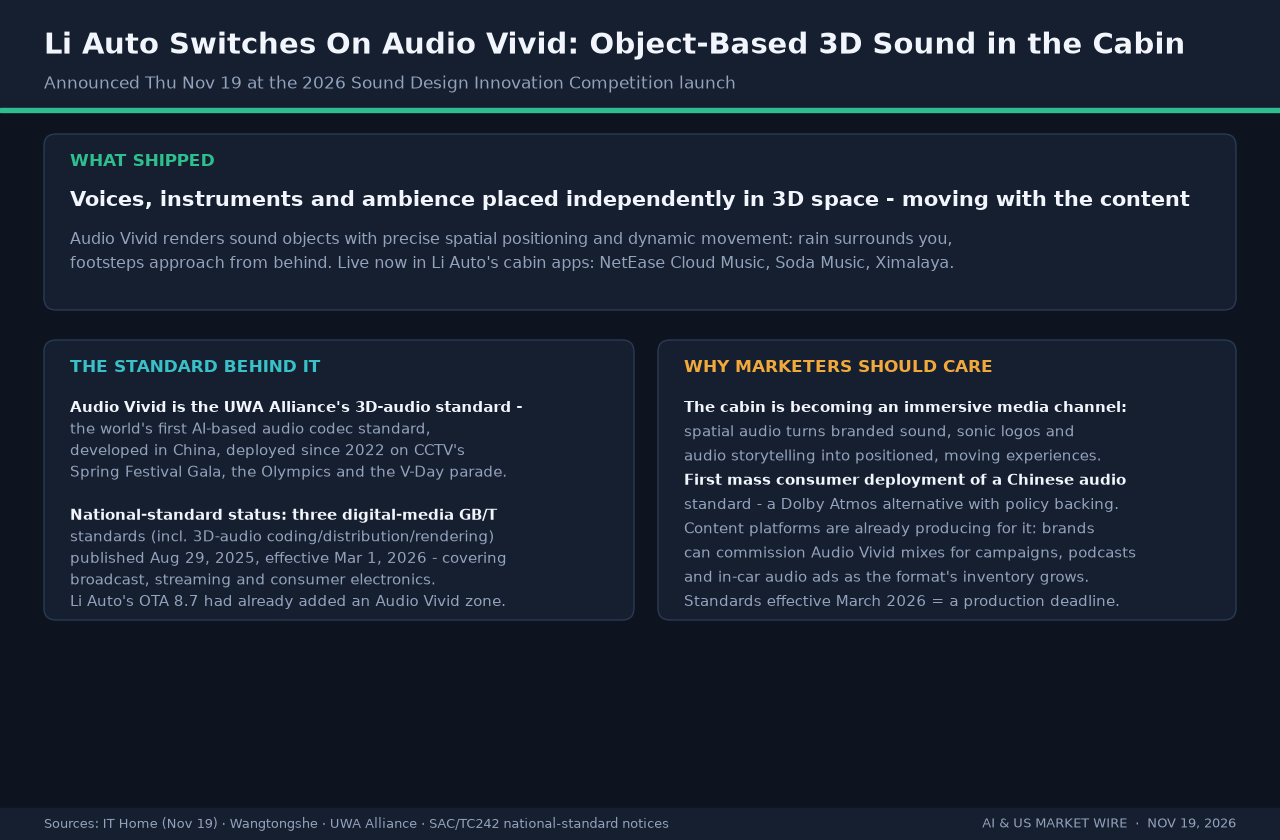
At the 2026 Sound Design Innovation Competition launch on Thursday, November 19, Li Auto announced Audio Vivid in-car support together with industry partners — object-based 3D audio that positions voices, instruments and ambience independently in space with dynamic rendering, so rain surrounds the cabin and footsteps approach from behind — live now in NetEase Cloud Music, Soda Music and Ximalaya on Li Auto’s head units (an Audio Vivid zone had already shipped in OTA 8.7). The standard underneath carries policy weight: Audio Vivid is the UWA Alliance’s 3D-audio technology, billed as the world’s first AI-based audio codec standard, deployed since 2022 on CCTV’s Spring Festival Gala, the Olympics and the V-Day parade broadcasts, with three related national standards (including GB/T 3D-audio coding, distribution and rendering) published August 29, 2025 and effective March 1, 2026 across broadcast, streaming and consumer electronics. For marketers, two implications: the cabin is becoming an immersive media channel where branded sound, sonic logos and audio storytelling can be positioned and moved — a Dolby Atmos alternative with domestic standards backing — and content platforms are already producing for the format, so commissioning Audio Vivid mixes for campaigns, podcasts and in-car audio is a near-term creative test, with the March standards date serving as the production deadline.