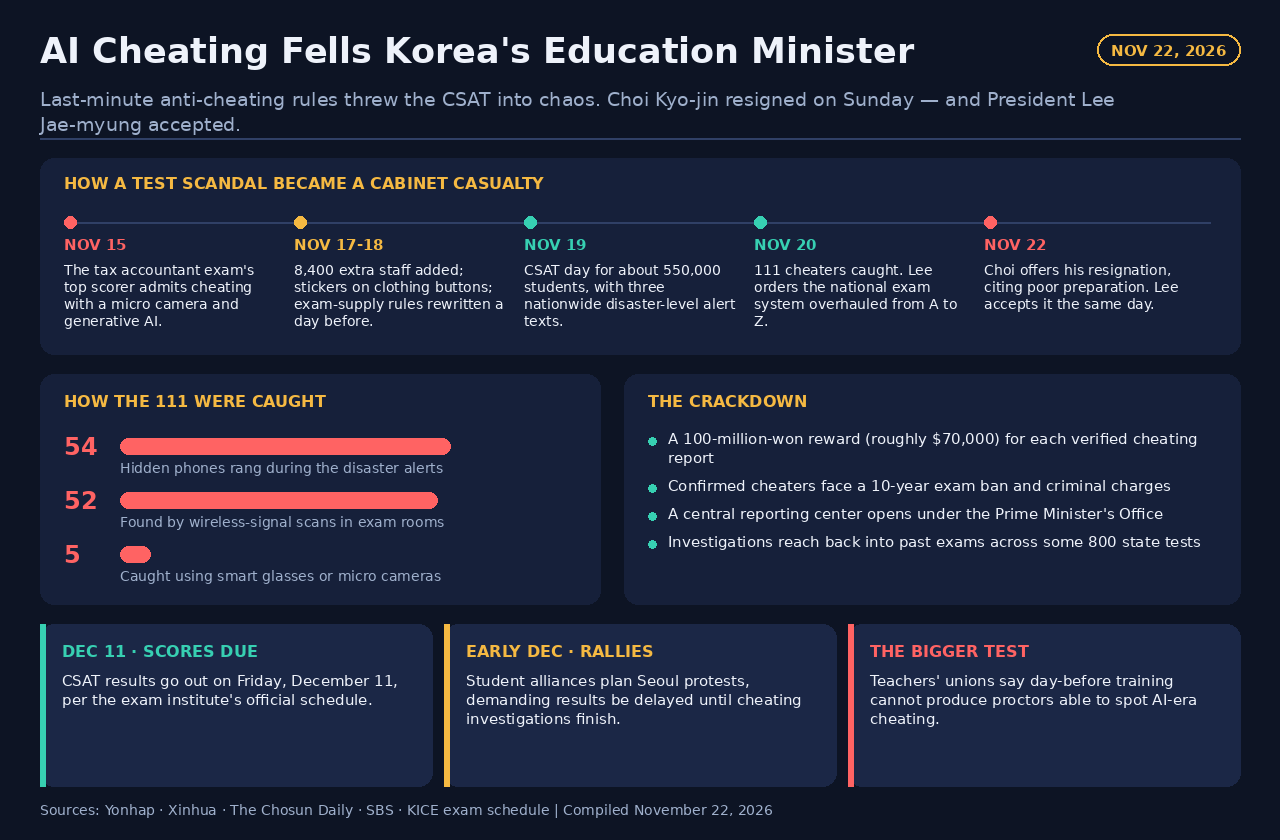
South Korea’s Education Minister Choi Kyo-jin offered his resignation on Sunday, November 22, and President Lee Jae-myung accepted — three days after a college entrance exam that turned into a national reckoning over AI-enabled cheating. The crisis began on November 15, when the top scorer of the national tax accountant exam admitted he had cheated using a micro camera and generative AI. Panicked, the ministry rewrote anti-cheating rules for the November 19 CSAT almost by the hour: 8,400 extra staff deployed two days before, stickers slapped on every clothing button to foil hidden cameras, and permitted stationery changed the day before the test. On exam day, roughly 550,000 students sat through three nationwide disaster-level alert texts designed to make confiscated-but-hidden phones ring out — and it worked, perhaps too well for the ministry’s reputation. Of 111 cheaters caught, 54 were exposed when their hidden phones rang during the alerts, 52 were found by wireless-signal sweeps, and five were caught red-handed using smart glasses or micro cameras. Teachers’ unions blasted the government for training emergency proctors by video call the night before; student alliances are planning Seoul rallies in early December, demanding results be delayed until investigations conclude. Lee has called AI-assisted cheating a serious criminal act, ordered the exam system overhauled from A to Z across some 800 state tests, and backed a 100-million-won reward — roughly $70,000 — for each verified report, with confirmed cheaters facing a 10-year exam ban and criminal charges. Scores are due Friday, December 11. Whether they arrive on time may be the next resignation-level question.